I come from a culinary arts background, but have since left that industry. I am now working on my writing, and enjoying cooking for family and friends.
Last week, Chadwick Boseman hosted Saturday Night Live. While on it, he did a skit as his character, T'Challa, from the movie Black Panther. If you have not seen Black Panther yet, do yourself a favor and go see it while it's still in the theatre. It's worth seeing it on the big screen. In the skit, as you can watch for yourself in the above video link, he references potato salad in conjunction with the stereotype that white people generally under-season their food. "Aw hell naw, Karen!" has become the new viral catchphrase on social media platforms.
While I generally try to steer clear of stereotypes as much as possible, I have to admit to being a Karen at times. I have definitely been guilty of under-seasoning my food. And I went to culinary school! So, in order to not be a Karen, I decided to create my own potato salad recipe that would hopefully not be "bland-ass". And definitely wouldn't have any raisins...! And apologies in advance because this isn't a measuring type of recipe. You just go by what you have and what seems right. So I present to you, my recipe for:
Aw Hell Yah Potato Salad Salad:
Russet potatoes, scrubbed, poked with a fork like you would do for baked potatoes (I used 3 good-sized potatoes for this)
Eggs (I used three. Two for in the salad and one for the garnish)
Bacon (I used the very thick-cut regular bacon from the butcher's counter at my grocery store. Three slices. Two for in the salad and one for the garnish)
Dill pickles, chopped
Dill pickle juice (I used 3-4 Tbsp.)
Black olives, sliced
Green onions, sliced (I used the white and light green parts for in the salad, and the dark green for the garnish) Dressing:
Mayonnaise (about 3/4 cup)
Sour Cream (about 1/3 cup)
Yellow Mustard (about 1-2 Tablespoons)
Hot Sauce of choice (to taste. I was going to use Tabasco but my bottle was really old so I used a bottle of habanero pepper sauce I had on hand instead. I used about a half teaspoon but it could have used a little more.)
Dried dill (to taste)
Black pepper (to taste)
Cayenne pepper (to taste)
Paprika for garnish (this is not optional)
Place the scrubbed, poked potatoes and eggs in a large pan of salted water, over high heat. Bring to a boil and then reduce heat a little to avoid boiling over onto the burner. My potatoes took about a half hour to cook, but remove the eggs after about ten minutes of boiling to avoid overcooking. Just use a spoon to remove them and place them in cold water and set in the fridge to cool down completely.
At the same time, cook the bacon. I usually do the thick-cut bacon like this in the oven. From the above picture, you can see that I put it on a sheet pan covered with parchment paper. I cooked it at 325 degrees for about a half hour, turning it over halfway through and draining off the oil before putting it back in the oven.
When the bacon is cooked, remove it from the pan and let it drain on paper towels. Place in the fridge to cool down.
When the potatoes are cooked through, turn off the stove and remove the potatoes to a large plate. Let them sit a few minutes to cool off a bit before placing in the fridge to cool even more. Don't cool them completely, just get them to the point where you can handle them with your hands without burning them. At that time, use a knife to peel the skin off and cut the potatoes into chunks. Place in a bowl that will be large enough to fit all the ingredients and be able to be stirred without dripping, as well. While the potatoes are still warm, pour the pickle juice over them and mix well, trying not to break up the potatoes too much. (I got the pickle juice idea from a coworker who likes to add pickle juice to her devilled eggs. I thought this might be a good way to season the potatoes themselves and really let flavor absorb into them.) Place the potatoes in the fridge and allow them to cool completely.
For the dressing, mix the mayonnaise, sour cream, mustard, dill, hot sauce, cayenne, and black pepper together in a smaller bowl. When the bacon is cool enough, chop up two of the slices and add them to the dressing. Mix well and refrigerate until ready to use. Note: In spite of T'Challa's disgust that Karen's potato salad was only
seasoned with a little bit of salt, do not put salt in the dressing.
Trust me on this one. There's enough salty elements in this salad that
it's not needed.
When everything is chilled, you can assemble the salad. Peel the eggs, chop two of them and add to the potatoes. Add the chopped pickles, green onions, and sliced black olives. Mix well. Pour the dressing over and mix well. Adjust the dressing ingredients to make sure the potatoes are well-dressed. I ended up adding a little more mayonnaise and hot sauce. Mix just enough to blend everything, but not enough to break the potatoes down.
Slice the last egg, chop the last slice of bacon, and top the potato salad with them. Sprinkle with paprika. Top with the green onions. Cover and refrigerate for at least two hours to allow the flavors to blend together properly.
This is what I ate with my dinner tonight and it was fantastic! I think the pickle juice on the potatoes really helps season the potatoes. You can dress potatoes with highly-seasoned dressing, and most of the time you can still taste the blandness of the potatoes underneath it. This helps combat that. Mixing the bacon into the dressing allowed the flavor to really permeate it. It would be less flavorful just to mix the bacon with the potatoes. I highly recommend doing it this way. And the sour cream adds a depth to the dressing that would otherwise be lacking if I'd just used mayonnaise. This is how I make devilled eggs, so I had a feeling it would work well in potato salad as well. I'm definitely sold on that.
I was really happy with this potato salad! I'm going to give some to my parents tomorrow and I'll probably share some with coworkers on Monday. Beside that, I'm going to eat it all myself!
I would like to think that T'Challa himself would enjoy this potato salad, but unless he comes to visit, or I get a chance to go to Wakanda, I'll just have to speculate! But you can try this out and let me know what you think. And if you come up with even better ideas, let me know!
I found and tested three recipes on Saturday. Two of the three turned out well and one of them, not so much. I will talk about the two that did, and we'll just forget the one that didn't, because it was that bad...! I was going to write about this earlier but the "luck of the Irish" ran out on me Saturday morning when my internet died and it took until Monday to get it back up and running! So here, at long last, is the post!
Entree: Dublin Coddle with Pearl Barley, courtesy of this website. I don't eat beef, so corned beef and cabbage is out for me. Besides, it's a very popular dish for this day and I wanted something different. Bacon, sausages, potatoes, and barley all cooked in one pot? Now that sounds fantastic to me! I had to try it. It totally worked.
Two kinds of breakfast meat and two kinds of carbs in one entree? Yes, please! Here is the obligatory, "prepped food before it's cooked," shot.
Post sausage and bacon browning. The barley has been mixed in, the onions are on the bottom, and the bay leaf is somewhere in the middle of it all.
The layer of potatoes on the top. Chicken broth is added and it cooks everything! I found it a little dry, the barley absorbed all the liquid. If you want it more "stewy," I would suggest adding more broth than it calls for.
This is the finished product! It's not fancy or that pretty to look at, but it is hearty and tasty! The flavors are simple and not highly seasoned beyond the salty/smoky of the bacon and the spices in the sausages, but it's still good. I ate all the leftovers over the next few days. It reheats well, but I wouldn't recommend freezing it. Potatoes never freeze and thaw well. This is a great change of pace from corned beef and cabbage, if you want something new, yet not complicated for next year!
Now for the dessert: Irish Shortbread, from here. Every year at Christmas, I make Scottish shortbread. It's delicious and impossible to mess up. I was very curious to see how Irish shortbread differs from its Scottish counterpart, so this was the perfect opportunity to try it out. It turns out, they are similar, but also very different, at the same time!
The cornstarch really changes the texture of the shortbread. With Scottish shortbread, you have to knead the dough with your fingers and my hands are so tired by the end of it. The cornstarch in this recipe keeps the dough from really coming together. It runs a little dry, but it's ok. It does come together a little bit, so you can knead it into a ball, but don't put too much effort into it. This is a really easy recipe!
Here it is, post baking. It bakes for a really long time on a really low temperature and one of my coworkers who tried a piece said it tasted caramelized to her, which makes sense with how it's baked. From here, I cut it into pieces while it was still warm and in the pan. I carefully moved them to a cooling rack when they started cooling down a bit.
I added powdered sugar to the top because I think it's pretty. Here is the post-cut version.
And here's a close-up of the cookie from the side. It's dense, and slightly crunchy. It's really rich and a little goes a long way! I splurged and bought Kerrygold butter for almost $4 for a half pound and that was on sale!!! Normally I would never, ever spend that much money on that small an amount of butter, but I decided that since it was a special day, and this recipe calls for so few ingredients, that I should make those ingredients really count. I don't know for sure if it made it taste better, but it was definitely more yellow than American butter, so it looked prettier!
The leftover cookies were scarfed down very quickly at work on Monday! It was definitely a winner. I want to make these again at Christmas and try them side-by-side with my Scottish shortbreads. So, to those if you go to Christmas Eve/Day with me, look forward to trying this one out!
Both of these recipes were fun to make and eat. I would definitely make them again. If you're looking for something new to try next year on March 17th, give these a try. You won't regret it!
Continent: North America, North Capital: Ottawa Current Head of State: Prime Minister Justin Trudeau Form of Government: Federal Parliamentary Constitutional Monarchy Official Language: French and English Ethnic Groups: Like the US, Canada is made up of immigrants and First Nation's Peoples. Nearly every ethnic group is represented. Population: 36,048,521 Independence Day: July 1, 1867 Main Religion: Roman Catholicism, though the country does not have a national religion. They are a secular state. Famous Canadians: L.M. Montgomery, William Shatner, K.D. Lang, Alanis Morissette National Anthem:
The Food: Poutine and Butter Tarts
I have heard of poutine my entire life but have not had a chance to try it before. I am sad that I waited so long because it is a fantastic dish! I could have been enjoying it for years before now. People might make fun of it because it's a rather humble dish, but some of the best foods in the world are the simplest dishes.
Poutine, for those of you who have never heard of it before, is French fries with cheese curds on them, smothered in brown gravy. You definitely need a knife and fork for these fries. This presented two challenges for me from the start: I can't eat the cheese curds because I am lactose intolerant, and I cannot eat brown gravy, because I don't eat beef. So, a dish with only three components isn't going to be much of anything if you take two of the three away. I had to replace them with something different that would still keep the integrity of the original dish. I managed to do so, and it turns out it's not that hard to do at all. Chicken gravy was an easy and obvious replacement for the brown gravy. I decided to make gravy from scratch, though, rather than use a packet of gravy mix, but use a mix if you are so inclined. The harder item to replace, were the cheese curds. I found the solution on the internet: vegan cheese curds. I know that sounds like an oxymoron, but it works. It's tofu that's been flavored to mimic cheese curds. Tofu already has a texture akin to cheese curds, so it's a natural fit.
This recipe has several components that I made individually. I will write it out as I made it.
Poutine:
French fries(I chose to make homemade oven fries with garlic, but you can use whatever French fry you want. You can deep fry them or use frozen or even tater tots if you like. Just make sure they're nice and hot and you should be fine!)
Cheese curds(You can use regular cheese curds, as is traditional, or make the vegan cheese curds, like I did. Here is how I made the vegan curds: 1/3 cup lemon juice, 4 tsp. kosher salt, and torn pieces of firm tofu. Mix the juice and salt and stir for a while until the salt dissolves. Mix the tofu in and soak for 30 minutes. Drain and rinse and set aside until ready to use.)
Gravy(Brown gravy is traditional, but I made homemade chicken gravy. I actually roasted chicken breasts for my dinners this coming week and used the drippings, and some chicken broth for the base. I splurged and made a roux to thicken it. Roux is equal parts melted butter and flour. You cook it on the stove until it's thick and smells nutty. Then slowly pour the liquid into it and let it come to a boil. Stir very well with a whisk and season to taste with salt and pepper. But you can make a mix if you want to instead. I'm sure it would be fine as well.)
Cook the French fries and put them on a plate. Top them with the cheese curds, and pour gravy over that. You will need a knife and fork for this.
The "cheese" curds have a nice salty, lemony tang to them and it all mixes really well with the gravy. I had garlic on my fries so there was a garlic flavor in all this too. This was ridiculously amazing! I will absolutely have to eat these more often!
To go with the poutine, I needed a dessert. One of the desserts that came up over and over again was "butter tarts". This sparked a memory and I ran to my own personal recipe collection where I found a hand-written recipe card my grandmother had written out for me for butter tarts. My grandmother, and her whole side of the family is Canadian. So, I feel that using her recipe makes it even more authentically Canadian. The recipe was pretty easy and since both dishes were pretty simple, I wanted to make my own pastry. I just couldn't stomach the idea of store-bought pastry for these. I found another recipe in my collection and tried it out. Both were huge successes! I will write them out as I made them:
Pate Brisee
2 1/2 cups flour
1 tsp. salt
1 tsp. sugar
1 cup cold butter, cut into small pieces
1/4-1/2 cup ice water(I needed nearly the full 1/2 cup)
In a bowl, combine flour, salt, and sugar. Cut in the butter with a pastry cutter or forks. Slowly add the ice water and mix until dough comes together. Knead gently a few times to combine and pat down into a disc. Cover with foil or plastic wrap and refrigerate for at least one hour. You can also freeze it for later use as well, if desired.
My Grandmother's Butter Tarts
1/2 cup butter, melted
1 1/2 cups brown sugar(Or do what I did: 1 cup brown sugar and 1/2 cup unsweetened applesauce)
1/4 tsp. salt
1 tsp. white vinegar
1 cup chopped walnuts
2 eggs
2 tsp. vanilla
Dough
Combine all the ingredients except for the dough, in a medium bowl.
Roll out the dough to about 1/4" thick and using a 2" cookie cutter or a drinking glass, cut out as many dough rounds as possible.
These work best with mini muffin tins. Place the dough inside each cup of a mini muffin tin and fill with a spoonful of the filling mixture. Bake at 425 degrees for 8 minutes and then turn the oven down to 350 degrees and bake for 10-15 minutes longer.
I think these things are filled with crack or something, because I cannot stop eating them. The pastry was fantastic and it will definitely be my go-to pastry recipe from now on. It's buttery and flakey and is everything pastry should be.The filling is slightly like the filling in a pecan pie, but not as gooey or sweet. The walnuts work really well in this.
I shared these with my Canadian grandmother and grandfather and also my Canadian dad and my mom, who is technically a Canadian citizen as well, because her mother was Canadian. I too am technically Canadian, due to my father. I think that's what made these dishes extra delicious, because it's not just amazing food, it's also my heritage.
While eating these, I of course had to watch a few episodes of one of my favorite Canadian tv shows: Road to Avonlea. I have several Canadian shows I love, but this one just sounded right today. If you've never watched it, you really should. It's by the same people who made Anne of Green Gables and is set in the same town. Visiting Prince Edward Island is on my bucket list. I'd like to visit all my Canadian family one day, maybe I'll do all of that at the same time! I'll bring them some butter tarts to try...!
The city was founded in 1638 by Puritans. New Haven's claim to fame is being the home of Yale University. It is the basis of the city's economy, and is its biggest employer. New Haven was Connecticut's co-capital from 1701 to 1783, before power was transferred entirely to Hartford. New Haven is said to be the cultural capital of the state.
Prior to the European Invasion, New Haven was home to the Quinnipiac Native American tribe. They were corn farmers and fishers. The Dutch were the first Europeans to settle in the area, followed by the Puritans from England. Rather than being slaughtered or displaced, however, the Quinnipiac sold their land to the settlers in return for protection from a nearby rival tribe.
The Collegiate School moved from Old Saybrook to New Haven in 1718. It was renamed Yale University after Elihu Yale, a merchant in the British East India Company who made a large donation to the school.
New Haven was one of the first cities to embrace the anti-slavery movement in the 1830's. During the Civil War, New Haven sold a lot of goods to the war effort, but didn't engage in any battles of their own. After the war ended, it became home to many Italian and Jewish immigrants.
After the two world wars, New Haven became a victim of urban decay, as more residents left the city to move to the suburbs. In the last few decades, though, it has begun to be built up once again.
The Food: Connecticut Not-Beef Supper and Connecticut Apple Brownies
Connecticut was one of the most difficult states to find recipes that I was willing to try. One of their most famous recipes is clam pizza with white sauce. That was a "no" for me...So I had to keep looking, and finally, after days of searching, I came across these two recipes. They sounded simple enough, yet tasty, so I went with them. They did not disappoint.
Connecticut-Not Beef Supper:
This is actually called Connecticut Beef Supper, but as I do not eat beef, I had to change it up a bit. I think it turned out really well and my sister actually ate some and loved it. That really says something for how good it is. I will rewrite the recipe as I did it and include the link to the original in the sources section.
2 Tbsp. cooking oil of choice 2 lb. cubed pork roast 1 onion, sliced 1 cup water 2 large potatoes, peeled and sliced 1 can cream of mushroom soup 1 cup sour cream 1 1/4 cup milk 1 tsp. salt 1/4 tsp. pepper 1 cup cheese, grated Bread crumbs(optional)
Heat oil in large skillet. Brown meat and onions. Add water and heat
until boiling. Cover and simmer 20 minutes. Pour meat into 13" x 9" ungreased dish. If there is a lot of liquid left in the pan, drain it out, you don't want this in the dish. Put potato slices on top.In a large bowl, stir soup, sour cream, milk,
salt and pepper together. Pour over potatoes. Bake at 350 degrees, uncovered, for 1 1/2 hours. For last half hour, sprinkle with cheese and
bread crumbs, if using, over the top and return to the oven.
This was really delicious and comforting on a winter night. I highly recommend this if you are looking for comfort food, but something a little different from what you usually go for. And if you have leftover liquid from simmering the meat, don't throw it away. Skim off the fat and freeze the liquid for something else. My sister and I discussed making a stew and that liquid would be perfect for it.
It's hard to go wrong with cheesy, creamy potatoes, and you throw the meat in it and you have a one bowl dinner. Those in my family are well aware of a dish called Patio Potatoes that is a staple for our Christmas Eve dinners. This dinner is much along those lines, but it's a little more dairy-friendly. I am looking forward to trying this reheated tonight for dinner!
Connecticut Apple Brownies:
1/2 cup butter
1/2 cup sugar
1/2 cup unsweetened applesauce
1 egg
2 cups apples, peeled, cored and thinly sliced (I used Honeycrisp)
1/2 cup chopped pecans
1 cup all-purpose flour
1/4 tsp. salt
1/2 tsp. baking powder
1/2 tsp. baking soda
1 tsp. cinnamon
Combine sugar, applesauce, butter, and eggs. In a small bowl, mix the dry ingredients together. Add them to the butter mixture, and mix well. Stir
in apples and nuts. Spoon into greased 9" square pan (or double
recipe for 9 x 13 inch pan). Bake at 350 degrees for 30 to 40 minutes.
Mine only needed 30 minutes. I made them in the morning to take with me to a tea party and they ended up being very popular! Calling them a brownie is a bit of a misnomer, because as you can see, there is no chocolate anywhere in the recipe. But, the texture is very much like a brownie. Maybe Apple Blondie would be a better name for them. By cutting out half the sugar and replacing it with the applesauce, it is healthier, but you don't notice it. The apples are sweet and the applesauce fits right into the recipe.
Both of these recipes were fantastic! I had to work so hard to find them in the first place that I am very glad they turned out so well. You definitely need to try these out. You will not regret it!
Conway was established as a railway town after the Civil War ended, by Asa P. Robinson. In 1878, a priest named Father Joseph Straub, who had founded the Duquesne University in Pittsburgh, Pennsylvania, moved to Conway. He built the St. Joseph Colony there. Both the railroad and Father Straub worked diligently to attract German and Catholic German families to the area. By 1889, more than 100 German families called Conway home.
Conway's proximity to the Arkansas River makes it a popular fishing destination.
Claim to fame: Conway is said to be the city that singer Conway Twitty took his name from.
The Food: Catfish, Collard Greens, and Cornmeal-fried Veggies
So, when I was thinking about what to do for the state of Arkansas, catfish immediately came to mind. I knew it was risky, though, because this is Seattle, and catfish is not native to this region. Nor is it particularly in high demand, which means the chance of me finding fresh catfish when I needed to, was very low. But I was determined to make it work. I lucked out, though. Last week my grocery store had one portion of catfish in the fresh fish section on discount. Not sure why it was discounted, because it was well within its use-by date. Probably because of demand, I would assume. Well, I snatch it right up and looked very carefully at the label. It did not say it had been previously frozen, so I made a risky decision and froze it. I normally would never do this to fish, but you can't keep fish in your fridge for a week before you use it, so it was either freeze it or not use it all.
I wanted a simple catfish recipe because I've never had it before and I wanted it to shine as a flavor and didn't want whatever I put on it to outshine or mask it. I found a very delicious and simple recipe that was also very easy to make. I was happy because it was steeped in Southern ingredients and just screamed "The South". Here is the recipe:
Pecan Catfish
1/2 cup cornmeal
1 teaspoon salt
1/4 teaspoon ground black pepper
1 1/4 pounds catfish
3 tablespoons vegetable oil
1/2 cup pecans, finely crushed
5 wedges lemon, for garnish
5 sprigs fresh parsley, for garnish
Preheat oven to 500 degrees F.
In a large bowl, mix the cornmeal, salt and pepper. Dip the catfish in the cornmeal mixture; coating well.
Place catfish on a flat, greased baking sheet. Pour the oil over the fish.
Bake in the preheated oven
for 15 minutes or until catfish flakes easily when tested with a fork.
Sprinkle with pecans toward the end of the cooking period.
Garnish with lemon wedges and parsley sprigs.
The only thing I didn't do was the lemon wedges and parsley sprigs. I just squeezed lemon juice over it all when it came out of the oven. I did it exactly as it was called for, except I put mine on parchment paper on the sheetpan instead of greasing a sheetpan. That worked just fine. I put the pecans on probably for the last 4 minutes. They will burn in an oven that hot, so don't add them too soon.
This one was really good! The sweetness of the pecan and the tartness of the lemon complimented the fish, but didn't overpower it. And that turned out to be a good thing, because catfish is a really delicate fish. It's a white fish, that just tastes really like the ocean, which is odd because it's a fresh water fish, but it does! It's like fish, but not fishy, if that makes any sort of sense. I highly recommend this one if you can ever get your hands on catfish.
And for my vegetable side, I knew I had to go with collard greens. This again was a risk because it's Seattle in January. Well, it turns out that collard greens are a cold weather vegetable, so I actually timed it perfectly. And it also turns out that my Safeway sells organic collard greens, so it wasn't too much of a challenge at all!
Most people prepare collard greens with ham flavoring the liquid. I am one of those unusual people who doesn't actually like ham-flavored things. I like ham, I like beans, and greens, and pea soup, but not together. So, that meant a vegetarian version. Luckily I ran across a great recipe that seemed easy enough.
Vegetarian Collard Greens 2 lbs
collard greens 4 -5
garlic cloves, minced 1 large
onion, chopped 3 cups
vegetable stock 1 teaspoon
salt
( to taste) 1 teaspoon
smoked sweet paprika 1/2 cup
apple cider vinegar hot sauce (optional) or
red pepper flakes
(optional)
Wash greens well,
submerging in a sink full of cold water to remove any dirt and grit.
Drain well. Cut off the stems right where the leaf starts. Stack about
5-8 leaves on top of eachother, then roll lengthwise. Cut rolled up
leaves into 1" slices widthwise. Repeat until all the greens are done,
and add to a large pot.
Add all other
ingredients. Cover and bring to a boil over high heat, then reduce heat
to a simmer. Simmer for 45 minutes or until greens are extremely tender.
Serve hot, using a slotted spoon to drain the liquid from the greens.
So, this started off just fine, and I had it on the back burner doing its thing while I worked on everything else. I thought that it would be fine, because the greens would release their liquid and it would basically stew until I was ready to serve it. That's not how it ended up, unfortunately. I did not take an "after" picture, because I burned the heck out of it and it was ruined! I did try a not-burned bit just to see if it was salvageable. It was very bitter. I'm not sure if that's because collard greens are bitter or because it sat and burned for a half hour, but either way, it was not edible. I was sad, because it was a solid recipe! But, lesson learned, collard greens don't actually give off that much liquid, so make sure to add lots to the pot and check it once in a while!
To round out the meal, I wanted a starch and an interesting way of preparing it. I found a recipe that seemed pretty simple and went with it.
Arkansas Fried Veggies
1 cup milk
1 egg
1 cup cornmeal, or as needed
2 squash, sliced
2 red potatoes, cubed
2 green tomatoes, cubed
3 pods fresh okra, sliced into rings, or more to taste
1/2 onion, diced
1/2 green bell pepper, diced
2 tablespoons bacon grease, or as needed
Salt/pepper to taste
Whisk milk and egg together in a large bowl. Pour cornmeal into another large bowl.
Dip squash, potatoes, tomatoes, okra, onion, and green bell pepper into milk mixture; press vegetables into cornmeal to coat.
Heat bacon grease in a
large skillet over medium-high heat. Cook and stir vegetable mixture in
hot grease until golden and tender, 15 to 25 minutes. Season with salt
and black pepper.
I used this recipe as a base but didn't do all the vegetables listed. I used what I had on hand, which last night happened to be fingerling potatoes that I cut into quarters, green beans, and sliced frozen okra that I thawed out. I cooked the potatoes first because they need a lot more time than the other vegetables. As golden as they got on the outside, they were still not cooked through, so I threw them on a sheetpan and put them in the oven while the catfish baked. That seemed to be enough extra time to cook them through. I fried the other veggies while the potatoes baked.
This recipe was ok, but not amazing. The problem is that when you fry cornmeal, it gets rock hard, so you're eating these crunchy nuggets with little bits of cornmeal getting stuck in your teeth. I bet it would be better if you ground up the cornmeal into smaller pieces. That might have worked better.
There was a lot of cornmeal in this meal, but cornmeal, catfish, pecans, collard greens, okra, and bacon fat is pretty much the epitome of Southern food, so it's fitting for this menu!
This meal might not have turned out perfectly, but it was a lot of fun to make. The catfish was delicious, and I do think the collard greens would have been really good if I hadn't burned them to smithereens...The veggies were ok, but the catfish was the star. Definitely try it out sometime if you can get your hands on some. It's worth it!
2013 population: 6,289; 55.6% African American, 41.8% white. Per capita income: $14,764.
The region around Monroeville was home to the Choctaw tribe prior to the European invasion. The area was taken over by the Spanish, but was purchased by the United States in 1795. The city of Monroeville was built in 1831, but not incorporated until April 5, 1899. After the Civil War, it took Monroeville from 1865 to 1900 for it to be completely rebuilt again.
Monroeville's big claim to fame is that it is the hometown of some of America's most famous authors. Truman Capote spent several summers during his childhood there, and Harper Lee, his friend, was born and raised there. She still lives there to this day. In 1997, Monroeville was named the "Literary Capital of Alabama," by the state legislature.
The Food: Winner, Winner, Chicken Dinner
One of my favorite books of all-time, is To Kill a Mockingbird, by Harper Lee. Harper Lee was born in Monroevill, Alabama, on April 28, 1926. She is best known for that novel, though she recently released a second novel called Go Set a Watchman. It takes place after the events of To Kill a Mockingbird, dealing with the same characters, yet it was written first. Go Set a Watchman is actually the impetus for the story that became To Kill a Mockingbird. I have not read Go Set a Watchman, and do not plan to, because I think To Kill a Mockingbird is a masterpiece in and of itself.
Food is mentioned a lot in the book. It's also mentioned in the film as well. I decided that when I got to Alabama, I would choose foods mentioned in the book, and focus on them. I chose three dishes to try out, and wasn't disappointed by any of them!
One of the most memorable food scenes in both the book and the film doesn't actually mention what type of food is eaten. I would love to have featured it for this post, but needed to choose others that actually mention the food eaten. The scene is set during a lunch break early in the school year. Jem and Scout have brought their friend, Walter Cunningham, home to eat with them. Atticus joins them for the meal and makes Walter feel at home. Walter, the son of a poor farmer, rarely gets to eat lunch, and is clearly looking forward to this meal. He requests syrup for his meal, which Atticus, unhesitatingly, asks Calpurnia the housekeeper to bring. He pays little attention to Walter as the boy proceeds to drown his food in syrup. Unfortunately, Scout doesn't do the same, and points it out, loudly, that one doesn't drown one's lunch in syrup.
The scene would be almost comical if it wasn't so heartbreaking to watch. The pure joy and anticipation on Walter's face is palpable. You can feel his excitement about the treat he's about to enjoy. But the second Scout points out his faux pas, his joy is immediately replaced with shame and humiliation. His meal, something he so rarely gets to partake in, has been ruined before it even began. It hurts to read or watch this scene. I think it's one of the things I keep in mind by choosing not to judge others for what they do or don't eat, or how they eat it. Why take that joy from somebody? Why be that cruel for no real good reason?
Anyway, the three foods I chose are quintessential Southern foods, and one of them I had been holding off on for just such an occasion as this post: Fried chicken. Such as simple dish, yet so easy to do wrong if you're not careful. I didn't want to end up using fried chicken as a default for all the Southern states, so I made sure to use it when it would have the best use. I had trouble finding recipes specific to the state of Alabama that I could or would eat. This state was the perfect location for the dish.
"It's not time to worry yet," Atticus reassured him as we went into the diningroom. "We're not through yet. There'll be an appeal, you can count on that. Gracious alive, Cal, what's all this?" He was staring at his breakfast plate.
Calpurnia said, "Tom Robinson's daddy sent you along this chicken this morning. I fixed it."
"You tell him I'm proud to get it--bet they don't have chicken for breakfast for breakfast at the White House."
Though it's not described how Calpurnia prepared the chicken, I'd say it's a safe bet that it was fried. There was no oven-frying then, and I doubt she made it into a stir-fry or chicken Parmesan. I chose a fried chicken recipe from my own recipe card collection, and I don't know the source of it, but it was amazing! I was really happy with how this turned out.
Buttermilk Fried Chicken
1(3lb.) fryer, cut into pieces
2 cups buttermilk or plain yogurt
1 onion, sliced
1 tsp. each dried parsley(I did not add this, it doesn't really add much flavor), tarragon, and thyme
1/2 tsp. paprika
1/4 tsp. cayenne pepper
2 cups flour
1/2 tsp. garlic salt(For this and the onion salt, I didn't have either, but I used granulated garlic and granulated onion instead. I just added a bit more salt and it turned out fine.)
1/2 tsp. onion salt
1/4 tsp. cayenne pepper
Salt/Pepper
2 cups canola oil
1.) Soak chicken 8 hours to overnight and up to two days in the buttermilk with the onions, herbs, paprika, and cayenne.(My note: I didn't have 8 hours, mine marinated for around 3 hours. It was still highly flavorful, though I am curious what it would have tasted like to have the full 8 hours.)
2.) Drain in colander, leaving some herbs on the chicken. In a paper or plastic bag, mix flours with seasonings. Meanwhile, heat 2 cups oil in a large, heavy-bottomed skillet on medium-high heat until a pinch of flour starts to sizzle when dropped in the hot oil. (Have a lid nearby for emergencies.)
3.) Place chicken pieces in bag with flour and shake until thoroughly coated.
Add chicken to hot pan and fry on one side for 12-15 minutes, until golden brown, and then use tongs to turn the pieces over for another 10-12 minutes again, until golden brown. (Be careful to keep the oil hot enough to fry the chicken, but not so high that it burns the chicken. To do this on an electric stove, alternate the settings between high and medium-high several times while cooking.)(My note: Do not turn the chicken if there is any resistance. If it is still stuck to the bottom of the pan, it is not ready to turn. All you will do is rip the batter off the chicken. Patience is really important for frying chicken. You'll be worried that it will burn, but it won't. Just trust it, it knows what it's doing better than you do.)
4.) Use tongs to remove chicken from pan. Place on a rack over a cookie rack to drain the excess oil. Add more salt and pepper to taste. (My note: I tested the temperature when my chicken was fully browned and it wasn't quite hot enough inside. I finished it off in the oven just to make sure there was no chance of eating undercooked chicken. It turned out fine that way.)
Makes 4 servings
I ate this hot last night but have a second serving to eat cold today. I have to see how it tastes cold vs. hot. That's the key to good fried chicken. The flavor of this was amazing. The thyme and tarragon work really well with it. You wouldn't necessarily think tarragon for fried chicken, but it really works! The batter was ridiculously crunchy and amazing. I may never be able to eat fried chicken again except for this kind because it was that good.
Aunt Alexandra met us and nearly fainted when Calpurnia told her where we were. I guess it hurt her when we told her Atticus said we could go back, because she didn't say a word during supper. She just rearranged food on her plate, looking at it sadly while Calpurnia served Jem, Dill, and me with a vengeance. Calpurnia poured milk, dished out potato salad and ham, muttering, "'shamed of yourselves," in varying degrees of intensity. "Now you all eat slow," was her final command.
Potato salad felt like the perfect accompaniment to the fried chicken. It can be eaten with the hot chicken, or the cold chicken the next day. I chose another of my own recipes, but again, I don't know the original source. I thought this was really amazing too.
Creamy Low-Fat Potato Salad
2 lb. small red potatoes, cut into 3/4" pieces
2 garlic cloves, peeled
1 small bay leaf
1 cup buttermilk
2 Tbsp. olive oil
2 Tbsp. tarragon vinegar(I did not have this, and couldn't find it at the grocery store. Instead, I used 2 Tbsp. white wine vinegar and put in about 1/2 tsp. tarragon and let it sit for a while to infuse the vinegar. I kept the tarragon in the vinegar when I added it to the rest of the ingredients, rather than straining it out. I think this worked just fine.)
1 tsp. Dijon mustard with seeds
1 tsp. salt
1/4 tsp. pepper
4 green onion, chopped
1 large celery stalk with leaves, chopped
1/4 cup chopped fresh parsley leaves(I didn't do this. I rarely/never use parsley when a recipe calls for it. It's either for garnish or flavoring and I don't think parsley really adds that much, flavor-wise, to a recipe.)
1.) In 4-qt. sauce pan, heat potatoes, garlic, bay leaf, and enough water to cover to boiling over high heat. Reduce heat to low; cover and simmer 10-12 minutes, until potatoes are fork-tender.
2.) Meanwhile, in large bowl, with fork, mix buttermilk, olive oil, vinegar, mustard, salt, and pepper until blended. Stir in green onions, celery, and parsley.
3.) Drain potatoes, discard garlic and bay leaf. Add warm potatoes to buttermilk mixture and gently stir with rubber spatula until well-coated. Cover and refrigerate if not serving right away.
Makes 8 servings: 130 calories, 4 grams fat
I would never have thought to use buttermilk for a potato salad dressing, but it really worked well! With the other ingredients, it really tasted like it was a mayonnaise-based dressing. I was really impressed. There was too much celery for my tastes, but that's easily altered. I highly recommend this one if you like potato salad, but are trying to be healthier too. Also, I only made a half batch of this, and it was just fine. Some recipes don't divide very well, but this one did.
Perhaps Calpurnia sensed that my day had been a grim one: she let me watch her fix supper. "Shut your eyes and open your mouth and I'll give you a surprise," she said.
It was not often that she made crackling bread, she said she never had time, but with both of us at school today had been an easy one for her. She knew I loved crackling bread.
Crackling, most often pronounced without the G at the end, is simply cornbread with cracklings added to it. What are cracklings, you may ask? If you're unfamiliar with traditional Southern cuisine, or have never read the Little House on the Prairie books, you may have never heard of this food before. Cracklings are the pieces left after frying up chopped salt pork. What is salt pork, you are now asking? Well, it's salted pork belly. It's the same cut of pork that bacon comes from, the only difference is, it hasn't been smoked. Salting food was a common way of making it last through the long autumn and winter months before proper refrigeration and freezing was available.
These are the cracklings I made last night. They don't taste the same as bacon. You can substitute bacon, but it isn't the same experience. Cracklings are very salty, but not at all smoky. They smell very different from bacon when you cook it. It takes longer to render than bacon, but be patient and keep stirring them as they cook. They will get there eventually.
This recipe comes from an article I found in the Chicago Tribune. I will share the link in the sources section, and do check it out. It has several other recipes available, all from foods mentioned in To Kill a Mockingbird. I will paste the recipe here from the article.
Cracklin' Bread
1 cup finely diced salt pork
2 eggs, beaten
3 cups yellow cornmeal
2 1/2 cups buttermilk
1/2 cup flour
1/3 cup lard, melted
1/4 cup water
1 teaspoon each: salt, baking powder
1/2 teaspoon baking soda
1.
Heat the oven to 400 degrees. Heat a skillet over medium heat; fry the
salt pork until well-browned and crispy, about 10 minutes. Remove
cracklings with a slotted spoon; drain.
2. Combine the eggs,
cornmeal, buttermilk, flour, lard, water, salt, baking powder and baking
soda in a large bowl; stir until thoroughly blended. Stir in the
cracklings; scrape batter into a 13-by 9-inch buttered baking pan. Bake
until golden brown, 25-30 minutes. Serve hot.
Nutrition information Per
serving: 284 calories, 48% of calories from fat, 15 g fat, 5 g
saturated fat, 44 mg cholesterol, 31 g carbohydrates, 5 g protein, 435
mg sodium, 1 g fiber
The only thing I did different from this recipe, was to substitute the lard with a plant-based oil instead. I had lard I could use, and I was even measuring it out when I changed my mind. With all the oil I was already using, and the salt pork in the recipe, and the fact that I had used lard in last week's blog post, I couldn't in good conscience use it when a healthier oil would work just as well. It turned out fine, but if you want to use the lard, by all means, go for it! Mine only needed the 25 minutes to be perfectly baked through. It makes a lot! If you don't have people to share it with, I suggest making a half batch. I don't think cornbread freezes very well. This one was really good too! I can see why it's a popular dish in the South.
There is the completed meal in all its glory. What a sight to behold. What a pleasure it was to eat. I wish I could eat like this every day, if only it wasn't so unhealthy!
This was a really fun experience. Cooking a meal based on an iconic novel set in a small town in the South, really helps to make you feel like you're there. You are stepping into a world not your own, and understanding what life was like there. If you have been thinking about rereading To Kill a Mockingbird or rewatching the movie, I recommend trying something like this. It enhances the experience that much more. It isn't a brand-new concept, trying foods based on a book or a movie, but it sure is fun!
2013 Census: 48,612 people. 2012 per capita income: $28, 522. 83.4% of the population is white, 9.6% is Hispanic. 83% of the population is Mormon, 8.8% is Catholic.
Before being settled by Mormons in 1848, the region was the seasonal home to the Bannock, Paiute, Goshute, and Shoshone tribes of Native Americans. During its time, the Pony Express had a station in Murray. Throughout its early history, the region was used for agriculture exclusively, however in 1869, an ore deposit was found, and that quickly became the top economic factor for the region. Murray housed the first smelter in the area in 1870 and would remain the center of business for smelting for the next 30 years. In the mid 1880's, the railroad came through the state which increased business to the area.
Murray was officially named in 1883 after General Eli Murray, for whom the post office was named. It was officially incorporated on November 18, 1902. The smelting industry suffered greatly during the Great Depression, but the Second World War and the explosion of the automobile industry after the war would keep the city thriving in spite of that set back.
Cool factoid: Murray High School was used for filming the auditorium scenes in the first High School Musical movie.
The Historical Event: So why did I choose the state of Utah for this week? Well, June 6th is the anniversary of D-Day, a very important turning point during the Second World War. I was a history major who focused on that war, though mostly on homefront issues, as opposed to the warfront. However, D-Day is one of those events that draws you in, regardless. The strategy and tactics involved, the luck, and the huge loss of life make it a compelling story that needs to be retold. So what does this have to do with my choosing Utah? Well, the coastline of Normandy, France was divided into five separate pieces and given names: Utah, Omaha, Juno, Sword, and Gold. Utah and Omaha were the beaches that the Americans were responsible for. Juno, Sword, and Gold were under the responsibility of the British and Canadians. Because I have already done the state of Nebraska for this project, that left Utah!
Of the two American beaches, Omaha is the one overwhelmingly talked and written about. It had far more casualties than Utah, and far more difficult circumstances to overcome. But don't underestimate the importance of the storming of Utah beach. It was the farthest west of the five and the closest to the Port of Cherbourg, a major entry point into France that was being used and protected by the Axis powers. The Allies wanted to take it and use it to bring in their own troops. Utah beach was added after the other four beaches, when General Eisenhower realized it would be a good location to go in to take the port. Utah was about three miles long, approximately two miles shorter than Omaha. Due to the terrain, the German presence was not as strong here. During the course of the first day, over 20,000 troops would land here, 1700 vehicles would arrive, and there would be less than 300 casualties. Utah had the advantage of good timing as it was the first one stormed. It had the element of surprise on its side, a luxury that the other four beaches did not have. It also had the advantage and disadvantage of only having one major road to access the beach. While this made it more difficult for the Allies to travel further into France, it also made it more difficult for the Axis powers to get to the coast to protect it. The beach landings were preceded by an aerial landing just after midnight the morning of D-Day. It was a success and confused the Axis powers. Was this the assault they'd long anticipated? Or was it a mere distraction? It turned out to be both. Utah beach's landing is considered to be the most successful of the five beaches.
The Food: Jell-O and "Funeral" Potatoes
All right, that's enough history for one blog post. So, back to Murray, Utah and food. Jell-O is not a food I generally eat. I ate it as a child, but since I don't eat beef, that pretty much leaves out anything with gelatin in it, and since I don't really do sugar anymore, Jell-O is pretty much off the menu. But...Utah is the Jell-O capital of the country. More Jell-O is eaten per capita in that state than anywhere else in the nation, so I felt like I needed to honor this. And during my research one dish came up over and over again and the name was such that I couldn't just dismiss it. What the heck are "funeral" potatoes? This is a side dish that shows up at nearly every funeral, and church or community function there. It's easy to make in large quantities and isn't terribly expensive either. It's great for feeding large crowds. And it turns out it's a very similar side dish to a family recipe we eat every Christmas Eve called "patio" potatoes, but it was different enough that I tried it out anyway.
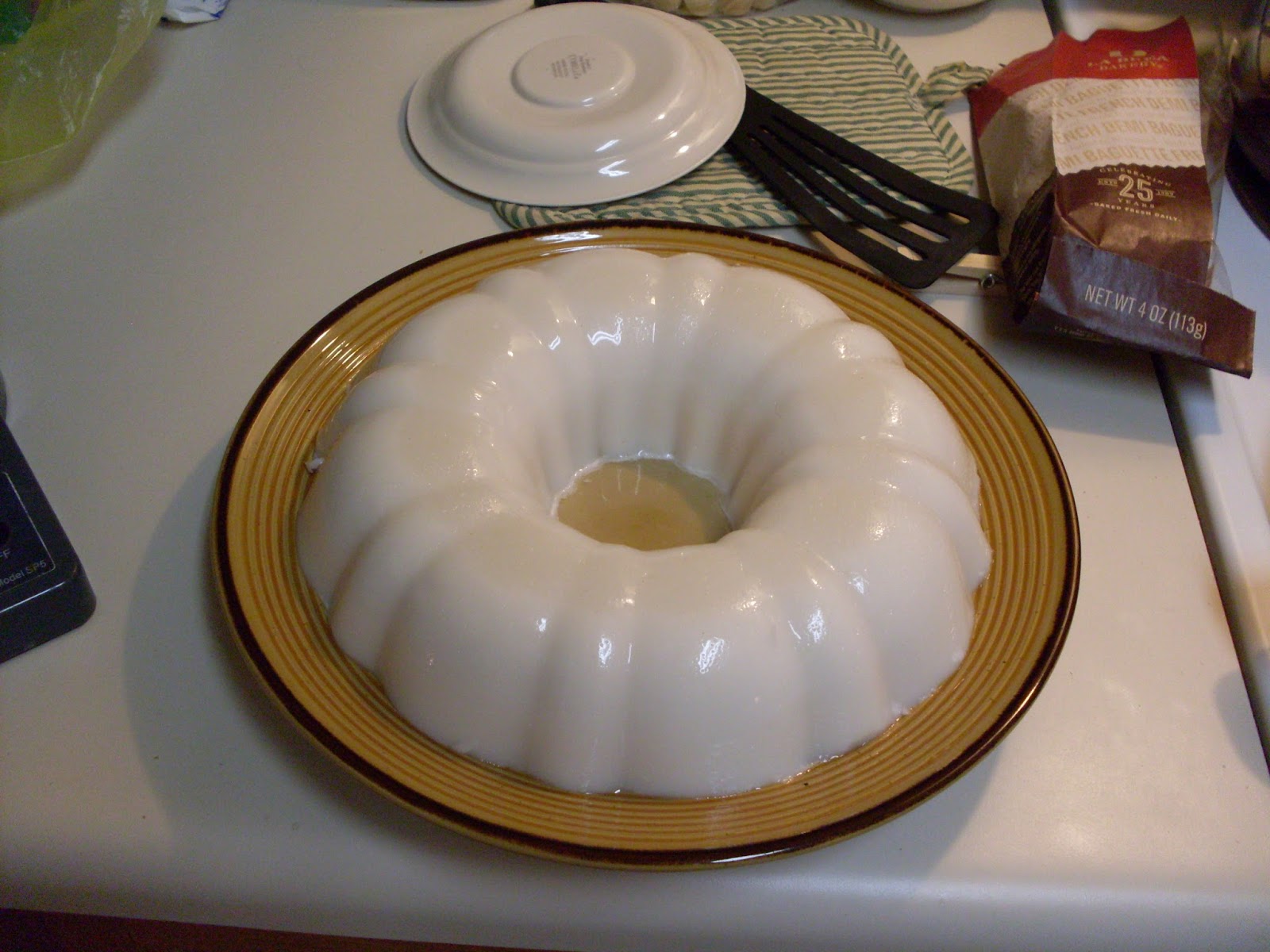
So, I looked up many Jell-O and Jell-O salad recipes to see if I could revamp it and make my own type of recipe. In the end I went to my local Asian grocery store and bought a package of Agar Agar. For those of you not familiar with this product, agar agar is a vegan, algae-based thickener that works in much the same way as gelatin. It has a higher gelling temperature which means you can keep it out at room temperature longer without worrying about it melting again, which is really lovely. I was only able to find a package with sugar in it, but I have heard that you can get just agar agar by itself, so if I was to pursue this, I would seek that out because that way I can control the sugar content better. I decided to make up a recipe with this while following the general directions on the packet. I used about 3 cups of light coconut milk(Trader Joe's brand) and 3 cups of water. For the last cup of water, I added 2 tsp. rose water to the cup and filled the rest with tap water. All of this was put in a large pan on the stove and brought up to a boil where I then added the packet of agar agar and let it simmer until it was all dissolved. I used a Bundt pan that I greased first and poured the liquid into it. I let it cool off a bit before placing it in the fridge. I did this in the morning so it would be ready for dessert in the evening.
I was nervous about it coming out of the mold and I used a spatula to loosen it up before overturning on the plate. It looks really cool! The flavor was ok, a bit too floral. I should have used half or a quarter the amount of rose water, but I do think it blended pretty nicely with the coconut flavor. However...the texture was a bit too chewy for my tastes. It's either how the agar agar works, or perhaps I needed to use less of it for the amount of liquid I used. There were two recipes on the box and I opted for the one with less liquid, because I was afraid it wouldn't gel enough. I think I should have used the one with more liquid and perhaps the texture would have been more Jell-O like. So, it wasn't a huge fail, and it did gel, so it was a success, just not a huge one either...This one needs more work, I think.
And now, to the potatoes, which my sister ate too and really liked. I made a half batch of what I was basing mine off of and made a few other changes, so I'll write out what I did, but will provide the link to the original recipe in my Sources at the end.
"Funeral" Potatoes:
16 oz. frozen shredded hashbrowns(Most packages in the store are bigger than this, so measure out 16 ounces from the larger bag and keep the rest for another use.)
1 can Cream of Potato soup(Cream of Mushroom would be great too.)
1 cup sour cream
3/4 cup shredded cheddar cheese
14 cup melted butter
1/4 cup chopped onion
1/2 cup panko
1/2 cup crushed potato chips
2 Tbsp. butter, melted
Grease a 9"x9" oven-proof dish and preheat the oven to 350 degrees. In a large bowl, mix the soup, sour cream, cheese, melted butter, and onion until well combined. (I found the onions too raw for my tastes when the dish was completed, so next time I would probably saute them in the butter first before adding it to the bowl and mixing with the rest of the ingredients.)
Add the frozen shredded hashbrowns(do not thaw first) and gently fold into the soup mixture until well combined. Spread this out in the greased dish.
Combine the panko and potato chips in a small bowl or on a plate and pour the melted butter into it. Mix until well combined and spread out evenly over the potatoes.
Bake for about 30 minutes or until the potatoes are cooked and everything is heated through.
This made about 6 servings, I'd say and was really easy and delicious. My sister thought it needed more cheese, and I'm inclined to agree with her. The sour cream was the strongest flavor. This is a new favorite of mine, I think. I do think it needs a happier name though...Potato Delight or something without the word funeral in it...I'll keep thinking. If you try this and like it, let me know! If you think of a better name for it, also let me know! But do try it, cuz I think you'll like it!
2013 Census: 843,393 people. As of 2010, 61.8% of the population is white, and 27.5% is African American. The per capita income is $24,430 and 18.9% live below the poverty line. It is the 12th largest city in the entire country and considered to be the least segregated city in the northern half of the nation.
Indianapolis was founded in 1821, but prior to that it had been home to the Lenape/Delaware and Miami tribes. With the advent of the railroad in the city in 1847, the city became a major destination, accessible from all directions and connected to several other major cities, including St. Louis, Chicago, and Detroit.
Indianapolis was also a stop along the Underground Railroad, though the city has had its ups and downs with racial issues. In the 1970's and 80's, it suffered greatly from "white flight", but has since bounced back. The nation's first illustrated African American newspaper, the Indianapolis Freeman was founded there in 1888. As with tolerance for change and acceptance comes those who fear it and fight against it. The KKK took root here in the 1920's and had a strong influence for a time, but had died out by 1944 when it disbanded entirely.
Today, in the state of Indiana, there is a similar backlash against the acceptance and tolerance for the LGBT+ community in the form of the Religious Freedom Bill that allows businesses to decline customers based on sexual orientation if it goes against their religious beliefs to do so. While the damage this bill can inflict is possibly not quite as extreme as the KKK, perhaps we can look to the decline and disbanding of that group as a sign of what will eventually be done to this bill. The good news is that the amount of people who don't support it far outweigh those who do. If you do visit the city or the state, make sure to keep an eye out for this sticker in business windows:
This will ensure that you are supporting a business that doesn't support hate or discrimination.
Indianapolis is also known for its sports and sporting events. They have a professional football team, and also have professional men and women's basketball teams. So, you might be asking me, "Why Indianapolis? And why right now?" Well, there is a very important reason I chose this city for this particular three day weekend: The Indy 500. The sporting event takes place on Memorial Day weekend every year, in fact it's happening right now as I type this at 9:35am Sunday morning. It's airing on ABC currently until noon west coast time.
The Indianapolis Motor Speedway was built in 1909 and the first Indy 500 was held in 1911. Why is it called "500"? Well, because the 200 laps that the cars take during the race equate to 500 miles. Women have been allowed to drive in the race since 1977, though their numbers are still quite small compared to the amount of male drivers in the race. This event is huge. Even if you've never been to the state and never watched a car race in your life, or even like cars, you've heard of this event. It's part of American culture, whether you like it or not. So, I celebrated it last night with the meal I prepared, and by watching the Pixar movie, Cars. That doesn't take place during the Indy 500, but it's close enough thematically that it felt appropriate.
The Food: Breaded Pork Tenderloin Sandwich and Indiana Potato Salad
This is quite possibly the most "Midwestern" meal I've done on this blog to date. Breaded and fried meat in bread, and potato salad. It's a carb-lovers dream come true. It was really good too! I found two recipes to base the sandwich on but I pretty much turned it into my own thing. I will write out what I did but also provide the links to the original recipes.
Indiana is a big state for pork production and when researching foods to try, this sandwich came up over and over again. There was no doubt in my mind that this particular dish sums up the state in its entirety.
Breaded Pork Tenderloin Sandwich: I only made one, and didn't really measure anything, so use this as a guide and increase amounts accordingly with how many you plan to make.
4 oz. pork tenderloin
Buttermilk
Salt
Pepper
Garlic Powder
Onion Powder
Dried Marjoram(sort of like oregano, you can use that instead if you want)
Seasoning Salt
Crushed Saltine crackers(I used leftover oyster crackers and they worked fine)
Peanut oil(if you have a nut allergy, vegetable oil would be fine. Olive oil might be a bit too strong of a flavor for this.)
Hamburger bun or Kaiser roll of your choice(I used whole wheat)
Hamburger toppings of your choice(I used mayonnaise, mustard, tomato slices, and pickle slices)
Place the pork between two pieces of plastic wrap and use a meat mallet to pound it to a thin, uniform size, about 1/2" thick.
In a plate, combine the buttermilk and spices together. Place the meat in the buttermilk mixture and turn over to cover both sides. Cover with plastic wrap and refrigerate for about an hour to marinate.
Crush the crackers and place on a separate plate. When the meat has finished marinating, remove from the buttermilk(discard this) and dip in the cracker crumbs until it's entirely covered on both sides. Let sit for a few minutes to allow the crackers adhere.
Heat oil in a frying pan over medium-high heat and pan-fry the tenderloin on both sides until golden brown.
It only takes a few minutes on each side to properly brown. When it's done, remove from the heat and place on paper towels to drain.
Toast the hamburger bun to your liking and prepare exactly as you would a hamburger, but using the breaded cutlet instead of the hamburger.
This was really simple to make. It was very tasty too, though I have to admit that the texture of the breading was lost in all the bun. The flavor of the meat is very delicate as pork tenderloin is not the strongest flavored cut of pork. It is also one of the most expensive cuts, and the healthiest cut as well. This does not undo the breading and frying to make this some sort of health food, however! I will be using the rest of the tenderloin I purchased to test out other recipes throughout the week. This cut of meat is usually far more expensive than I like to buy, but once in a while it's a good treat, especially when you put it to use in so many other recipes. If I was to make this again, I would probably just do it as a cutlet and skip the sandwich part. That way I could really taste the flavor and texture of the breading and meat.
There had to be a side dish for my sandwich, and so I turned to a Midwestern classic side: potato salad. But I didn't want just any potato salad. I wanted something I'd never even thought to try before. And I found it...It's just about the most Midwestern thing to ever be from the Midwest. I will write out how I made it, because I cut it down to be two servings, but will include the link to the original as well. This is a hot potato salad, which you may not have ever had before. Those tend to be German in origin, but this one had simple ingredients that were just soooo American I couldn't resist. Some of you might scoff or feel grossed out by it, but I chose to celebrate it in all its glory...
Indiana Potato Salad:
1 good-sized Russet potato
1-2 Tbsp. minced onion
2 slices Kraft singles American cheese(Yes, Kraft singles. And even worse, I saved money and bought the store-name brand too!!!! The recipe actually calls for Velveeta, which I didn't have on hand and my store sells it but it's way too expensive to buy for the small amount it calls for, so I opted for American cheese slices instead.)
Mayonnaise
Bacon bits
Boil the potato in water until it's cooked through. Remove from the water and let cool to the touch. Peel and dice the potato.
In a 9"x 9" or 8"x 8" ovenproof dish, place the potato and minced onion and stir together. Dice or rip up the cheese slices and mix into the potatoes. Place enough mayonnaise in the dish to blend properly into the potato mixture.
Place this in a 350 degree oven for about 10-15 minutes until it's hot and the cheese has melted. When it's done, top with bacon bits and serve.
This recipe sounds insane, I know! It's less of a potato salad and more of a baked side dish. For those in my family who have had the "patio potatoes" at Christmas, this is a similar flavor and texture, only it takes way less ingredients, an in spite of being filled with cheese and mayonnaise, is probably healthier than that recipe which has two types of "cream of" soups, cheese, and half and half in it. My sister tried it and loved it, which is saying something!
This meal is a quintessential Midwestern or American meal. You can sort of see the ethnic roots, but it has become something else entirely its own. I can imagine a salad like this being eaten at a church gathering or a neighborhood picnic, and the sandwich being featured at every restaurant in Indiana, each trying to put their own twist on it. It is truly a celebration of ingredients from that state, prepared with love and pride and joy. And that is how it should be eaten. Don't pay attention to the calorie or fat count, just enjoy it.
If you're watching the race today and wondering what to have for lunch, this would make a great meal and a great tribute to the place that made the race famous. Enjoy!