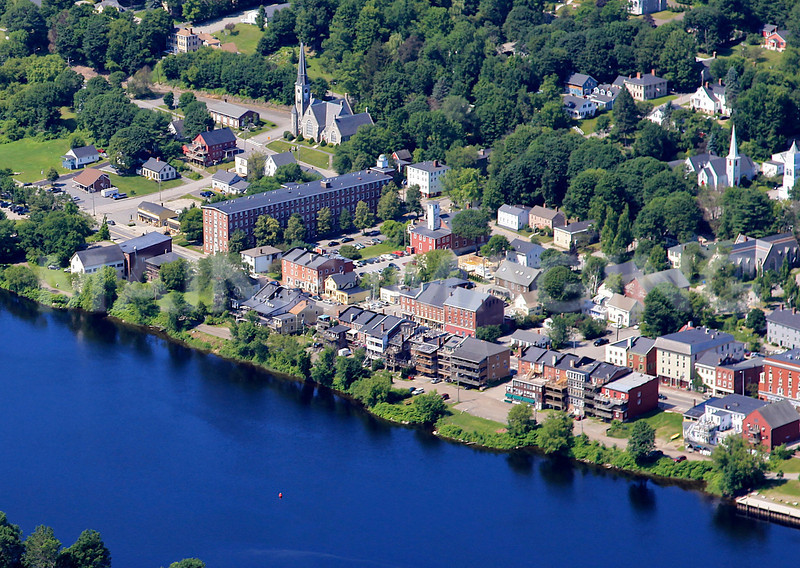
The Location: Hallowell, Maine
2013 population: 2,343 people; 94.6% white, 1.6% two or more races. Per capita income: $35,148.
Prior to the European invasion, the land around Hallowell was home to the Penobscot, or Panawahpskek, tribe. Hallowell was named for Benjamin Hallowell, a merchant from Boston. It was originally part of the city of Augusta, but it became its own town when Augusta broke off from it in 1797. The entire area was a part of the state of Massachusetts to begin with, but in 1820, Maine seceded from Massachusetts, and became its own state.
From 1815 to 1908, granite was the major industry for Hallowell. Ice was also a large part of their economy. Today, though, the city is known for its antique shops and pubs. For the most part, Hallowell has been a town relatively untouched by the major events of American history, though they did send many men to fight for the Union during the Civil War. The city today leans more liberal, in terms of politics, as it did then. Many people joined the war in order to help abolish slavery.
Why Hallowell? Because it's Halloween, of course! What a perfectly named city for this holiday!
The Food: A Duo of Desserts
I haven't done an all dessert post since Washington state's trio of apple desserts. Maine has a lot of seafood dishes it's known for, but as with last week with Maryland, there are so many kinds of seafood I don't eat that it wasn't very practical for me to feature them. This meant I had to get a bit more creative. With the fact that I would be doing this on Halloween, I decided to go in the dessert direction. Maine is also known for blueberries, and I opted for a recipe that heavily featured blueberries in their honor. Further research revealed a dish I have heard of, but never tried. I knew this was the time to try it!
First up is a recipe I found in my own collection. It comes from the Taste of Home magazine, unknown date.
Blueberry Oat Cake
2 eggs
2 cups buttermilk
1 cup packed brown sugar(I used 1/2 cup brown sugar and 1/2 cup unsweetened applesauce and I think it turned out just fine)
1/2 cup vegetable oil
2 cups flour
2 tsp. baking powder
1 tsp. baking soda
1 tsp. cinnamon
1/2 tsp. salt
2 cups quick-cooking oats
2 cups fresh or frozen blueberries, unthawed
1 cup chopped walnuts(I used pecans because they are naturally sweeter in taste than walnuts), optional
Powdered sugar
In a mixing bowl, beat the eggs, buttermilk, brown sugar(and applesauce, if using) and egg. Combine the flour, baking powder, baking soda, cinnamon and salt; add to batter. Beat on low speed for 2 minutes(or by hand, which is what I did). Fold in oats, blueberries and walnuts(or pecans), if desired.
Transfer to a greased and floured 10" fluted tube pan(Bundt cake pan). Bake at 375 degrees for 45-50 minutes or until a toothpick comes out clean.(Note, this cake is way too thick for a toothpick to do any good. I used a bamboo skewer since it was long enough to get to the bottom.) Cool for 10 minutes before removing from pan to a wire rack to cool completely. Dust with powdered sugar.
Makes 12-16 servings
This is what happens when you didn't see the part about flouring the cake pan until you just typed up this recipe 30 seconds ago, and try to remove it while it's still too hot. This was a literal hot mess, but it tasted good. I was able to dislodge the top half of the cake and sort of put it back together, but unfortunately it definitely crumbled when I cut pieces from it. Again, the flavor was fantastic and I'm sure if I'd floured the pan and had let it cool longer than the 10 minutes it called for, it would have done better. I have used my Bundt pan many times and have rarely had this bad of an issue.
Next up, a New England staple called Indian Pudding. I don't know about you, but I am not necessarily comfortable eating a dish with the word "Indian" in it, when it isn't actually Indian food. This dish has an interesting history. In England, it is made with wheat and is known as Hasty Pudding. You may have heard of this. It's pretty well-known, and even has its own club. When people started traveling to the New World, they discovered new ingredients, such as corn, that when dried and ground, was a grain that could be used in a variety of ways. The Europeans referred to it as "Indian meal," and from there comes the name of this dish.
I would argue that Indian Pudding is one of the first, if not the first Americanized recipe. Or to be even more historically-accurate, the first New Englandized recipe. America, of course, wouldn't be in existence for a little while longer. Taking a well-known recipe from England and substituting ingredients available in the New World, though in a very simple and humble dish, was the beginning of what would become American food culture.
If I was to rename this dish, I would propose calling it "Yankee Pudding," because it refers to the region in which it was invented, and acknowledges its American-ness. Though we were introduced to corn from the Native Americans, they never ate it in this form.
The recipe I used is from the internet, but I will type it out here, along with any changes or notes of my own.
Maine Indian Pudding
2 cups milk
1/4 cup cornmeal
1/2 cup milk, cold(Note, the website lists this as 1/4 cup, but the instructions say 1/2 cup. I used 1/2 cup, so I changed the quantity in this section to match because it was confusing otherwise.)
1/2 cup dark molasses, not blackstrap(I am not the biggest fan of molasses. I cut this down to 1/4 cup and did 1/4 cup of raisins to give it additional sweetness. I still found it to be overwhelmingly sweet and if I was to do this again, I would probably have cut it down to 1/8 cup, which is 2 Tablespoons of molasses and the rest raisins. With molasses, a little really does go a long way.)
1 tsp. salt(Because I did cut down on the amount of molasses, the salt came through a bit more than it should have. If you reduce the quantity of molasses, I would cut the amount of salt in half.)
1/4 cup sugar
1 tsp. cinnamon
4 Tbsp. butter
1 3/4 cups milk, cold
*Scald 2 cups of milk in a double boiler.
*Mix the cornmeal and 1/2 cup cold milk until smooth. Stir into the hot milk and cook over the hot water for 20 minutes, stirring frequently.(When you do this, you will be wondering what, if anything, is happening with your mixture. The milk will get frothy as you stir it but not much will change until about the last 5 minutes when it starts to thicken. Just keep faith in what you're doing and know that it will turn out ok in the end.)
*Add the molasses, salt, sugar, cinnamon, and butter; mix well.
*Pour into a buttered dish.
Pour the last 1 3/4 cups cold milk over the top of the pudding.
*Bake at 250 degrees for three hours(I started this about 4.5 hours before I wanted to serve it. The dish is based on something called Hasty Pudding, which is ironic, because it takes hours to prepare. Go figure!) Remove from oven and let sit for 30 minutes. Serve with ice cream or whipped cream, if desired.
Makes 4-6 servings.
As you can see, the cake was better-looking once I dug the top half out of the pan. It's just a facade though, it's definitely a chunky cake. The pudding is really interesting. The milk poured on the top sort of soaks into the pudding and also evaporates and creates a skin. Normally I don't like skin on pudding, but this was different. Because of the sugar and molasses, it was almost like the top of a burnt creme where you have to break through the caramelized sugar topping. It provided the majority of the texture. The rest of the pudding is very soft, but that gave you something to bite into and chew. The raisins also were really good in this. And not only is this something that doesn't call for a lot of cornmeal, which means your cornmeal goes a long way, it's also properly gluten free! So, all you gluten free eaters can partake of this and not worry about it! I cannot vouch for using an alternate non-dairy milk. It may or may not turn out the same. Try that out at your own risk, but do let me know if it works for you!
I really liked both of these desserts. Even though the pudding was a bit too molasses-ey for my tastes, it was still tasty. It was cool to use cornmeal in a completely different way too. I have used cornmeal a lot in this project. It's a New World ingredient after all, so it should feature highly in a project about American cuisine. For some reason, the pudding evoked images of the past. You can feel the history in it. The cake was delicious as well, but a much more straight-forward dessert. Both of these also make a lot. These would be good for groups. I had enough for tasting tonight, and to try tomorrow, and still had enough to share with my parents, my grandparents, and still have enough of the blueberry cake to take to work on Monday to share with my coworkers! You should definitely give these recipes a try!
Sources:
City Info
City Pic
City Map
Indian Pudding Recipe
Indian Pudding History
City History
Showing posts with label pudding. Show all posts
Sunday, November 1, 2015
Sunday, October 4, 2015
Dining-In: A Culinary Tour of America-Jamestown, North Dakota
2013 population: 15,440; 92.3% white, 2.4% Hispanic. Per capita income: $26,529.
Jamestown is the 9th largest city in North Dakota. It was built in 1872, just after the Northern Pacific Railroad added a new section to the Northern Transcontinental line. The same year Jamestown was built, the US Army built Fort Seward nearby. Their sole purpose was to protect the area where the railroad crossed over the James River. The fort was decommissioned in 1877, but the city continued to thrive. The Roman Catholic Diocese was established in Jamestown on November 10, 1889.
Jamestown's economy is based on manufacturing, though they have several attractions for tourists as well. They have two golf courses, an arts center, and the Jamestown Resevoir and Jamestown Dam created artificial lakes that attract a lot of fishermen and women, as well as water sports enthusiasts. Jamestown has two claims to fame: It is the hometown of American author Louis L'Amour. There is a walking tour one can take to retrace his steps. Jamestown is also home to the World's Largest Buffalo Monument.
While researching cities in North Dakota, I came across this tourist
Along with buffalo, prior to American and European settlers claiming the land, this territory had been home to the Crow, Sioux, and Blackfeet tribes. They still have a presence in the state, though much smaller now.
The Food: Ovnsstekt Torsk Med Sitron(Lemon-Baked Cod), Lefse, and Rice Pudding
What in the world are those foods, you may be asking yourself. And what culture are they from? The answer to the culture: Norwegian. What are they? You'll find out!
As of 2009, North Dakota's population is 30.8% Norwegian American. That makes North Dakota the state with the most Norwegian Americans in the entire nation, even more than Minnesota! Most Norwegian settlers came to the area between 1870 and 1920. They have a long and well-established history here. Because of this, and because of the fact that I can't bring myself to try buffalo, I had to try out some of the well-known Norwegian dishes I've never had before.
Ovnsstekt Torsk Med Sitron(Lemon-Baked Cod):
Cod is a fish I tend to eat only in fish-and-chip form. I tried to get my hands on some of the fish native to North Dakota, like pike or walleye, but it's pretty much impossible to find here in Seattle. While researching Norwegian entrees, I came across this cod recipe and it was pretty different from how I've ever had it prepared before, so I chose it. The recipe is from the internet, so I will provide the link in the sources at the end of this post. I can't copy and paste it because the formatting is too different to deal with, but I'll talk you through what I did.
Basically, you need a quarter of a pound of cod per person, skin and bones removed. You mix lemon juice and melted butter and brush that over the fish. The breading is simply flour, salt, and pepper, and you dredge both sides of the fish in it. Place the fish in a baking pan and drizzle any remaining lemon-butter over it and top with paprika. Bake at 350 degrees for 25-30 minutes, or until cooked through and fish starts to pull apart. Serve with lemon slices.
This is an incredibly simple way to prepare fish. Because the cod is something I'm so used to in fish-and-chip form, it was odd to eat it this way. I think of the fish I've prepared so far this year, this was the "fishiest". It needed a lot of lemon, but the salt and pepper from the breading was definitely enough to season it. I can see now why people tend to eat this fish with vinegar or tartar sauce, it needs something equally strong to hold up against the flavor of the fish. It also smelled the "fishiest" too, but that's what scented candles are for, right?! I don't sound like I'm selling this to you very well, do I? Let's just say, if you are a cod fan, you'll love this recipe!
Lefse: Potato Flatbread
Lefse is basically a cross between a mashed potato pancake and a flour tortilla. Literally, that's how it's made, with mashed potatoes and flour, and rolled thin and fried like a flour tortilla. You are supposed to use a special rolling pin with little squares etched in it to get the texture of the lefse just right. And you're supposed to use a special stick for picking it up, carrying it to the griddle, and turning it. I had none of this, and they are very expensive to buy for just one time. I originally opted out of making lefse because of this and had chosen a different potato recipe to use, but I made a last-minute decision to make lefse anyway because the other recipe didn't appeal. Lefse is pretty much the most well-known recipe I can think of when it comes to Norwegian food and I am glad that I made it. I decided to try it out anyway, without any of the proper equipment, and it might be a travesty, but I'd do it anyway. Fortunately, I was struck with inspiration right as I was about to start rolling the lefse. I have a towel that has squares in it and with that and some masking tape, my rolling pin was transformed into a rudimentary lefse pin!
You have no idea how proud I was of this! If you have a towel like this, I recommend rigging something like this up instead of spending major dollars on a special pin, unless you make lefse a lot. Then the actual pin might be worth it. The main thing to keep in mind is because of how the towel is rolled over the pin, there's one part that sticks out, so you can't really roll it exactly as you would a rolling pin. You sort of have to roll it back and forth halfway. But it still works.
I also used the rolling pin to transport the dough from the board to the pan and I used a fish spatula to turn it. No special stick needed. I'm pretty proud of how these turned out, though I've never had lefse before, so I can't compare it to the authentic kind. My recipe comes from The Frugal Gourmet's cookbook called "The Frugal Gourmet on Our Immigrant Ancestors," and I will write out the recipe for you. I'll write it out as-is, but note that I made a half batch and it turned out just fine.
2 1/2 lb. russet potatoes, peeled and cut in half
2 Tbsp. butter, room temperature
1/4 cup milk
1 tsp. salt
2 cups all-purpose flour plus additional flour for rolling and dusting
Boil the potatoes until tender. Drain them well, return them to the pot, and stir over low heat, a few minutes, to dry the potatoes, being careful not to brown them.
Mash the potatoes, using a potato ricer(I don't have a ricer anymore and used a masher and it was fine), in a heavy-duty electric mixer bowl. Add the remaining ingredients, except for the flour for rolling and dusting, and mix well. Blend together to form a nonsticky dough. Knead and form into a smooth log. Divide it into 24 pieces. When you are ready to prepare the lefse, roll each into an 8"-10" circle. Turn the lefse as you roll it and keep it well coated with flour to prevent sticking. The dough is soft, but try to use as little flour as possible.
Preheat the electric griddle or frying pan to 375 degrees, or use a griddle or frying pan over medium heat. Lightly grease it with oil.
Shake excess flour off each circle of lefse and place it in the pan. It will start to bubble; cook until the bubbles are lightly browned, about 1 1/2 minutes. With a spatula, turn and cook the other side. Stack the lefse on a wire rack as they are cooked, or wrap them in foil and keep warm in a 200 degree oven.
They can be frozen and quickly reheated in the frying pan or on the griddle. Makes 24.
Once they were finished, I buttered one side and rolled them up. A couple I tried plain, and a couple I tried sprinkled lightly with sugar and cinnamon and then sprinkled with lemon juice before wrapping them up. I liked the sweetened ones better, I think. The lemon juice worked really well with the sugar and cinnamon and I highly recommend trying it that way! This was one of the most fun things I've made for this blog. I think it was because of the obstacles I had to overcome with the rolling pin. It's fun to come up with ways to make something happen without the proper equipment.
Rice Pudding:
This meal called for dessert, and rice pudding just seemed like the thing to make. I had made rice a couple days earlier and purposely made extra for this. I had a couple recipes, but I pretty much turned it into my own, so I'll just write it out. Sorry, this is one of those recipes without real measurements...
Cooked rice
Milk
Cinnamon
Nutmeg
Cardamom
Raisins
Dried sweetened cranberries
Vanilla extract
Almond extract
Orange blossom extract
Unsweetened applesauce
Zest of one lemon
Everything gets placed in a large saucepan and heated up. Use a spoon to break apart clumps of rice. Just cook the heck out of it and keep adding more milk as the rice thickens. You can add sugar if you want and you can season it however you like. I basically scrounged through my spice rack and baking shelf and threw in whatever sounded good.
I tried mine hot last night, but it makes a ton so I will try it out today cold. I am unsure how I feel about this one. I think the lemon zest was actually too much. I should have left that out. And possibly the applesauce. I think that sort of messed up the texture. I'm not used to eating sweet rice, except in sushi-format, and that's not sweet sweet, so this was something my taste buds were not used to. I think if I'd been raised on rice pudding, it would have been awesome, but for me, it'll take a few more tries before my taste buds and mouth get used to the taste and texture of it. I was shocked, though, at how simple it was to prepare this. It's a great way to use up leftover rice.
What stands out to me most about these foods, besides the fact that they were rather monochromatic, hence the green beans, was the simplicity of the ingredients. The lefse was complicated to prepare, but the rice pudding and fish were not. But all three recipes had a minimal amount of ingredients and that allowed the main ingredient in them to shine. It's like letting the food speak for itself, and truly honoring the ingredient for what it is. I don't know enough about Norwegian food to say if that's how all of their recipes are, or if I just lucked out with these three, but there was something very pure about this meal. Fish, potato, rice. Hearty and filling. No frills, just presented in a way that allows you to truly appreciate them. I really liked it! It makes me want to explore this culture and cuisine more.
Sources:
Baked Cod Recipe
City History
City Stats
City Map
Buffalo Statue Picture
City Pic
Native American History
Labels:
cod,
lefse,
norwegian cooking,
pudding,
rice
Subscribe to:
Posts (Atom)


