Showing posts with label peaches. Show all posts

Sunday, February 7, 2016

Dining-In: A Culinary Tour of America-Hilton Head Island, South Carolina


The Location: Hilton Head Island, South Carolina
2013 population: 39,412; 75.9% white, 14.3% Hispanic. Per capita income $46,661.

The first signs of life on Hilton Head Island date back 15,000 years, though not much is known about the peoples who lived there at the time. More recent tribes include the Escamacus and the Yemassee. The first recorded European to make contact with the native peoples of the island was Francisco Cordillo, a Spanish explorer, in 1521. The island has changed hands over the centuries, to various European occupiers.

By the 1700's, the island was used as land for plantations and growing cotton. The oldest structure still on the island, is the Baynard Mausoleum, built in 1846. During the Civil War, the Confederacy built several forts on the island, while the Union built an army hospital there. The Union also conscripted many male slaves from the island to fight on their side, and with their wages, they were able to return to the island after the war and buy land and homes there. The town of Mitchelville was the first town in the United States built solely for freed slaves.

Hilton Head Island is one of the coastal areas of South Carolina known for being home to Gullah culture. Gullah is a combination of English, Native American, and West African cultures, most of which revolve around the cultivation and harvesting of rice. The land in South Carolina is particularly conducive to growing rice, and West African nations were renowned for their rice, so slaves from those nations were particularly in high demand. Because of the way rice was grown and harvested, the slaves were granted a lot of "free time," with which they preserved their culture, which they have passed down along the generations, where it remains intact to this day. It is not only known for its culinary, musical, and artistic elements, but is also its own dialect of English as well.

During the World Wars, Hilton Head Island was used as a lookout for German and Axis submarines, and as a military base. The city itself was not incorporated until 1983, and today the island is mostly used as a vacation destination.

The Food: Shrimp and Grits, and Blueberry Peach Cobbler
Full disclosure: I assigned this menu to the state of South Carolina completely randomly. The dishes are so Southern that I had to use them at some point in time, and South Carolina became the location assigned to them because all the other states had been chosen for other things. I had no idea that Shrimp and Grits was a very important dish in Gullah culture, or that Hilton Head Island was part of it too. I was very lucky to have paired them up, and it makes me look far more clever than I really am!

Shrimp and Grits:
I looked at a lot of Shrimp and Grits recipes and most of them called for cheese of some sort being added to the grits. This is a pretty common way of making them. However, I am one of those old-school believers in the "You don't mix cheese and fish" rule. It just didn't sound good to me, personally, so I looked for recipes that didn't have cheese in it, and came across a couple good ones. I ended up using them as a base, and to find the proper proportion of dried grits to liquid, but basically invented the recipe from there. I also had a good conversation with a coworker that left me with some ideas to build on as well. Unfortunately, it's one of those recipes without proper measurements. I will, however, include the links to the recipes so you can study those if you'd like!

So, you may be asking yourself right about now, what is a grit? Here is a handy explanation of just exactly, what a grit is:

Grits are also known as polenta. Polenta is the Italian version of grits. Grits are just the more humble version...To make my grits, I started with the liquid I was going to add to them. I started with chicken stock and added a handful of shrimp shells I had frozen after another one of my blog meals earlier this year that involved shrimp. I think it was my gumbo, another Southern delicacy! I threw in a bit of onion and a couple garlic cloves and simmered it for a while. It ended up smelling really shrimpy! I was a bit nervous because it was sooo shrimpy. I love shrimp, but sometimes it can be too shrimpy, you know what I mean?

I used 1/4 cup of grits, which was an adventure to find at the store. Hint: Don't go to the breakfast aisle to look for them. They only seem to carry instant, and as we all know, those are an abomination before the Lord. So, I looked very carefully on the pasta aisle, but they only had tubes of the already cooked kind and that isn't what you want either. It was also not available in the bulk section of my store. Where did I finally find it? The baking aisle...with all the small bags of specialty flours and grains. Go figure!

Anyway, I added the grits to the boiling stock, which I had strained and measured to one cup, and it wasn't enough liquid. Thankfully I had more chicken stock so I threw it on the stove, turned it on high and squeezed in some lemon juice to flavor it. You have to add boiling liquid to the grits to properly cook them. Bit by bit, you pour in more liquid and stir well, until its as thick or thin as you want it to be. Grits can be creamy and soupy like Cream of Wheat or it can be thick and chewy like oatmeal. Sometimes people add cream or milk to it, but I didn't. I just added the stock and mine were more creamy and soupy.

For the shrimp, I had purchased frozen, already shelled and deveined shrimp. I thawed them out and threw it in a frying pan with olive oil and some roughly cut garlic. I would have taken more time to chop the garlic properly but I was on the phone when I was cooking so I couldn't spare an extra hand. I squeezed in lemon juice and sprinkled salt, pepper, and some cayenne pepper and just sauteed it all until it was cooked through. To serve, I poured the grits into a bowl and dumped the shrimp on top. And that was it!
The grits probably took close to a half hour to cook, so make sure to know that going into it. The shrimp only takes a few minutes so don't do that till the very end. I looked at some videos online of how to cook Shrimp and Grits, and most of them have gravy involved. None of the recipes I found had gravy, but that might have been a fun addition. Next time!

This dish was really interesting. The grits were soft and slightly chewy. They were highly flavored from the stock I used. The shrimp were also highly flavored and blended well with the grits. They were just slightly spicy which went well with the grits too. The only issue I had was texture. It was all very soft and I wish there had been some sort of crunchy element to it. I'm not sure what I'd do to adjust that, but I'll keep thinking about it. The flavors were almost bordering on too strong, so I might cut back on the salt next time. The lemon works really well in this, so don't skip that!

Blueberry Peach Cobbler:
This is another quintessential Southern dish, and I actually managed to find one of my own recipe cards for this one! Unfortunately I don't know the original source. A couple notes: It's really difficult to find peaches in Seattle this time of year. And by really difficult, I mean impossible. It's also difficult to find them in frozen form at an affordable price. And by also difficult, I mean impossible. So, for the second time in this blog project, I willingly turned to canned peaches. I did manage to find some that were not steeped in corn syrup, so I went with those. I drained and rinsed them well and continued on with the recipe as it is described. For the blueberries, it was pretty much the same story, though I did manage to find affordable frozen berries. I measured out the 10 ounces it called for and let them thaw out before making the cobbler. And for the buttermilk, if you don't have any on-hand and don't want to buy a pint just for the amount you need for this, try this: Mix one Tablespoon of lemon juice in a one-cup measure and fill up the rest of the cup with regular milk. Mix well and let sit for about five minutes. The lemon juice will sour and thicken the milk and it will simulate the buttermilk perfectly.
Here is the recipe:
Filling-
6 large peaches, about 3 lbs., peeled and cut into thin slices
1 pt.(10 oz.) blueberries
1/2 cup sugar(I reduced this down to 2 Tbsp. and it turned out just fine.)
1 Tbsp. flour
2 tsp. lemon juice
Pinch nutmeg
Biscuits-
2 cups flour
2 tsp. baking powder
1/2 tsp. baking soda
1/4 tsp. salt
2 Tbsp. sugar
3 Tbsp. butter, frozen
3/4 cup low-fat buttermilk
Topping-
1 Tbsp. milk
2 Tbsp. sugar combined with 1 tsp. cinnamon

Preheat the oven to 375 degrees. Prepare a 2-qt. casserole dish by coating with cooking spray.(I used butter.) Set aside.
Place the peaches, blueberries, sugar, flour, lemon juice, and nutmeg in a large bowl and combine well. Transfer to the casserole dish.
For Biscuits-In a large bowl, combine the flour, baking powder, baking soda, salt, and sugar. Grate the frozen butter into the flour mixture so that you start with very small pieces.(This sounds like an ingenious idea until you try it out with the three-sided grater and half of it gets stuck inside and pretty much melts before you can get it out again. I did the best I could and placed the plate of grated butter back in the freezer for a couple minutes, but I wasn't able to get all of it out of the grater. If you have a single sided grater, I would recommend using that instead.) Rub with fingertips until fully incorporated. Add the buttermilk and stir just until moistened.(I found I needed a little more buttermilk than it called for when I mixed it.)
Drop the batter on top of the fruit to cover as much as possible. Brush with the milk and sprinkle the cinnamon-sugar evenly over the top.
Bake for about 35 minutes or until the biscuits are done and the fruit is bubbling.
Makes 8 servings
309 calories, 5 grams fat, 5 grams fiber

 I found mine needed almost ten more minutes to bake until the cobbler was fully baked. To test them, you have to lift one up and look at the underside. If it's baked all the way through, it's good. If it's still wet, you need to cook it longer. Because of this, the tops of the biscuits were a bit hard. I wonder if I had left the milk and cinnamon-sugar to the very end and let it cook for just those last ten minutes, if it would have helped soften it at all. It might not, but it's worth a try for next time! If you eat ice cream or whipped cream, this definitely is something you'd want to eat it with. This was so good I ate two bowls of it last night! And it makes a lot so it's good for sharing with others. The original name of the recipe is Peach Cobbler with Light Biscuits, but because the blueberry ended up being the dominant flavor, I changed the name to reflect that. The canned peaches seem to have worked just fine in this dish, so it was a good choice that was also comparatively affordable.

I highly recommend both of these dishes. They required a bit of work but weren't difficult to prepare at all. Shrimp and Grits is a true Southern dish. Southern cuisine, I have learned over the course of this project, is one of the most blended cuisines I have ever seen. English, African, French, Caribbean, Native American, and Latino all blended together into something unique and so very American. It is the perfect embodiment of the term "melting pot". Do give it a try sometime!

Sources:
City Map

City Stats

City Pic

City History1

City History2

City History3

Shrimp and Grits History

Gullah Culture Video1

Gullah Culture Video2

Shrimp and Grits Recipe1

Shrimp and Grits Recipe2


Sunday, August 9, 2015

Dining-In: A Culinary Tour of America-Greeneville, Tennessee

The Location: Greeneville, Tennessee

2013 population: 15,020; 83.7% white, 7.8% Hispanic. Per capita income: $18,693

Greeneville was named after Nathanael Greene, a Revolutionary War hero. It was also the home and is the final resting place of President Andrew Johnson.

Archaeology places humans inhabiting the region as far back as 10,000BCE. The Cherokee tribe were living there prior to the European invasion. European settlers began taking over the area in 1772. Greeneville was officially made a town in 1786.

The state of Tennessee has a unique place within the history of the American Civil War. Part of the state supported the Union and part of the state supported the Confederacy. The eastern half of the state, the half that Greeneville is part of, supported the Union and had a long history of participating in the Abolitionist movement prior to the war's outbreak. The eastern half of the state went so far as to fight to become its own state in order to side with the Union, but they were denied, and the entire state of Tennessee would side with the Confederacy. Greeneville and the rest of the eastern side of the state participated in acts of civil disobedience in order to continue their fight for the Union, even though they were occupied by the Confederacy. Railroads were destroyed and bridges were blown up. At least two people were executed for their acts of rebellion against the Confederacy. Today, Greeneville's county courthouse has monuments to both the Confederacy and the Union and is thought to be the only city in the United States with tributes to both sides of the Civil War.

The Food: Fried Green Tomatoes and Peach Hand Pies


Tennessee is known for their barbecue, but because I have featured that already and am reserving the right to do so again, I didn't want to overdue barbecue. This led to researching other popular dishes of the region. I have never had fried green tomatoes before but it is such an iconic Southern dish, I knew it would be the perfect time to try it. I had originally planned a different city with a different menu, but when my parents went to the Edmonds Farmer's Market yesterday and ran across a couple of green tomatoes for me, I made a last minute switch to try them out. I'm really glad I did because they were soooo good!

Fried green tomatoes were not necessarily a Southern delicacy. They were an American delicacy. They showed up in menus throughout the country over the years. They had a popularity that waxed and waned. They were waning and possibly poised to fade into obscurity when a little movie, based on a book, came out in 1991. Fried Green Tomatoes, starring Jessica Tandy, Kathy Bates, and Mary Stuart Masterson, made a hit out of the dish, which began showing up everywhere in the Southern states. I suppose you could call the dish, a neo-classic. The movie is fantastic, and I highly recommend it. I have not read the book, but I hear it is also quite excellent.

I had a recipe card that I intended to follow, but I was missing eggs and didn't want to run to the store, so I had to completely revamp the recipe. I decided to really revamp it, so the recipe is entirely mine. I will write it out here.

Fried Green Tomatoes:
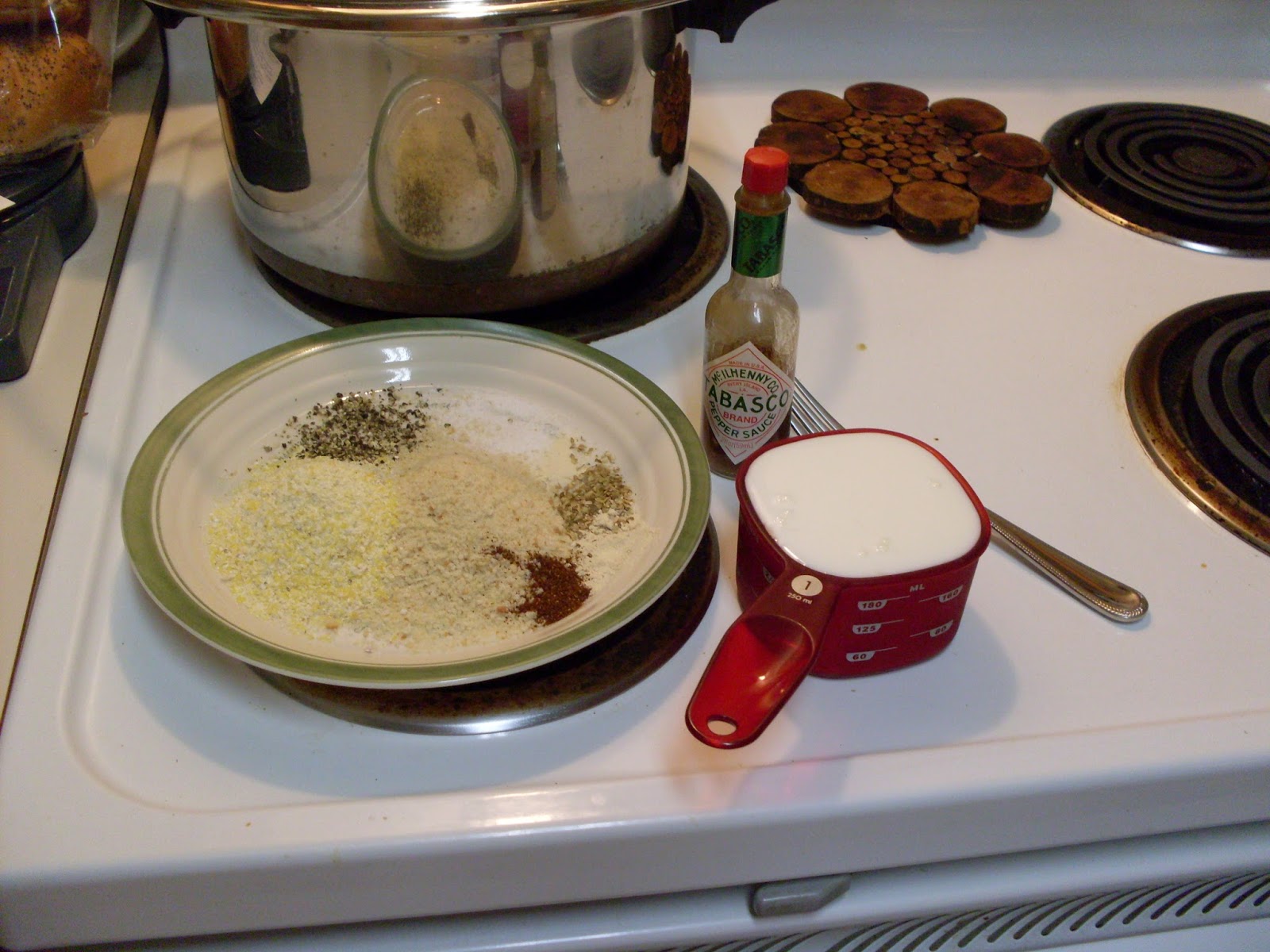
2 green(unripe red) tomatoes(Or however much you want depending on how many people you're making it for.)
Equal parts unseasoned breadcrumbs and cornmeal(Sorry, I didn't measure anything. Just use enough so that it looks like it'll coat all the tomatoes you have.)
Salt/Black pepper, to taste
1/2 tsp. each chili powder, garlic powder, oregano, and onion powder
1 cup buttermilk(I made mine homemade by pouring 1 Tbsp. white vinegar into a 1 cup measure and filling the rest of the cup with milk. Let it sit about five minutes before using.)
Tabasco, to taste
Butter/Canola oil/Bacon grease(You can use any of these or a combination of them. I made a batch for my parents with butter and canola oil, but mine I made with bacon grease and canola oil.)


Slice the tomatoes crosswise into 1/2" slices. On a plate large enough for dredging the tomatoes, combine the flour, cornmeal, and dried seasonings. Mix well. Pour the buttermilk into a bowl large enough to hold the tomato slices; you can do this in rounds if you need to. Add the Tabasco to the buttermilk and mix well. Soak the tomato slices for a few minutes in the buttermilk before dredging in the cornmeal mixture. Set the coated slices onto another plate and let sit for five minutes or so to let the coating adhere firmly to the tomatoes.

Heat the oil of your choice in a large frying pan over medium heat. When hot, add the tomato slices. You will have to be very gentle with these when they fry because the tomatoes are delicate and the coating is even more delicate. It will fall off very easily if you are not careful. When they are deep brown, remove them from heat and gently dab at them with a paper towel to absorb the excess oil.

You can eat these plain or with a sauce of your choice, but I made mine into a BLT. Well, a BT, because I didn't use lettuce. I bought some lovely poppyseed kaiser rolls, sliced one in half, and toasted it in the oven. I fried up thick-cut bacon and used some of the leftover grease from it to fry the tomatoes while the bacon rested and the roll toasted. Mayonnaise on the roll, then tomato slices, then the bacon, and it was fantastic!! It was just out of this world! I also tried a couple of the tomato slices plain to know what the texture and flavor of it was just on its own. I can see why this has become such a popular dish because it was just ridiculously delicious.

Peach Hand Pies:
Peach pie is another dish synonymous with the South and I felt they paired well with tomatoes. Both are in the height of their season this time of year. It's the perfect summertime dessert. I have done peach pie for this blog before, but this was different because they were individual-sized. I had a recipe card for it and I based mine off of it. I made a few changes based on my tastes. The recipe was for 16 servings, but I only bought enough dough for half, so I only made half. Now I have too much peach filling leftover and I'm not sure what to use it for. I will write out the recipe based on eight servings so you don't accidentally buy too many ingredients.

1/2 Tbsp. butter
2 tsp. cornstarch
3 Tbsp. sugar(I substituted unsweetened applesauce and it worked just fine.) + 1/2 Tbsp sugar(I actually did use this.)
1 lb. ripe peaches, unpeeled, pitted, and cut into 3/4" pieces
Pinch salt
1/2 Tbsp. lemon juice
1 pkg.(15oz) refrigerated unbaked pie crusts (The kind you unroll yourself, not the ones in a pie tin)
1/2 Tbsp. milk

1.) In nonstick 12" skillet, melt butter over medium heat. In cup, mix cornstarch with 3 Tbsp. sugar. Stir peaches, sugar mixture, and salt into butter in skillet. (If you use applesauce like I did, don't mix that with the cornstarch first, just add all of the ingredients to the skillet and stir well to mix.) Cook 25 minutes or until peaches are very soft and mixture thickens and boils, stirring frequently. Boil 1 minute. Remove skillet from heat; stir in lemon juice. Cool completely. (Mixture can be made up to 1 day ahead and refrigerated until ready to use.)

2.) Preheat oven to 425 degrees. Let pie crusts stand as label directs.
3.) On work surface, unfold 1 dough round; cut into quarters. Spoon 2 Tablespoons of filling in strip down center of each quarter, leaving about 3/4" dough uncovered at each end. Fold dough over filling. With fork, press edges together to seal. Transfer pies to ungreased cookie sheet. Repeat with remaining dough and filling. (You will need two cookie sheets for them.)
4.) Brush tops of pies with milk; sprinkle with remaining sugar. With knife, cut 1" slit in top of each pie to allow steam to escape during baking.
5.) Place cookie sheets on two oven racks. Bake 18-20 minutes or until golden brown, rotating cookie sheets between upper and lower oven racks halfway through baking. Transfer pies to wire racks to cool.
Makes 8 pies

This was one of the best meals I've had in a while. Tomatoes and peaches really do go well together. Both are fruits, and sweet. They evoke images of the South and summertime. I highly recommend both of these. You will not be disappointed. I promise!

Sources:
City Info

City Map

City Pic

City History

Fried Green Tomatoes History

Sunday, April 26, 2015

Dining-In: A Culinary Tour of America-De Smet, South Dakota


The Location: De Smet, South Dakota


The picture isn't much to look at, I'll admit, but I picked this town for a reason. A very good one, to me, at least. This town is on my "bucket list" of places to see. If you don't know off the top of your head why, I'll explain...

As of the 2010 census, the population of De Smet was 1,089 people. 98.8% of them are white, and 0.6% are Native American. The unemployment rate is 1.1%, with an average income of $26,042.

Dakota was made a territory in 1868. It is the subject of a song featured in the 1960's Disney movie, The One and Only Original Family Band. If you haven't seen this movie before, you should. It's fun. Watch it around Election Day...


This song was actually in the running to be named the official state song for South Dakota. It's quite lovely, I think. 

De Smet was "platted", the step prior to incorporation, in 1880. It was named after Father Pierre De Smet, a Jesuit missionary who worked with Native Americans during his career. The first train came through the town in 1880.

You're probably saying to yourself, wow, there's really not much to this town, why ever did you choose it? Well...now we come to the reason I chose it. Those of you familiar with the works may already know the name, but in case you are not, I will tell you. De Smet was the home of Laura Ingalls Wilder. She came with her family in 1879 at the age of 12 and would end up living there for the rest of her life. Three of her books: The Long Winter, Little Town on the Prairie, and These Happy Golden Years, all take place in De Smet. And a fourth book, By the Shores of Silver Lake, takes place nearby. Laura met and married her husband Almanzo Wilder there, and her daughter, Rose Wilder Lane, a famous writer and journalist in her own right, was born and raised there. The town has many tourist attractions you can visit, including the farms and houses they lived in. I have always wanted to visit this town because I am a life-long fan of the Little House books, and the tv show. Some day I will visit here.

The Food: Sour Cream Peach Kuchen

Kuchen is the official state food of South Dakota, and for good reason. It's quite fantastic. It's also because there are a lot of German immigrants to the state and this is a German dessert. One of the best gifts immigrants to our country bring to us, is their food. That is one thing I am learning more and more with each week of this project. Some people might feel threatened by immigrants, but I think we can all agree that we all eat better by having them here.

This dish is dedicated to my co-worker Tanya, who recommended I look into it. I'm glad I did because it is amazing! It turns out I have several recipes in my collection, but I've never made any of them before. They all had ingredients that were out of season, but one of them had an economical alternative, so I chose that one. Peaches are not in season yet, and frozen cost so much money for the amount I needed that I turned to canned peaches. Yes, I used peaches from a can, and I lived to tell the tale. I try to avoid corn syrup as much as possible, so the idea of using peaches that are soaking in it was gross to me, but I rinsed them off very carefully and I think it kept the corn syrup to a minimum. The recipe is from the Taste of Home magazine, February/March 2001 edition. I will write it out as it was originally written, but add my own changes to it in parenthesis.

Sour Cream Peach Kuchen

Ingredients:

3 cups flour
1 1/4 cups sugar, divided (I used 1/4 cup sugar and 1 cup of unsweetened applesauce instead)
1/2 tsp. baking powder
1/4 tsp. salt
1 cup cold butter
2 cans (29 oz. each) sliced peaches, drained or 13 small fresh peaches, peeled and sliced
1 tsp. cinnamon
Topping:
4 egg yolks
2 cups (16oz) sour cream
2-3 Tbsp. sugar (I used 1 Tbsp.)
1/4 tsp. cinnamon

In a bowl, combine the flour, 1/4 cup sugar, baking powder and salt; cut in butter until mixture resembles coarse crumbs. Press into the bottom and one inch up the sides of a greased 13"x9"x2" baking dish.


Arrange peaches over crust. Combine cinnamon and remaining sugar(This is where I used the applesauce); sprinkle over peaches. (I mixed them in a bowl with the applesauce and cinnamon to make sure it was all very well combined and then poured them over the crust.) Bake at 400 degrees for 15 minutes.


Meanwhile, in a bowl, combine egg yolks and sour cream. Spread evenly over the peaches. Combine sugar and cinnamon; sprinkle over the top.


Bake 30-35 minutes longer or until golden. Serve warm or cold. Store leftovers in the refrigerator. Yield: 12 servings


This was good warm last night but it was even better this morning cold. The crust is basically a shortbread. When you make it you will think you're doing something wrong because you're adding no liquid to it. But this isn't a pastry, so resist that instinct to add liquid and stick to the recipe. The peaches will add some moisture to it and the butter will melt into it to hold it all together. The sour cream/egg yolk topping is new to me but quite a revelation. It has a cheesecake quality to it but without using cream cheese. This is a wonderful surprise to somebody who is lactose intolerant. I can eat certain brands of sour cream without issue, but cream cheese I can only eat one particular brand that is very expensive, which means that cheesecake is no longer possible for me. This was a very fun treat.

This was the first time I have made something that turned out exactly as the picture looked. I was excited to see that it was just like it should be. I have at least two other kuchen recipes and I might have to try them out this summer when stone fruits are in season.

I would say this recipe was pretty easy to make. Somebody who doesn't have a lot of baking experience will be able to make it without much trouble. I would recommend everybody try this sometime. You won't regret it! The most dangerous part of it all, though, is that I am off work this week so I have nobody to eat all the leftovers except myself...And let's be honest, I'm probably going to eat it all!

Sources:

Map

City Pic

Economic Info

City Info

Kuchen Info