Showing posts with label german. Show all posts

Sunday, June 2, 2019

What's in Grandma's Recipe Tin?-Wiener Schnitzel


My original plan was to make this meal last weekend, Memorial Day weekend, when I was going to Leavenworth on Saturday, but I had misplaced the recipe and couldn't find it, and was just too lazy to deal with it all, so I scrapped it till this weekend. I chose this wiener schnitzel recipe because Leavenworth is a Bavarian-style town, and I like German food, so it was a perfect connection. While there, I picked up a package of spaetzle to try, because I've never had it before and it's the quintessential German side dish. Neither disappointed.

The recipe is from a newspaper clipping from an unknown year, from one of the Seattle newspapers, because I can see Seattle-related things advertised on the other side of the clipping, but no date or year listed anywhere. It does say the recipe is a reprint from the San Francisco Chronicle originally. I'll type it out because it's larger than the last recipe and won't show up very well in a photograph.

Wiener Schnitzel
Serves: 4
Prep Time: 15 minutes
Cook Time: 15 minutes

4 pork cutlets, each about 1/2" thick or slightly less (about 1 1/2 lbs.)
1/2 cup milk
2 eggs, slightly beaten

1 1/2 cups panko or homemade breadcrumbs (see note)
2 Tbsp. butter, plus more as needed
1 1/2 tsp. sea salt or kosher salt
1 tsp. freshly ground black pepper
2 lemons, halved

Preheat oven to 225 degrees and place a serving platter in the oven.

Pound the cutlets until they measure roughly 7" by 10" and are very thin, about 1/8" thick. It takes about 4 minutes per cutlet to accomplish this. The cutlets can be pounded the day before and wrapped in plastic wrap until ready to cook, if desired.

Pour the milk in a shallow bowl, and put the beaten egg in another. Sprinkle the panko or breadcrumbs on a sheet of aluminum foil.

In a large frying pan, melt the butter over medium-high heat. While it is melting, dip one cutlet into the milk, then the egg, and then lay it in the panko or breadcrumbs, then turn and coat the other side. Sprinkle with a little salt and pepper. When the butter foams, put the breaded cutlet into the hot butter. If the pan is large enough, repeat with a second cutlet.

When the crust is golden brown, about two minutes, turn and repeat on the other side, 1-2 minutes. Remove and place on the warm platter in the oven. Repeat, adding more butter as needed, until all are done.

Serve hot, along with half a lemon.

Note: To make homemade breadcrumbs: Simply put dried baguette or other artisan bread in a blender or food processor and chop or process to medium light crumbs.

I started off with two thin-sliced pork chops. Basically one pork chop, cut down the middle. The recipe doesn't say exactly what kind of cut of meat to use, which would have been helpful, so I just went with these, because they were already thinner, and affordable.
And as you can tell, I don't always follow directions as they are written. This is usually because I don't actually really read them until just before cooking, and then I generally wing-it as I go, as long as I got the ingredients right, which I also sometimes don't follow either, cuz what's the fun of following the rules? I mixed the egg and the milk together, like you would for dipping bread for French toast, and you know what? It turned out just fine. Don't bother dirtying up a third plate for the breading process, it's totally ok to mix the egg and milk.
Here is the finished result! I used panko, and half of it falls off, so don't freak out if that happens to you too. Enough will stay on to be delicious and coat it all. And as you can tell, it's not nearly as thin as the recipe says it should be. This is because I spent forever pounding them with a meat mallet and that's as thin as they got. I got worried my apartment neighbors would start to get upset if I kept at it, so I just stopped. Again, if it had said what cut of meat to use, it would have helped because some work better than others for this, and clearly the pork chops I had weren't the right cut. It's ok if yours don't get as thin as they should either, just know that you'll need to cook them longer, but it'll all work out fine in the end. Don't panic.
Here they go in the melted butter. The butter immediately sucked up into the breadcrumbs and I had to keep adding more and more that I finally switched to oil because I was tired of using so much butter. It still needed way more than it called for, so be prepared emotionally to be consuming so much butter and oil in one dish, but sometimes you gotta do what you gotta do, you know? Just work out a few extra minutes the next day and you'll be all good.
Here's the first flip. It does take a few times on each side to get it really browned. Be careful with the tongs because the breading is delicate and will scrape off if you press too hard with them. And make sure to take extra care to fry the edges too, because they won't brown on their own if you don't. If they were thinner, they'd cook faster and probably cook the sides better too. But, just adapt to what you ended up with and it'll be fine!
Here's the spaetzle I bought in a German cheese shop in Leavenworth. It was expensive, but worth it. It's an imported item and you're supporting a small, independent store, so I had no problem shelling out some extra money on it. I just followed the directions on the package exactly, which are thankfully in English, and it turned out great. I know sometimes people fry these in butter after they're cooked, and I'd definitely eat it that way. It would just make it that much more awesome. It's a good alternative from other, more common forms of side dishes, and a must for German entrees!
Here's the final result! Nicely browned, crispy breading which you must put lemon juice on, it just takes the flavor up to a whole other level of deliciousness! This didn't go exactly as the recipe said it would, but it still turned out great. That's the important lesson to be learned with cooking. Don't be intimidated by the instructions. If one way doesn't work for you, find another way!

If you like German food, or want to explore German cuisine more, this is a great starter recipe. It's pretty basic, and quick and easy. I think you'll all enjoy this one! Happy Cooking!


Sunday, October 18, 2015

Dining-In: A Culinary Tour of America-Sheboygan, Wisconsin

 
The Location: Sheboygan, Wisconsin
2013 population: 48,725; 76.8% white, 10.1% Hispanic. Per capita income, $21,294.

Sheboygan was founded in 1846, though people had been coming to the area since the 1830's. Prior to American colonization, the region had been home to the Chippewa, Winnebago, Menominee, Ottawa, and Pottawatomie tribes. Sheboyan is thought to be a Chippewa word, referring to the passageway between the lakes, that was mangled over the years.

After the city of Sheboygan was founded, it became home to a large German immigrant population, though many Irish and Dutch immigrants settled there as well. During the 1970's, the city welcomed a large group of Hmong, or Laotian refugees, who relocated there.

Interesting Factoid: The United States's first Socialist party officeholders were Fred C. Haack and August L. Mohr. They were elected as Aldermen for the city of Sheboygan in 1898.

Another Interesting Factoid: Sheboygan is home to an annual bratwurst festival. This is appropriate given what I made for the meal...

Why Sheboygan? You are probably asking me this right about now. Well, for one, it's a fun word to say. But the real reason is that it was mentioned in one of my all-time favorite movies, and I'd never heard of it before then. It was a fun part of the movie, so I always associate the city with it.

Polka King of the Midwest Here is a link to the clip from the movie.(This blog program only lets me upload stuff from Youtube and this is not from there, hence the link only instead of the cool inserted video...!) If you cannot think of the movie based on what I named the link, I'll tell you what it is. It's from Home Alone. John Candy plays Gus Polinski, the "Polka King of the Midwest" and he and his band were very popular in Sheboygan. Do check it out if it's been a while since you've seen the movie.

I feel like I may have found my true home in the state of Wisconsin. Cheese, and German food. I mean, do you really need anything else? For those of you who drink, there is also copious amounts of beer to be had. I made a total of four recipes for this week's blog, and they all turned out to be pretty awesome. Cheese and German food is a heavenly combination. I chose to do this in October so I could count this as my Oktoberfest celebration. Wisconsin is the perfect state to feature for Oktoberfest. It did not disappoint.

The Food: Midwestern Oktoberfest


All of my recipes came from the internet, so I will post all the links in my sources section at the end of this post.

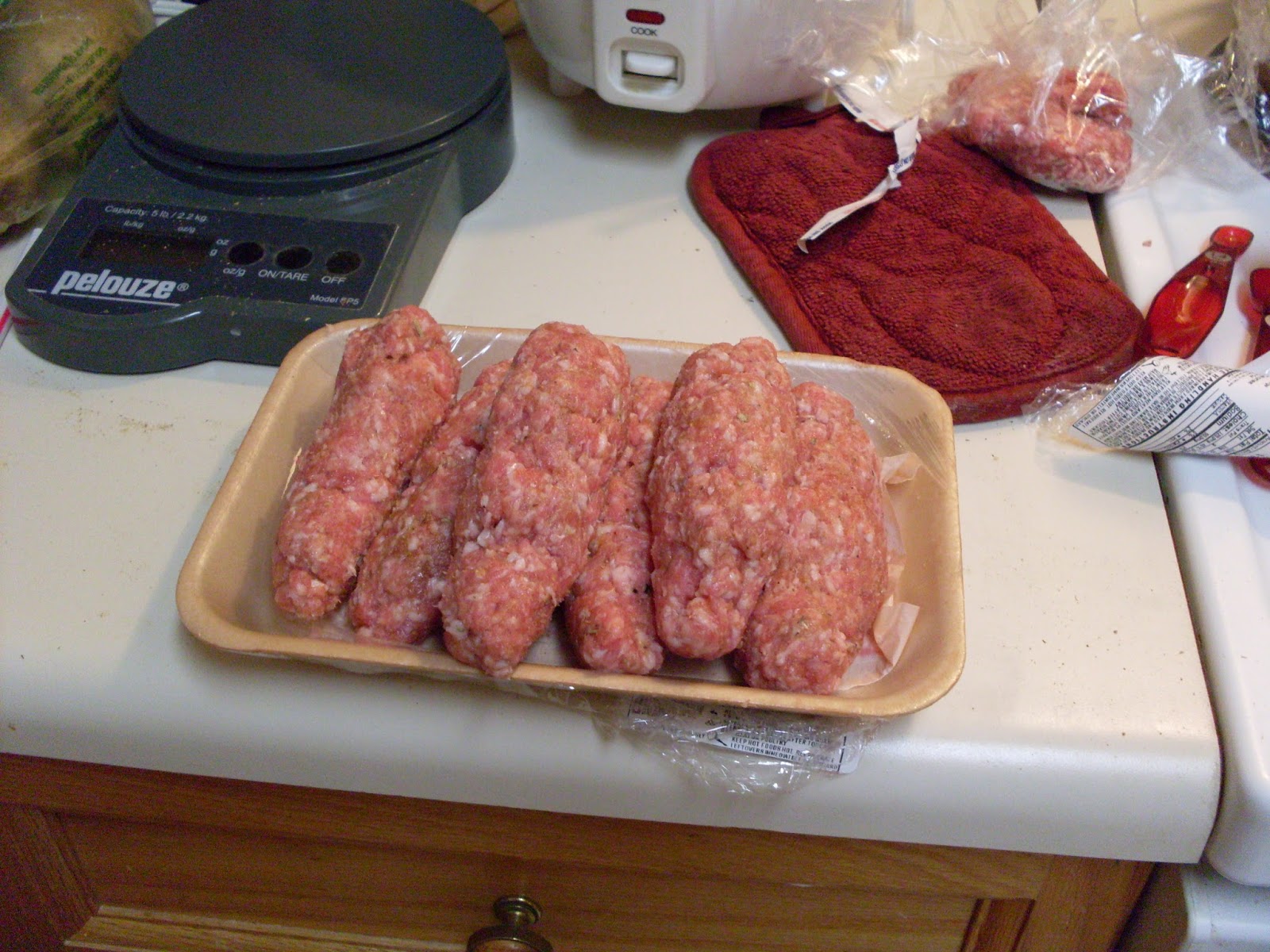
First up was bratwurst, which was to be the focal point of the meal. Now, there are some lovely bratwursts you can buy already made at the grocery store. The two recipes I made featuring bratwurst, call for commercially-prepared brats. But, I wanted to do something special. Anybody can buy brats, but not many can say they've made them by hand. Well, I am now one of the proud few, who can! I made homemade bratwursts a few weeks ago when I made the breakfast sausage to feature with my Johnny cakes for Rhode Island. I bought extra ground pork, made them, and froze them until yesterday. I didn't put them in casings because I don't have the equipment to do so, and also because buying an entire package of casings when you only need a few is wasteful and impractical. I shaped them into sausage shapes, and wrapped them in plastic wrap, then in foil. They held their shape very well.

Here is the ingredient list copied from the original site, but with my own instructions:

Bratwurst
5 lbs. ground pork, fine grind
4 tsp. sugar
1 Tbsp. ground coriander
1 Tbsp. ground sage
1 tsp. paprika
1 tsp. cayenne pepper
2 tsp. dried rosemary
1 Tbsp. dry mustard
1 tsp. pepper
1 tsp. nutmeg
5 tsp. salt

This is for 5 pounds of sausage. I cut it down to a fourth of the recipe, which made the seasonings easy to divide. So, 1.25lb. ground sausage and the adjusted seasonings. You can do this for however much you want. If you're a huge bratwurst fan and would like to keep them in your freezer for whenever you want them, make it all, or do it by half.
 Basically, place everything in a large bowl and mix really, really well. Then divide them up in the size you want, I went with about 3.5 ounces per sausage, and roll them into a log shape. Wrap each one individually in plastic wrap and foil, then freeze until ready to use. The flavor really is just like a commercially-prepared brat. The only difference, is it's not in a casing so you have to be a little more delicate with them. I think these would grill ok, but you can't really boil them in beer or anything that would require immersing it in liquid. You could attempt keeping it in the foil as you boil them, after removing the plastic and see if they keep their shape, but that would probably keep it from absorbing any flavor of the liquid. If you are a major eater of brats, you might go ahead and invest in the casings and equipment for stuffing them, but you'd have to figure that out on your own!
Now that I had my brats, what was I going to do with them? I've done brats and sauerkraut several times in my life. I love it, but it's not new. I want to feature things that are new to me on this blog, so I had to expand my repertoire of brat cookery. After researching more of the cuisine of Wisconsin, I came up with two soup recipes that would work really well. Since I couldn't decide which to do, I made both! Well, half recipes of both. The recipes called for more brats than I had, but I made it work and I don't think I missed the extra meat.

The first recipe was a brat and cheddar soup. Here is the recipe:
Brats and Beer Cheddar Chowder 
2 tablespoons butter or margarine 
1 medium onion, finely chopped 
1 medium carrot, coarsely shredded 
3 large shallots, chopped  (I actually forgot to get these at the store and think the soup would have been even better with them. Don't leave these out like I did!)
1 14 - ounce can vegetable broth or 1-3/4 cups vegetable stock (I used chicken stock. This isn't a vegetarian dish, why not use something with more flavor? Sorry veggie stock lovers...)
1/3 cup all-purpose flour 
1 cup whole milk, half-and-half or light cream (I used 2% milk and it was just fine)
1 teaspoon caraway seeds, crushed 
1/4 teaspoon ground black pepper 
10 ounces Wisconsin Aged Cheddar cheese or sharp cheddar cheese, shredded (I don't know if my cheese actually came from Wisconsin or not, but I pretended it did...)
4 cooked smoked bratwurst, knockwurst or Polish sausage (about 12 ounces total), halved lengthwise and sliced (I precooked my brats and just threw them in when it's called for.)
1 (12 oz.) can beer or 12-ounce bottle ale

In a large saucepan, heat the butter over medium heat. Add onion, carrot and shallots; reduce heat to medium low. Cook, stirring frequently, about 10 to 15 minutes or until the onion is very soft and golden. 
 
In a large screw-top jar, combine broth and flour. Cover and shake until combined and smooth. (I just used a bowl and a fork for this. I didn't have a screw-top jar on hand to use for this. You definitely have to stop and stir a few times to make sure the flour on the bottom and sides get properly incorporated, but it works just as well.) Stir into the onion mixture. Add the milk, caraway seeds and black pepper. Cook over medium heat, stirring frequently, about 5 minutes or until the mixture thickens. Gradually stir in the cheese; reduce heat to low. Cook, stirring frequently, until cheese melts, but do not boil. Stir in the bratwurst and beer. Cook, stirring frequently, until heated through. If you like, serve with rye bread. 
 
Makes 4 to 6 main-dish servings (7 cups).
 
This has a lovely, orange color, probably from the carrots because it was orange before I added the cheese. It has a strong beer flavor which blends well with the cheese. I did add some salt and pepper, but not much. I think I definitely missed the shallots. They tend to be slightly sweet, which would have balanced the bitterness of the beer more. This had a great texture, definitely lives up to the name "chowder".
 
The second soup recipe's formatting is such that I can't copy and paste it here. I will share the link in the sources section and you can get it from there. This one was brats, potatoes, and cabbage soup with Swiss cheese. The recipe calls for water and I found that it wasn't enough liquid. Before the step that calls for adding milk, I added 2 cups of chicken stock to the pot as well and that seemed to be just perfect for the amount of soup. I made a half recipe, though, so you might need up to 4 cups if you make a whole batch. I also added salt and pepper to this one, but not much. The Swiss cheese is a very subtle flavor, but it was delicious! I was very impressed with this one.
 
Neither soup was difficult to make, but it was a bit challenging to make two simultaneously. It was fun though! Both took about the same amount of prep and cooking time, so it was a good pairing. I would make both of these again.
 
To accompany the soups, I needed bread. And I found the greatest recipe ever. Again, the formatting is such that I can't copy and paste, but I'll provide the link. The concept is basically, savory monkey bread. For those of you who are unfamiliar with monkey bread, it's bread dough cut into small pieces that are then dipped in melted butter and rolled in a sugar-cinnamon mix. It's placed in a Bundt pan and baked until cooked through. This recipe was exactly that, but with cheese. My sister had a bag of Parker house rolls that she was not going to use because she hadn't realized at the time she bought it that it was the actual dough and not rolls. So I bought it off of her, thawed them out, and used it for this recipe. Each dough piece was rolled in melted butter, then in fresh, shredded Parmesan cheese. After filling the well-greased Bundt pan with half the bread, you put in a layer of shredded Provolone cheese. Then repeat with the rest of the dough, butter, Parmesan and Provolone. Let it rise in a warm place for an hour before baking at 375 degrees. Since my bread package only had 24 instead of 36 rolls like the recipe calls for, I cut the time down to 30 minutes and ended up baking for about 33 minutes total, but keep an eye out for it because it does get very browned on top. 
OMG, this is the greatest thing I have ever tasted. It's definitely going to end up in my top ten list of recipes I made for this project. It sticks to the bottom of the pan, so you really do want to make sure it's super well greased.
They don't really pull out of the pan, you have to cut them out, but then the two layers do pull apart from one another. I have never had Provolone and Parmesan together, but they work really well. Provolone melts really well, but is softer than the Parmesan, which tends to melt and get a bit hard and crunchy. I am going to try reheating these tonight with my leftover soup. It will definitely need to go in the oven rather than the microwave. That cheese won't work in the microwave.
Here is the meal in all of its glory. The cabbage and potato soup is in the back and the cheddar beer soup is in the front. The only thing I added after this picture, was a dill pickle, which I thought was perfect for the flavors of the night. I actually sat with both bowls in front of me and ate them simultaneously. I had one spoon in each hand and it was ridiculous. And also awesome. It's the perfect time of year for these recipes. They'd be way too heavy for spring or summer. If you like brats and cheese, you absolutely have to make these! You will not regret it!

Sources:
City History

County History

City Stats

City Map

City Pic

Bratwurst Recipe

Bratwurst, Beer, Cheddar Chowder Recipe

Bratwurst, Potato, Cabbage Soup Recipe

Wisconsin Cheese Pull-Apart Bread (Note: The picture on the recipe does not match the recipe, my photos are the accurate depiction of what this will look like when you make it.)


Sunday, April 26, 2015

Dining-In: A Culinary Tour of America-De Smet, South Dakota


The Location: De Smet, South Dakota


The picture isn't much to look at, I'll admit, but I picked this town for a reason. A very good one, to me, at least. This town is on my "bucket list" of places to see. If you don't know off the top of your head why, I'll explain...

As of the 2010 census, the population of De Smet was 1,089 people. 98.8% of them are white, and 0.6% are Native American. The unemployment rate is 1.1%, with an average income of $26,042.

Dakota was made a territory in 1868. It is the subject of a song featured in the 1960's Disney movie, The One and Only Original Family Band. If you haven't seen this movie before, you should. It's fun. Watch it around Election Day...


This song was actually in the running to be named the official state song for South Dakota. It's quite lovely, I think. 

De Smet was "platted", the step prior to incorporation, in 1880. It was named after Father Pierre De Smet, a Jesuit missionary who worked with Native Americans during his career. The first train came through the town in 1880.

You're probably saying to yourself, wow, there's really not much to this town, why ever did you choose it? Well...now we come to the reason I chose it. Those of you familiar with the works may already know the name, but in case you are not, I will tell you. De Smet was the home of Laura Ingalls Wilder. She came with her family in 1879 at the age of 12 and would end up living there for the rest of her life. Three of her books: The Long Winter, Little Town on the Prairie, and These Happy Golden Years, all take place in De Smet. And a fourth book, By the Shores of Silver Lake, takes place nearby. Laura met and married her husband Almanzo Wilder there, and her daughter, Rose Wilder Lane, a famous writer and journalist in her own right, was born and raised there. The town has many tourist attractions you can visit, including the farms and houses they lived in. I have always wanted to visit this town because I am a life-long fan of the Little House books, and the tv show. Some day I will visit here.

The Food: Sour Cream Peach Kuchen

Kuchen is the official state food of South Dakota, and for good reason. It's quite fantastic. It's also because there are a lot of German immigrants to the state and this is a German dessert. One of the best gifts immigrants to our country bring to us, is their food. That is one thing I am learning more and more with each week of this project. Some people might feel threatened by immigrants, but I think we can all agree that we all eat better by having them here.

This dish is dedicated to my co-worker Tanya, who recommended I look into it. I'm glad I did because it is amazing! It turns out I have several recipes in my collection, but I've never made any of them before. They all had ingredients that were out of season, but one of them had an economical alternative, so I chose that one. Peaches are not in season yet, and frozen cost so much money for the amount I needed that I turned to canned peaches. Yes, I used peaches from a can, and I lived to tell the tale. I try to avoid corn syrup as much as possible, so the idea of using peaches that are soaking in it was gross to me, but I rinsed them off very carefully and I think it kept the corn syrup to a minimum. The recipe is from the Taste of Home magazine, February/March 2001 edition. I will write it out as it was originally written, but add my own changes to it in parenthesis.

Sour Cream Peach Kuchen

Ingredients:

3 cups flour
1 1/4 cups sugar, divided (I used 1/4 cup sugar and 1 cup of unsweetened applesauce instead)
1/2 tsp. baking powder
1/4 tsp. salt
1 cup cold butter
2 cans (29 oz. each) sliced peaches, drained or 13 small fresh peaches, peeled and sliced
1 tsp. cinnamon
Topping:
4 egg yolks
2 cups (16oz) sour cream
2-3 Tbsp. sugar (I used 1 Tbsp.)
1/4 tsp. cinnamon

In a bowl, combine the flour, 1/4 cup sugar, baking powder and salt; cut in butter until mixture resembles coarse crumbs. Press into the bottom and one inch up the sides of a greased 13"x9"x2" baking dish.


Arrange peaches over crust. Combine cinnamon and remaining sugar(This is where I used the applesauce); sprinkle over peaches. (I mixed them in a bowl with the applesauce and cinnamon to make sure it was all very well combined and then poured them over the crust.) Bake at 400 degrees for 15 minutes.


Meanwhile, in a bowl, combine egg yolks and sour cream. Spread evenly over the peaches. Combine sugar and cinnamon; sprinkle over the top.


Bake 30-35 minutes longer or until golden. Serve warm or cold. Store leftovers in the refrigerator. Yield: 12 servings


This was good warm last night but it was even better this morning cold. The crust is basically a shortbread. When you make it you will think you're doing something wrong because you're adding no liquid to it. But this isn't a pastry, so resist that instinct to add liquid and stick to the recipe. The peaches will add some moisture to it and the butter will melt into it to hold it all together. The sour cream/egg yolk topping is new to me but quite a revelation. It has a cheesecake quality to it but without using cream cheese. This is a wonderful surprise to somebody who is lactose intolerant. I can eat certain brands of sour cream without issue, but cream cheese I can only eat one particular brand that is very expensive, which means that cheesecake is no longer possible for me. This was a very fun treat.

This was the first time I have made something that turned out exactly as the picture looked. I was excited to see that it was just like it should be. I have at least two other kuchen recipes and I might have to try them out this summer when stone fruits are in season.

I would say this recipe was pretty easy to make. Somebody who doesn't have a lot of baking experience will be able to make it without much trouble. I would recommend everybody try this sometime. You won't regret it! The most dangerous part of it all, though, is that I am off work this week so I have nobody to eat all the leftovers except myself...And let's be honest, I'm probably going to eat it all!

Sources:

Map

City Pic

Economic Info

City Info

Kuchen Info


Sunday, February 15, 2015

Dining In-A Culinary Tour of America: Valentine, Nebraska

The City: Valentine, Nebraska, aka, "America's Heart City"
According to the 2010 census, the population of this town is 2,737. Of this total, 86.3% is white and 9.1% is Native American. As of the 2000 census, the per capita income was $22.715, and 6.4% live below the poverty line.

Valentine, just north of the Niobrara River, was founded in 1883 when the Sioux City and Pacific Railroad came through that part of the country. As we saw last week in Pocatello, Idaho, railroads were a big factor in when and where cities in this country were established.

The city was named after Congressman E.K. Valentine, who won an election just prior to the city's founding. During its first few years, the population tripled, which brought with it a huge increase in violent crime. Eventually, a "no guns in the saloons" policy was enforced, and helped to curb violent crime.

Fun Fact: Valentine participates in a mail rerouting program. During the time before Valentine's day, mail is rerouted through the city's post office, where it is given a special Valentine postmark as well as a Valentine's day message stamp.

The Dish: Runza
I had never heard of this food before I started looking around for cities that I could associate with Valentine's Day. When I ran across Valentine, Nebraska and started researching foods of Nebraska, this word popped up over and over again. Runzas are apparently so popular in Nebraska that there is even a chain of fast food restaurants name after it. When I looked it up I got really excited because of its history and knew I had to do it. Runza, also known as bierock, fleischkuche, or Kraut Pirok, is a meat and cabbage-filled bread dough that hails from the same German colony in Russia that my great grandfather and his family were from.

Almost every culture has a dish like this. Think of pierogies of Poland, humbow from China, or pasties from Britain. Samosas and empanadas are other examples. A dish that is small enough to be held in your hand, has a hearty filling, but with a casing that keeps it from making a total mess when you eat is important. You can make them ahead of time and take them to work or school and eat them on the go if need be. I was very happy to see that my own heritage has its own contribution to this delicious and practical culinary tradition.

And now a bit of a tangent in which I wax poetic about Volga Germans and my own background. Back in the mid 1700's, Catherine the Great, who was German but had married into the Russian royal family, took over as Queen(apparently there was a whole thing and a deposition of her husband and a conspiracy to assassinate him and all sorts of drama) and invited Germans into the country to settle the vast prairie-like lands along the Volga river. They were given complete autonomy and did not have to pay taxes or serve in the military. They spoke their own language, established their own churches, and kept to themselves. My great grandfather was born in Saratov, Russia, which was in the middle of this area. When he was a very young child, the attitude in Russia was changing towards the Volga Germans. They were told they had to start paying taxes, serving in the military, and basically to completely assimilate with the greater Russian population. Many of the people, my family included, didn't want to do this, so they left. Many of them settled in the Midwestern states of the US, but my family want to Canada and settled in Calgary, Alberta. These areas in both the US and Canada have a similar environment to the land they had known in Russia. Not everybody left, however, and the majority of those who stayed behind would end up being rounded up during the Second World War and shipped off to Siberia, seeing as Germany was an enemy state to Russia. A lot of people died there, but those who survived ended up staying and there is still a large population of ethnically German Russians in Siberia today.

Ok, now that I am finished with that, I can get back to the actual dish. I found a few good recipes online and used those to base mine off of. I had planned to make the bread dough myself but I had a time crunch at the last minute and when I compared prices to buying a bag of bread flour versus buying those bags of frozen dough(I used Rhodes brand) and seeing it was pretty much the same price, decided to get the already made dough instead. I would like to do this again sometime and make the dough myself.

The filling was really simple. I switched out ground chicken for the ground beef and kept the seasonings exactly as it called for in the recipe. I used only fresh cabbage in mine but I can see how using sauerkraut or a mixture of both could be amazing. If you like sauerkraut, that is. Which I do. You could even add diced cooked potato in this too if you wanted, but then you'd be dangerously encroaching into pasty territory.
 After being filled and resting a second time. Just before putting them into the oven. I wasn't sure how big they'd get so I put them on two sheets.
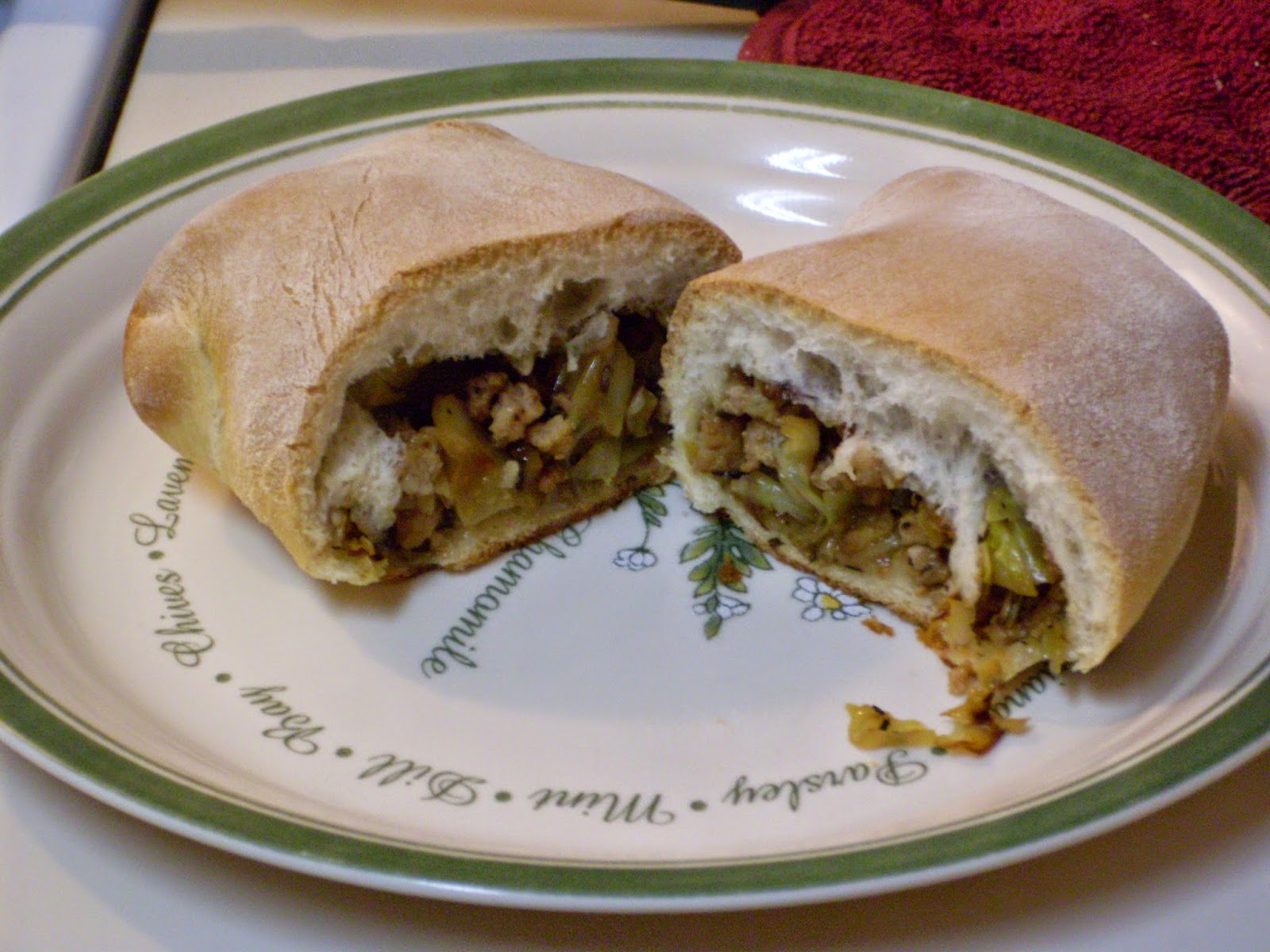
After coming out of the oven. I moved them all onto one sheet to rest for a few minutes before trying one.

I wasn't able to fit as much filling in them as I would have liked. The recipe said to divide the dough into 8 pieces and it's possible that if I'd made the dough myself it would have made enough to create bigger pieces, but it was still filling. The cabbage is slightly bitter which works well with the salty, savory flavors mixed with it. The dough was delish and held its own against the filling. There was no mess and it was really easy to eat. I am not going to write out the recipe since I largely used one I can link to, so I will post the link to it here.
These were amazing! I forgot to add the egg wash on the top like the recipe said to do. Obviously it looks different without it and it might have been a bit crunchier with it, but I didn't miss it, personally. I followed the bread package instructions for cooking temp and time and did 25 minutes. I think the full 30 would have been too much time.

The next time you have a hankering for German food but want to try something a little different, I would highly recommend this. It was pretty simple to make and really good. I was originally going to serve this with roasted potatoes with caraway seeds, but I just made soup instead. Two of these plus the soup was a perfect-sized meal.

Sources: Just a reminder that I am not posting anything from Wikipedia, just assume that I use that as the base of my research and it's easy enough to look it up there so I don't feel the need to post a link to it. I just post links to the other sources.

The Recipe

Runza History

Valentine City History

Map

City Picture