This week's recipe was a simple, yet very tasty, cornbread muffin. Wednesday, June 19th was Juneteenth, and I wanted to celebrate the holiday. Traditional foods for this holiday are picnic-style foods, as well as something red to drink. In addition to the muffins, I also whipped up a batch of my potato salad recipe. I was going to make a boxed variety of cornbread muffin but I was lucky enough to find the perfect recipe to try in my grandmother's recipe tin, so I made that instead. Everything turned out great!
This recipe is a clip-out recipe card from the Family Circle magazine, from June of 1966. It's a quick recipe, I whipped it up after work in the evening and I don't think it took much longer to make than a boxed variety would have taken to make.
Here's all the ingredients, minus the shortening that was melting on the stove. I always like these line-up shots!
First things first, all the dry ingredients are mixed in a bowl. I sifted the flour before measuring it, and then sifted it again with all the other dry ingredients before adding the cornmeal and whisking well.
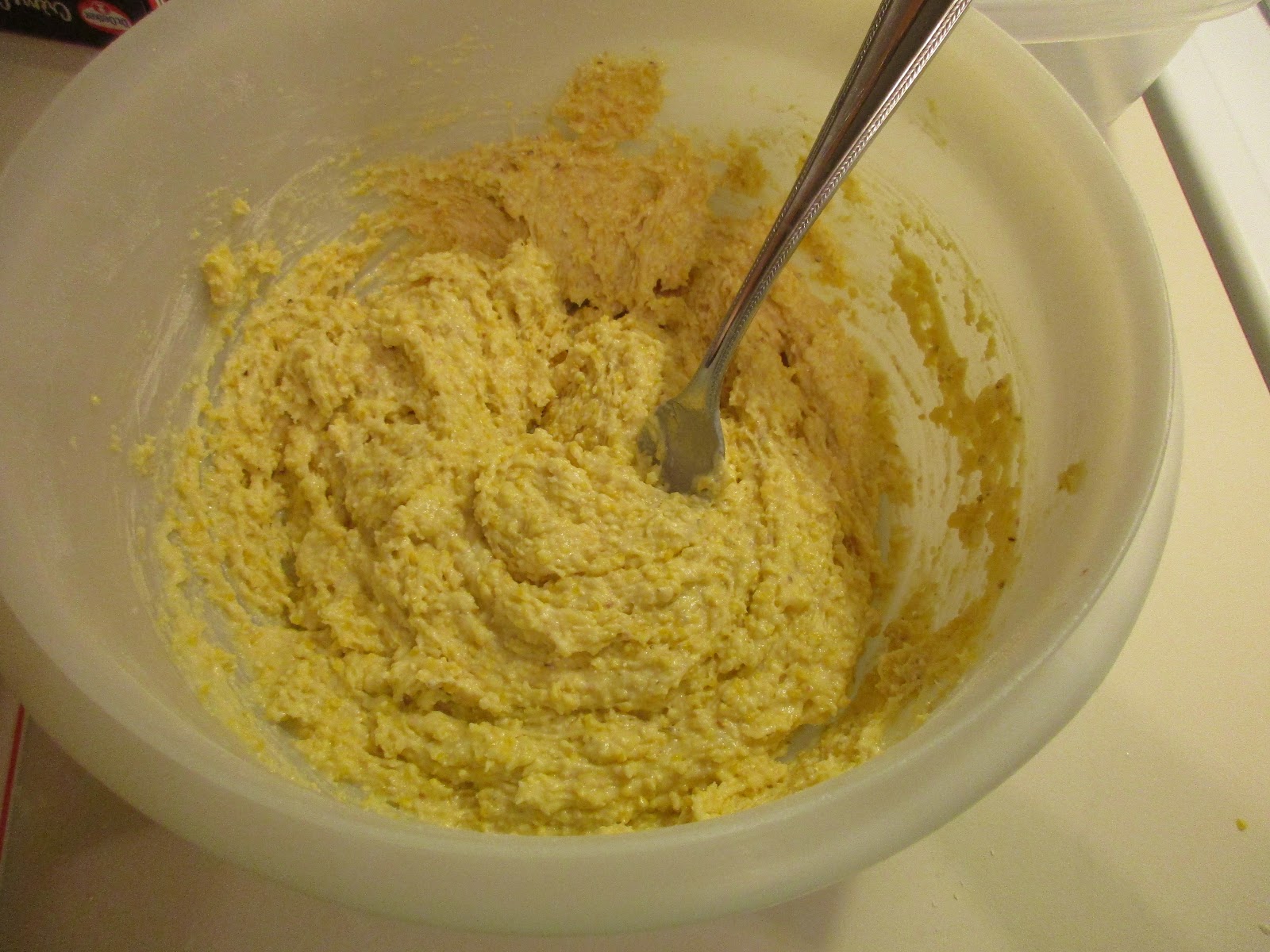
Here it is after you mix in the egg and buttermilk.
And here is the final product after you stir in the melted shortening. The difference is subtle, but you can see that it is a bit smoother than without it.
Here we go into the muffin tin! The bottom and sides did want to stick to the paper liners a bit, so you might consider spraying the liners with cooking spray just to help combat that.
And out of the oven, exactly the 20 minutes it calls for seemed to do the trick.
Here was my final dinner plate. I made the potato salad the night before, and bought the chicken from the deli that night. The red drink next to it is a store-bought frozen juice concentrate I got to help with my plantar fasciitis. What?-You're probably asking me right now. Yep. It turns out that rolling a frozen can of juice concentrate helps stretch and ice the muscles in your foot. And then you get to drink the juice afterwards. (My feet were clean and I had a towel over the can, don't worry!)
I ate the muffins with butter, and a glug of sorghum syrup to dip them in. The sorghum syrup was really tasty with it! I highly recommend this. The only thing to keep in mind with this recipe is that it doesn't not hold out over time. I tried them the next night and they were too dry to be edible. If you make this recipe, I recommend sharing it with others and eating it all the same day you make them.
So, there you have it! A really basic, simple cornbread muffin recipe that is a great starting place if you're not familiar with making them from scratch. It has just enough sugar to be slightly sweet, but not overly sweet like a lot of boxed varieties can be. This is a fast recipe, so don't worry about waiting till after work to make it. And for the most part, it's all ingredients people tend to have on-hand. All I had to buy was the buttermilk, which I never keep on-hand.
I encourage everybody to study up on Juneteenth, and try out this recipe next year to join in with the celebration! Happy eating and celebrating!
-Foodie
Showing posts with label sorghum syrup. Show all posts
Sunday, June 23, 2019
Sunday, January 21, 2018
Michael Twitty's Sorghum-Brined Chicken
This last week, I tried out one of the recipe's from Michael Twitty's, The Cooking Gene. Sorghum-Brined Chicken sounded very "exotic" to me, because sorghum is something completely unavailable in Seattle. A previous blog post tells the tale of how I recently came to be the proud owner of my own adorable pint of sorghum syrup and finally had the chance to taste it. When my local grocery store had a great sale on whole chickens, and I got one for under $5, I knew my time had finally come. Here's a link to the recipe. The recipe for kitchen pepper, that isn't included in the link, is available in his book. Here are some pictures of the cooking process. It was surprisingly not difficult to make, and had more hands-off time than hands-on time. This is a great way to roast a chicken if you don't have a lot of time to devote to chopping and mincing.
This is the kitchen pepper that I made. I didn't have all the ingredients, but was happy with the results anyway.
The brine is really simple, it's just salt, water, vegetable stock, and sorghum syrup. I used an oven roasting bag to put the brine and chicken in. I never use them in the oven, they're just lying around my kitchen, but I discovered that those bags are really great for brining. I highly recommend using one for this!
Post-brined chicken with the kitchen pepper covering all of it. Under the chicken is a layer of green cabbage leaves. Under the cabbage are two pieces of kitchen twine. You can kind of see them on three sides. You definitely need kitchen twine for this recipe, so if you don't have any on-hand, buy some at the store beforehand.
The chicken has been topped with another layer of cabbage leaves, and I have tied all the twine to hold everything together. The recipe calls for a Dutch oven, but I don't have one. I used a disposable roasting pan that I covered with foil, instead. It seems to have worked just fine.
This is the final result. I took the foil and top layer of cabbage off and let it sit in the oven for a while to brown on top more. Definitely test it with a thermometer to make sure it's at least 165 degrees. I think it had great color! The pepper blends well with the sweetness of the syrup and the salt from the brine. The cabbage cooks down and mixes with the flavors too. I made some garlic-flavored rice to eat with this and it was a perfect meal!
The next time you're looking for a new and simple way to roast a chicken, I recommend this recipe. If you can, try to find a chicken that doesn't have additional salt water added to it. This can be difficult to find because it's a cheap and easy way to make chicken stay moist while jacking up the price because it also makes the chicken weigh more than it really does. (Random capitalism-ruining-food rant.) I haven't checked lately, but in the past, Foster Farms chicken never added salt water to their chicken.
There are some other recipes in The Cooking Gene that I'd like to try some day. I'll make sure to write a report about them when I have a chance to make them! If anybody else out there has read or reads this book, I'd love to hear what you thought of it. If you try this recipe, let me know what you think of it! And if you do the Twitter thing, give Michael Twitty, aka, Kosher Soul, a follow. He's great!
Labels:
chicken,
michael twitty,
sorghum syrup,
southern food,
the cooking gene
Sunday, October 15, 2017
New Ingredient-Sorghum Syrup
I have finally finished reading Michael Twitty's book, The Cooking Gene, and in order to try out some of the recipes featured in the book, I had to get my hands on an ingredient that turns out is pretty much impossible to get your hands on in Seattle. I scoured every grocery store in my vicinity, and even made a special trip to Whole Paycheck Foods to look for it there, but with no luck. The only thing that could be done, was to order it online. I finally did, and it arrived last week in a super cute jug. I had no idea what it tasted like or how to use it, but I had a couple recipes to try and also have this handy guide called the internet to refer to for answers.
I had a roasted salmon recipe that calls for sorghum syrup, and decided to try it out last night. The recipe is from Cooking Light, and can be found here. The first thing I noticed when I opened the jug, was how sticky it is. It's super sticky. I'd say it's halfway between molasses and maple syrup in thickness. It got on everything, including things I swear I hadn't even touched. Be prepared to clean extensively when you're finished!
This is the salmon with the sorghum-mustard glaze on it, waiting to go into the oven. After a discussion on twitter last night, I would say that using tofu would be an excellent vegetarian option for this. Please note, that the recipe doesn't call for salt, so you might want to add some anyway, or make sure to season properly before eating. Especially if you end up using tofu. I didn't have lemon zest on-hand, so I just threw in some lemon juice instead. It worked fine.
Here is the post-roasted, post-broiled salmon. I probably could have broiled it longer, but the glaze on the pan was getting really burned and I was afraid of it smoking too much, so I took it out. You can see the edges are nice and browned.
This was really tasty! Sorghum is hard to describe. When you initially taste it, there's an explosion of flavor in your mouth. There's an almost tart/sour flavor up front, but it quickly dissipates into a round, sweetness. It's less harsh than molasses, which I'm not terribly fond of. It's not mapley like maple syrup or like sugar. It really is its own, unique flavor. I was impressed, and ended up keeping the extra glaze to use again on some more salmon.
I found some other recipes to try, a cookie recipe and a cake recipe to try. I am also going to try out some of the recipes from The Cooking Gene, so I'll try to update when I try them out.
If you live in a region where you can easily access sorghum syrup, take a moment to appreciate it! It might not be special to you, but it's not something everybody can easily access. And for those of you wondering about ordering it for yourself, go for it! A little goes a long way, so it will last you a long time and make the cost worthwhile.
Subscribe to:
Posts (Atom)