The Location: Galveston, Texas
2013 census: 48,733 people. Per capita income: $37,154. 45.2% white, 31.1% Hispanic.
The city was originally part of Mexico, and was named after Bernardo de Galvez y Madrid, the Count of Galvez in Spain. It was built in or around 1816 by a French pirate in order to help the newly-formed Republic of Mexico fight against the Spanish. The Port of Galveston was built in 1825 by the Congress of Mexico after winning their independence from Spain. During the Texas Revolution, it would be used by the Texas Navy and eventually became the capitol of the Republic of Texas. During the 19th century, it would become a vital port for commerce.
In 1900, a major hurricane came through the Port and an estimated 6,000-8,000 people were killed. It remains, to this date, the largest natural disaster in American history. After the hurricane, the Galveston Movement, an immigration plan to help repopulate the city and region, would bring in about 10,000 Jewish immigrants from Eastern Europe, as well as many Italians and Germans. It would permanently altar the racial background of the entire region.
During the 1920's and 1930's, tourism would become Galveston's major form of income, which remains so to this day. During Prohibition, Speak Easies and gambling houses would become a major draw to people. Add to this a robust sex industry that had been going on since the Civil War, and it was a winning combination. Since the 1950's, however, the tourism has become much more family-friendly...
During the Second World War, the Port would become home to a major Army-Air Corps base, which would also bring with it an increase in population and change the type of industries in the region. Today it is still well-known for its tourism, but the insurance and health care industry also contribute a lot to the city's success.
The Event: 150th anniversary of Juneteenth
What is "Juneteenth"? you may be asking yourself right now. And how can it be 150 years old and I've never heard of it before? Juneteenth is celebrated in some parts of the United States more than in others, so you might not have been exposed to it before. Juneteenth is a contraction of the words "June" and "Nineteenth" and represents the date of June 19, 1865. This date is significant because it is the day that Major General Gordon Granger, leader of the Union Army, reached Galveston, Texas on his mission to occupy the state of Texas at the behest of the federal government. While the 13th Amendment to the United States Constitution, the Emancipation Proclamation, and the end of the Civil War had all occurred already, some states were still holding out on freeing their slaves and needed the federal government to step in and force them to. Texas was one such hold-out. The last hold-out, in fact.
On June 19th 1865, Major General Granger made the announcement that slavery was over with and would no longer be tolerated or allowed. This was the last area in the country to free their slaves, so this event marks the true ending of slavery, something that the 13th Amendment, the Emancipation Proclamation, and the end of the Civil War, were all unable to do by themselves.
Juneteenth is a community celebration, with barbecues, parades, prayer services, and games being held to enjoy. It has had its ups and downs over the years. It lost popularity during the Great Depression since people couldn't afford to celebrate. But during the 1950's and 1960's, it had a resurgence due to the Civil Rights movement. In 1980, Texas became the first state to declare it a holiday. Today, nearly half the states in the country do this as well.
The Food: Two foods have become synonymous with Juneteenth: Barbecue and Strawberry Soda Pop, and that is what I made to honor the day. I'm not sure about the pop, but the idea behind the barbecue is that a, it's delicious, and b, it creates a pleasing smell that, when cooked outdoors, wafts up to the heavens. This wafting to the heavens is so that your ancestors can then partake in the meal and the celebration with you. Juneteenth is a day of remembering your loved ones, the ones who left too soon, and your ancestors. Particularly if you, or they, ever lived in a time when they were unfree. You celebrate your freedom with them as they look down on you from above. In a way it's almost like El Dia de Los Muertos that way. Connecting then and now through food. It's beautiful to me.
Strawberry Pop/Soda/Soda Pop
I tried to think of how to make homemade soda pop without using sugar or corn syrup, so I looked around the internet for recipes that I could alter. I found a generic one using a simple syrup flavored with strawberries that you then add to sparkling water. This made me think about making my own syrup without adding sugar. I didn't bother to keep track of the original recipe since I would be turning it entirely into my own. I think it turned out pretty tasty! I used a recipe I've done before for one of my "pie bites" I like to make, using strawberries and lime juice to create a strongly-flavored fruit pulp. It's so easy it's ridiculous. Here's how to do it:
In a small frying pan, with a box grater, use the side with the smallest shred and grate 4-5 very ripe strawberries, leaving out the leaves. This will basically create strawberry pulp. Heat it over medium-low heat until most of the water has evaporated and it's concentrated to a thick paste. Add a few squirts of lime juice and mix.
Put a spoonful at the bottom of a glass and top it with sparkling water, or club soda and stir. The strawberry mixture is flavorful enough to flavor the entire glass and color it as well, but you've added no sugar to it besides what was in the berries. This amount of fruit paste is enough for two servings. Increase the amount based on however much you need to make. It is really delicious!
BBQ-
I made two, actually three recipes for this one, and tried it out on two separate cuts of meat with two different cooking methods. I think they both turned out really great!
Citrus Roundup BBQ Rub-if I recall correctly, this came from a Disney Insider email and is what they use at the BBQ place in Disneyland. I will write it out exactly as it's written, but will put in notes of what I changed for myself.
2 1/2 tsp. lemon pepper
2 Tbsp. seasoning salt
2 Tbsp. paprika
1 Tbsp. sugar(I reduced this down to 1/2 Tbsp.)
1 Tbsp. brown sugar(I reduced this down to 1/2 Tbsp.)
1 Tbsp. ground cumin(I reduced this down to about 1/2 tsp. because I really don't like a strong cumin taste, but that's just my personal preference.)
1 Tbsp. chili powder
1 Tbsp. garlic powder
1 Tbsp. onion powder
1/4 tsp. cayenne pepper
Combine all ingredients in a medium bowl. Stir to combine.
That's it for that recipe. I used it to coat a small rack of baby back ribs and baked them in an oven. I put them in a shallow dish, put water in the bottom, covered with foil and baked it for about 2 hours. I turned the ribs and put in more water half way through. The seasoning flavored the water to create a bit of a jus that I spooned over the ribs when I served them. I think this worked out pretty well, though I think the seasoning was a bit too thick. Next time I would use less. The flavors were fine, but the seasoning created a thick crust I didn't care for. And the recipe makes enough for leftovers, so you can use this on other things too if you make it. It should keep at room temperature for quite some time, so make it once and keep it until it's gone. It was really simple but delicious!
BBQ Sauce for Chicken or Pork
This was also a recipe card, though I don't know the source, unfortunately.
1 Tbsp. olive oil
1 medium onion, chopped
2 Tbsp. grated, peeled ginger
3/4 cup chili sauce(I found a recipe, the link will be in my sources, and made the chili sauce by scratch. The only alteration I made to the recipe was to cut the sugar listed in half. Feel free to use commercially-prepared chili sauce if you'd rather.)
1/2 cup ketchup(I don't eat ketchup anymore and used 1/2 cup tomato sauce and it turned out just fine)
1 Tbsp. sugar(I reduced this to 1/2Tbsp.)
2 Tbsp. cider vinegar
2 Tbsp. soy sauce(I used reduced sodium)
1 tsp. Worcestershire sauce
1.) In nonstick 10" skillet, heat over medium heat. Add onion and ginger; cook 10 minutes or until onion is tender and lightly browned.
2.) Stir in chili sauce, ketchup, sugar, vinegar, soy sauce, Worcestershire, and 1/3 cup water.(I actually didn't see this part about the water and didn't add it. I think it was just fine without probably because I used tomato sauce instead of ketchup. Ketchup is thicker and would need to be watered down. If you use tomato sauce like I did, I wouldn't recommend adding the water. It would be too watered down.) Cook 5 minutes, partially covered, to blend flavors.
3.) Brush sauce onto spare ribs, pork roast, or chicken during last few minutes of cooking. (Makes enough for 4 lb. spare ribs or 2 chickens.) Cover and refrigerate sauce if not using right away. Sauce will keep up to 1 week in refrigerator or up to 2 months in freezer.
Makes about 2 cups. Per 1/4 cup: 70 calories, 2 g. fat
I made the sauce ahead of time but didn't have time to saute the onion or ginger, so I did that after I got home from the birthday party I had attended yesterday. Once the sauce was assembled, I place a few spare ribs in my crockpot and covered it with the sauce. Not all of it, but just enough to cover it. I cooked it on high for several hours and it came out amazing! Though, I think it needed a bit more vinegar for my tastes. Next time I'd add more vinegar. The meat was flavorful and tender and I used the sauce to cover the plain rice I had made to accompany it. This was a winner dinner! I highly recommend trying these recipes out. The sauce and rub made enough that I might have to use them again for the 4th of July.
Sources:
City Map
City Info
City Pic
Homemade Chili Sauce Recipe
Juneteenth History
More Juneteenth History
Sunday, June 21, 2015
Sunday, June 14, 2015
Dining-In: A Culinary Tour of America-Fairmont, West Virginia
The Location: Fairmont, West Virginia
According to the 2010 census, there are 18,704 people living in this city. The 2012 per capita income was $21,093. 88.6% of the population is white, and 8.7% is black.
Interesting Factoid: Mary Lou Retton is from this city! How cool is that?!
The city was established in 1820 as Middletown, but the name was changed to Fairmont in 1843 when it was chartered by the Virginia General Assembly.
Like many towns in West Virginia, Fairmont is a coal mining town. In December of 1907, there was an explosion in two mines that triggered an earthquake large enough to be felt up to eight miles away. It destroyed buildings in the area, and knocked railcars off their rails. The explosions killed 362 people and remains, to this day, the largest mining disaster in the history of the nation.
Coal mining also leads into the food I chose. It is so synonymous with the state of West Virginia that it also informs the culinary dishes of the area too.
The Food: Pepperoni Rolls
Fairmont is the home of "The Original Pepperoni Roll". They were invented in 1927, by Guiseppe Argiro, an Italian immigrant who had come to America several years earlier to make a living. He had worked as a coal miner, and saw that one of the most popular meals the men ate during their lunches was bread and pepperoni sticks. He had an idea to combine them into one dish that could be eaten with one hand. By 1927, he worked in a bakery where he was able to develop this recipe. It ended up being a huge hit with coal miners. The pepperoni roll was easy to transport and easy to eat in one hand. Like a calzone, pierogi, or a pasty, it is a bread item encasing a filling, which is a classic food preparation that nearly every culture uses in their own way. The bread acts as a transportation device for the filling, yet also provides nourishment.
When I was researching this state, this dish came up over and over again so I knew I had to try it. The dish was popular when it was first introduced and remains so popular even today, that it was named as the state dish. That is quite an honor!
The recipe is ridiculously simple, and I happened to have all the ingredients on hand, which is really nice! You may not realize this, but this blog project is rather expensive, so having all the ingredients already, is quite appealing! I found a recipe online that called for frozen bread dough, which I had leftover from when I made runzas for the state of Nebraska earlier this year. You may recall that as another bread and meat-filling dish, akin to the pepperoni roll. The flavors, however, are nothing alike.
While runzas were made as individual items, the pepperoni roll was made as one large roll and cut into slices. Recipes vary, some of them are individual rolls, and some of them are slices, almost like a bread and meat strudel. Some recipes are very simple, just bread and pepperoni sticks, while some are more complex, by adding cheese or using a different form of pepperoni. The recipe I used called for pepperoni slices, and that's why I opted for it. There is one brand of pepperoni, Applegate, that has an all-pork recipe, so I can eat it since I don't eat beef and most pepperoni is a blend of pork and beef. I highly recommend this brand because it's super delicious!
The first step is to thaw the bread dough. If you follow the package directions, you take one of the dough pieces out of the package and put it in a greased loaf pan and leave it in the fridge all day to thaw out. I did this and it worked perfectly. However, I should have let it come to room temperature before I started kneading it. I didn't and I think that made it rather difficult to stretch out properly. It kept going back to its original shape and I had to work it for quite a while before it would stay in that slightly rectangular shape. The original recipe says to cut the dough into two and basically make two smaller rolls. Since some of the dough was too tough to use(freezer burn is no fun!), I had picked off the tough parts, but the rest was just fine. I thought since it was less than originally called for, I didn't need to cut it in half. I don't think it suffered at all, really. One large or two smaller, it still ends up the same when it's baked!
The next step, once the bread is in the right shape, is to lay out mozzarella cheese slices on top of the dough, slightly overlapping and leaving a bit of a gap around all the edges, like you would a pizza. On top of that, lay out the pepperoni slices. That's it for the ingredients. Seriously, it's three ingredients!
The next step is to then roll it up like a cinnamon roll or a strudel. Start at the far long end and begin rolling it towards you. It holds up better than you would imagine. Seal all the edges when you're done and move it onto a greased or parchment paper-lined baking sheet.
Bake it at 350 degrees for about a half hour. It should be golden brown when it's done. Some of the cheese and grease from the pepperoni might spill out of the bread when it's baking, but it's ok. This is perfectly normal. Let it sit for a few minutes before cutting it into slices.
I served this with a little bit of spaghetti sauce for dipping. These were ridiculously good. So simple with the ingredients used, but the flavors are so bold. They all shine-the bread is distinct from the cheese, which isn't drowned out by the pepperoni. It's really rich because there isn't the tomato sauce in it to interact with the flavors like a traditional pizza. I also ate a slice this morning for breakfast after it had chilled overnight and it was almost better cold. I can see why this would be an ideal meal for somebody taking food in a lunch pail for later in the day in a coal mine. It really is a one-hand dish, no utensils required. When it's chilled, nothing spills, it holds together entirely. It sounds so simple, but this was really a revelation to me in how amazing something can taste when there's nothing fancy involved. I can totally see why this is the state dish.
I did not make a side dish with this. I was unable to come up with any definitive sides from West Virginia that weren't generically "Southern", and I wasn't terribly hungry, so I just had some Pirate Booty to round out the meal.
This would be something that somebody without a lot of experience cooking or baking could easily make. It's hard to mess up. It would also be something fun to cook with children. They could help roll out the dough and lay down the cheese and pepperoni. Older kids would be able to help roll it up. I highly recommend this one!
Sources:
Pepperoni Roll Recipe
Pepperoni Roll History
City Pic
City Map
City Stats
Mining History
City History
State Dish Info
Sunday, June 7, 2015
Dining-In: A Culinary Tour of America-Murray, Utah
The Location: Murray, Utah
2013 Census: 48,612 people. 2012 per capita income: $28, 522. 83.4% of the population is white, 9.6% is Hispanic. 83% of the population is Mormon, 8.8% is Catholic.
Before being settled by Mormons in 1848, the region was the seasonal home to the Bannock, Paiute, Goshute, and Shoshone tribes of Native Americans. During its time, the Pony Express had a station in Murray. Throughout its early history, the region was used for agriculture exclusively, however in 1869, an ore deposit was found, and that quickly became the top economic factor for the region. Murray housed the first smelter in the area in 1870 and would remain the center of business for smelting for the next 30 years. In the mid 1880's, the railroad came through the state which increased business to the area.
Murray was officially named in 1883 after General Eli Murray, for whom the post office was named. It was officially incorporated on November 18, 1902. The smelting industry suffered greatly during the Great Depression, but the Second World War and the explosion of the automobile industry after the war would keep the city thriving in spite of that set back.
Cool factoid: Murray High School was used for filming the auditorium scenes in the first High School Musical movie.
The Historical Event: So why did I choose the state of Utah for this week? Well, June 6th is the anniversary of D-Day, a very important turning point during the Second World War. I was a history major who focused on that war, though mostly on homefront issues, as opposed to the warfront. However, D-Day is one of those events that draws you in, regardless. The strategy and tactics involved, the luck, and the huge loss of life make it a compelling story that needs to be retold. So what does this have to do with my choosing Utah? Well, the coastline of Normandy, France was divided into five separate pieces and given names: Utah, Omaha, Juno, Sword, and Gold. Utah and Omaha were the beaches that the Americans were responsible for. Juno, Sword, and Gold were under the responsibility of the British and Canadians. Because I have already done the state of Nebraska for this project, that left Utah!
Of the two American beaches, Omaha is the one overwhelmingly talked and written about. It had far more casualties than Utah, and far more difficult circumstances to overcome. But don't underestimate the importance of the storming of Utah beach. It was the farthest west of the five and the closest to the Port of Cherbourg, a major entry point into France that was being used and protected by the Axis powers. The Allies wanted to take it and use it to bring in their own troops. Utah beach was added after the other four beaches, when General Eisenhower realized it would be a good location to go in to take the port. Utah was about three miles long, approximately two miles shorter than Omaha. Due to the terrain, the German presence was not as strong here. During the course of the first day, over 20,000 troops would land here, 1700 vehicles would arrive, and there would be less than 300 casualties. Utah had the advantage of good timing as it was the first one stormed. It had the element of surprise on its side, a luxury that the other four beaches did not have. It also had the advantage and disadvantage of only having one major road to access the beach. While this made it more difficult for the Allies to travel further into France, it also made it more difficult for the Axis powers to get to the coast to protect it. The beach landings were preceded by an aerial landing just after midnight the morning of D-Day. It was a success and confused the Axis powers. Was this the assault they'd long anticipated? Or was it a mere distraction? It turned out to be both. Utah beach's landing is considered to be the most successful of the five beaches.
The Food: Jell-O and "Funeral" Potatoes
All right, that's enough history for one blog post. So, back to Murray, Utah and food. Jell-O is not a food I generally eat. I ate it as a child, but since I don't eat beef, that pretty much leaves out anything with gelatin in it, and since I don't really do sugar anymore, Jell-O is pretty much off the menu. But...Utah is the Jell-O capital of the country. More Jell-O is eaten per capita in that state than anywhere else in the nation, so I felt like I needed to honor this. And during my research one dish came up over and over again and the name was such that I couldn't just dismiss it. What the heck are "funeral" potatoes? This is a side dish that shows up at nearly every funeral, and church or community function there. It's easy to make in large quantities and isn't terribly expensive either. It's great for feeding large crowds. And it turns out it's a very similar side dish to a family recipe we eat every Christmas Eve called "patio" potatoes, but it was different enough that I tried it out anyway.
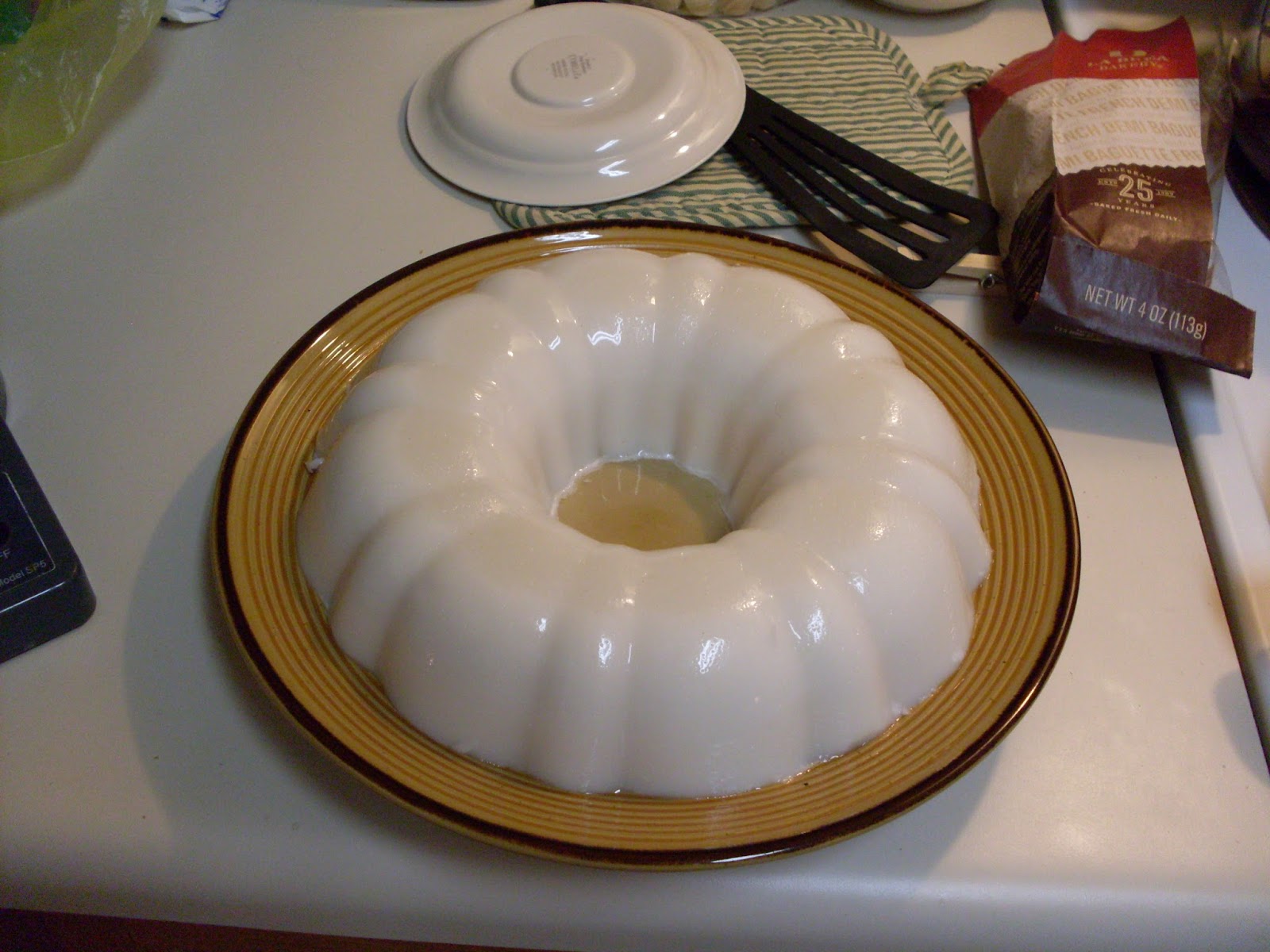
So, I looked up many Jell-O and Jell-O salad recipes to see if I could revamp it and make my own type of recipe. In the end I went to my local Asian grocery store and bought a package of Agar Agar. For those of you not familiar with this product, agar agar is a vegan, algae-based thickener that works in much the same way as gelatin. It has a higher gelling temperature which means you can keep it out at room temperature longer without worrying about it melting again, which is really lovely. I was only able to find a package with sugar in it, but I have heard that you can get just agar agar by itself, so if I was to pursue this, I would seek that out because that way I can control the sugar content better. I decided to make up a recipe with this while following the general directions on the packet. I used about 3 cups of light coconut milk(Trader Joe's brand) and 3 cups of water. For the last cup of water, I added 2 tsp. rose water to the cup and filled the rest with tap water. All of this was put in a large pan on the stove and brought up to a boil where I then added the packet of agar agar and let it simmer until it was all dissolved. I used a Bundt pan that I greased first and poured the liquid into it. I let it cool off a bit before placing it in the fridge. I did this in the morning so it would be ready for dessert in the evening.
I was nervous about it coming out of the mold and I used a spatula to loosen it up before overturning on the plate. It looks really cool! The flavor was ok, a bit too floral. I should have used half or a quarter the amount of rose water, but I do think it blended pretty nicely with the coconut flavor. However...the texture was a bit too chewy for my tastes. It's either how the agar agar works, or perhaps I needed to use less of it for the amount of liquid I used. There were two recipes on the box and I opted for the one with less liquid, because I was afraid it wouldn't gel enough. I think I should have used the one with more liquid and perhaps the texture would have been more Jell-O like. So, it wasn't a huge fail, and it did gel, so it was a success, just not a huge one either...This one needs more work, I think.
And now, to the potatoes, which my sister ate too and really liked. I made a half batch of what I was basing mine off of and made a few other changes, so I'll write out what I did, but will provide the link to the original recipe in my Sources at the end.
"Funeral" Potatoes:
16 oz. frozen shredded hashbrowns(Most packages in the store are bigger than this, so measure out 16 ounces from the larger bag and keep the rest for another use.)
1 can Cream of Potato soup(Cream of Mushroom would be great too.)
1 cup sour cream
3/4 cup shredded cheddar cheese
14 cup melted butter
1/4 cup chopped onion
1/2 cup panko
1/2 cup crushed potato chips
2 Tbsp. butter, melted
Grease a 9"x9" oven-proof dish and preheat the oven to 350 degrees. In a large bowl, mix the soup, sour cream, cheese, melted butter, and onion until well combined. (I found the onions too raw for my tastes when the dish was completed, so next time I would probably saute them in the butter first before adding it to the bowl and mixing with the rest of the ingredients.)
Add the frozen shredded hashbrowns(do not thaw first) and gently fold into the soup mixture until well combined. Spread this out in the greased dish.
Combine the panko and potato chips in a small bowl or on a plate and pour the melted butter into it. Mix until well combined and spread out evenly over the potatoes.
Bake for about 30 minutes or until the potatoes are cooked and everything is heated through.
This made about 6 servings, I'd say and was really easy and delicious. My sister thought it needed more cheese, and I'm inclined to agree with her. The sour cream was the strongest flavor. This is a new favorite of mine, I think. I do think it needs a happier name though...Potato Delight or something without the word funeral in it...I'll keep thinking. If you try this and like it, let me know! If you think of a better name for it, also let me know! But do try it, cuz I think you'll like it!
Sources:
Jell-O Consumption, I didn't just make it up!
Funeral Potatoes Recipe
City Info
City Pic
City Map
D-Day Map
Utah Beach History
More Utah Beach History
2013 Census: 48,612 people. 2012 per capita income: $28, 522. 83.4% of the population is white, 9.6% is Hispanic. 83% of the population is Mormon, 8.8% is Catholic.
Before being settled by Mormons in 1848, the region was the seasonal home to the Bannock, Paiute, Goshute, and Shoshone tribes of Native Americans. During its time, the Pony Express had a station in Murray. Throughout its early history, the region was used for agriculture exclusively, however in 1869, an ore deposit was found, and that quickly became the top economic factor for the region. Murray housed the first smelter in the area in 1870 and would remain the center of business for smelting for the next 30 years. In the mid 1880's, the railroad came through the state which increased business to the area.
Murray was officially named in 1883 after General Eli Murray, for whom the post office was named. It was officially incorporated on November 18, 1902. The smelting industry suffered greatly during the Great Depression, but the Second World War and the explosion of the automobile industry after the war would keep the city thriving in spite of that set back.
Cool factoid: Murray High School was used for filming the auditorium scenes in the first High School Musical movie.
The Historical Event: So why did I choose the state of Utah for this week? Well, June 6th is the anniversary of D-Day, a very important turning point during the Second World War. I was a history major who focused on that war, though mostly on homefront issues, as opposed to the warfront. However, D-Day is one of those events that draws you in, regardless. The strategy and tactics involved, the luck, and the huge loss of life make it a compelling story that needs to be retold. So what does this have to do with my choosing Utah? Well, the coastline of Normandy, France was divided into five separate pieces and given names: Utah, Omaha, Juno, Sword, and Gold. Utah and Omaha were the beaches that the Americans were responsible for. Juno, Sword, and Gold were under the responsibility of the British and Canadians. Because I have already done the state of Nebraska for this project, that left Utah!
Of the two American beaches, Omaha is the one overwhelmingly talked and written about. It had far more casualties than Utah, and far more difficult circumstances to overcome. But don't underestimate the importance of the storming of Utah beach. It was the farthest west of the five and the closest to the Port of Cherbourg, a major entry point into France that was being used and protected by the Axis powers. The Allies wanted to take it and use it to bring in their own troops. Utah beach was added after the other four beaches, when General Eisenhower realized it would be a good location to go in to take the port. Utah was about three miles long, approximately two miles shorter than Omaha. Due to the terrain, the German presence was not as strong here. During the course of the first day, over 20,000 troops would land here, 1700 vehicles would arrive, and there would be less than 300 casualties. Utah had the advantage of good timing as it was the first one stormed. It had the element of surprise on its side, a luxury that the other four beaches did not have. It also had the advantage and disadvantage of only having one major road to access the beach. While this made it more difficult for the Allies to travel further into France, it also made it more difficult for the Axis powers to get to the coast to protect it. The beach landings were preceded by an aerial landing just after midnight the morning of D-Day. It was a success and confused the Axis powers. Was this the assault they'd long anticipated? Or was it a mere distraction? It turned out to be both. Utah beach's landing is considered to be the most successful of the five beaches.
The Food: Jell-O and "Funeral" Potatoes
All right, that's enough history for one blog post. So, back to Murray, Utah and food. Jell-O is not a food I generally eat. I ate it as a child, but since I don't eat beef, that pretty much leaves out anything with gelatin in it, and since I don't really do sugar anymore, Jell-O is pretty much off the menu. But...Utah is the Jell-O capital of the country. More Jell-O is eaten per capita in that state than anywhere else in the nation, so I felt like I needed to honor this. And during my research one dish came up over and over again and the name was such that I couldn't just dismiss it. What the heck are "funeral" potatoes? This is a side dish that shows up at nearly every funeral, and church or community function there. It's easy to make in large quantities and isn't terribly expensive either. It's great for feeding large crowds. And it turns out it's a very similar side dish to a family recipe we eat every Christmas Eve called "patio" potatoes, but it was different enough that I tried it out anyway.
So, I looked up many Jell-O and Jell-O salad recipes to see if I could revamp it and make my own type of recipe. In the end I went to my local Asian grocery store and bought a package of Agar Agar. For those of you not familiar with this product, agar agar is a vegan, algae-based thickener that works in much the same way as gelatin. It has a higher gelling temperature which means you can keep it out at room temperature longer without worrying about it melting again, which is really lovely. I was only able to find a package with sugar in it, but I have heard that you can get just agar agar by itself, so if I was to pursue this, I would seek that out because that way I can control the sugar content better. I decided to make up a recipe with this while following the general directions on the packet. I used about 3 cups of light coconut milk(Trader Joe's brand) and 3 cups of water. For the last cup of water, I added 2 tsp. rose water to the cup and filled the rest with tap water. All of this was put in a large pan on the stove and brought up to a boil where I then added the packet of agar agar and let it simmer until it was all dissolved. I used a Bundt pan that I greased first and poured the liquid into it. I let it cool off a bit before placing it in the fridge. I did this in the morning so it would be ready for dessert in the evening.
I was nervous about it coming out of the mold and I used a spatula to loosen it up before overturning on the plate. It looks really cool! The flavor was ok, a bit too floral. I should have used half or a quarter the amount of rose water, but I do think it blended pretty nicely with the coconut flavor. However...the texture was a bit too chewy for my tastes. It's either how the agar agar works, or perhaps I needed to use less of it for the amount of liquid I used. There were two recipes on the box and I opted for the one with less liquid, because I was afraid it wouldn't gel enough. I think I should have used the one with more liquid and perhaps the texture would have been more Jell-O like. So, it wasn't a huge fail, and it did gel, so it was a success, just not a huge one either...This one needs more work, I think.
And now, to the potatoes, which my sister ate too and really liked. I made a half batch of what I was basing mine off of and made a few other changes, so I'll write out what I did, but will provide the link to the original recipe in my Sources at the end.
16 oz. frozen shredded hashbrowns(Most packages in the store are bigger than this, so measure out 16 ounces from the larger bag and keep the rest for another use.)
1 can Cream of Potato soup(Cream of Mushroom would be great too.)
1 cup sour cream
3/4 cup shredded cheddar cheese
14 cup melted butter
1/4 cup chopped onion
1/2 cup panko
1/2 cup crushed potato chips
2 Tbsp. butter, melted
Grease a 9"x9" oven-proof dish and preheat the oven to 350 degrees. In a large bowl, mix the soup, sour cream, cheese, melted butter, and onion until well combined. (I found the onions too raw for my tastes when the dish was completed, so next time I would probably saute them in the butter first before adding it to the bowl and mixing with the rest of the ingredients.)
Add the frozen shredded hashbrowns(do not thaw first) and gently fold into the soup mixture until well combined. Spread this out in the greased dish.
Combine the panko and potato chips in a small bowl or on a plate and pour the melted butter into it. Mix until well combined and spread out evenly over the potatoes.
Bake for about 30 minutes or until the potatoes are cooked and everything is heated through.
This made about 6 servings, I'd say and was really easy and delicious. My sister thought it needed more cheese, and I'm inclined to agree with her. The sour cream was the strongest flavor. This is a new favorite of mine, I think. I do think it needs a happier name though...Potato Delight or something without the word funeral in it...I'll keep thinking. If you try this and like it, let me know! If you think of a better name for it, also let me know! But do try it, cuz I think you'll like it!
Sources:
Jell-O Consumption, I didn't just make it up!
Funeral Potatoes Recipe
City Info
City Pic
City Map
D-Day Map
Utah Beach History
More Utah Beach History
Labels:
agar agar,
coconut,
dairy,
potatoes,
rose water
Sunday, May 31, 2015
Dining-In: A Culinary Tour of America-Quincy, Washington
The Place: Quincy, Washington
Do you know how hard it was to find a place in my own state that I have not been to? I knew my rule of "It has to be a place I've never been to before" would be hardest here in Washington. I managed it, though! Once I decided to focus on produce instead of salmon, it narrowed it down to the eastern half of the state, which definitely opened up a few more options for me. I've been to the bigger cities east of the mountains, so it was still challenging to find a small town with enough to talk about that I had never been to. And so, I present to you, Quincy!
Quincy was established in 1892 as a railroad camp during the construction of the Great Northern Railroad. It was incorporated on March 27, 1907. It wouldn't be until the early 1950's however, when the Grand Coulee Dam brought water to the area in great quantities, that agriculture would become the city's main claim to fame.
Quincy is also near several tourist areas and benefits from being the closest full-service city with amenities for visitors. It is located close to the Gorge Amphitheatre near the city of George, and also near Crescent Bar, a town by the river that gets a lot of tourists during the summer because of their water-based attractions. For those of you who may never have traveled east of the Cascade mountains, the eastern half of the state is very hot and dry. Some parts are nearly desert-level, so having water is a very good thing for tourism.
The Food: A trio of apple desserts
When I picked apples, it didn't take long for me to decide on desserts over savory. I thought it would be a fun change of pace. My first pick was a classic Apple Brown Betty, which I had heard of but never tried before. And I usually make two items, but when I saw the one puff pastry recipe, and saw another one in my recipe collection, I decided to try them both. Why? Because when you buy puff pastry at the store, it comes in a two pack, so why not use it all up at once? The recipes were similar but also very different, as the picture shows. I found all these recipes in my own personal recipe card collection, and I no longer know the sources. And as always with desserts, I changed it to cut out a lot of the sugar. I will write them out as I made them because I don't think the recipes suffered at all, really. In fact, there was less waste. Some of the steps in a couple of the recipes asked for you to drain off the syrup created by the sugar and liquid given off by the apples, and just throw it away! By using less sugar, it didn't create excess liquid to be thrown out. This kept all the flavor, in a more concentrated form, in the dish, which means I didn't need to sweeten it more. My parents actually drove up last night at 9pm to get some of it. They said it was delish, so, it must be good and not just me being biased! But it was all pretty darn good, I think! Also, I didn't take pictures of the assembly of the food because it really wasn't note-worthy, so the picture of the final products, is the best of the best I took last night. I like that even though the puff pastry desserts are largely the same ingredients, they look very different, visually. I think it all turned out to be very pretty food. And also, the leftover pastries make a lovely breakfast the next day...Just eat them at room temperature and the pastry is still good the next day! I know this because I am writing in between bites...
Apple Brown Betty: I made a half batch, but this can easily be doubled.
4 slices firm white bread, torn into 1/2" pieces
1/4 cup butter, melted
1/2 tsp. ground cinnamon, divided
1 1/4lb. Granny Smith apples, peeled, cored, and thinly sliced
1/3 cup unsweetened apple sauce, minus 1 Tbsp.
1 Tbsp. brown sugar (I put the sugar in the bottom of the 1/3 cup and topped it with the applesauce. The original recipe calls for 1/3 cup brown sugar for the amount I made, but there was no way I was going to use that much sugar. This was a good compromise. The applesauce added moisture and sweetness but without as much sugar. The small amount of brown sugar added enough of the flavor but didn't add too much excess sugar, either.)
1 Tbsp. lemon juice
1/2 tsp. vanilla
1/8 tsp. ground nutmeg
1.) Preheat oven to 400 degrees. On a baking sheet, bake the bread pieces until very lightly toasted, about 12-15 minutes, stirring occasionally. Grease a shallow 2-quart ceramic or glass baking dish.(I used my 9"x9" Pyrex dish.)
2.) In medium bowl, combine melted butter, and 1/4 tsp. cinnamon. Add toasted bread; toss gently until evenly moistened.
3.) In large bowl, toss sliced apples, brown sugar and applesauce, lemon juice, vanilla, nutmeg, and remaining 1/4 tsp. cinnamon.
4.) Place 1/2 cup bread pieces in the baking dish. Top with half the apple mixture, then 1 cup bread pieces. Place remaining apple mixture on top; sprinkle with remaining bread pieces, leaving a 1" border of apples all around the edge.
5.) Cover dish with foil and bake 30 minutes. Uncover and bake 10 minutes longer or until apples are tender and crumbs on top are brown. Let stand 10 minutes before serving. Serve warm.
Makes 4 servings
Most Apple Brown Betty recipes call for breadcrumbs, so if you wanted to take the bread after it's been toasted and crush it into crumbs, feel free to do so. This was quite tasty. I mean, it's basically cinnamon bread and apples, but it's a good, simple, easy dessert that's also a good way to use up bread that might be getting too old and tough for sandwiches. This would be good with whipped cream or ice cream, if you eat that sort of thing.
Sauteed Apples in Puff Pastry:
2 Tbsp. butter
1 Tbsp. brown sugar(original recipe calls for 1/3 cup)
1 Tbsp. bourbon
1 tsp. ground cinnamon
1/8 tsp. ground nutmeg
3 medium cooking apples, peeled, cored, and chopped(I feel this actually made too much filling and when I tried to cram more into the pastry to not feel like I was wasting it, it made it difficult to fold and properly close. I still managed it, though. I think 2 apples is more than enough. I used Pink Lady apples for this and they were perfect.)
1/2 of (17 1/4oz.)pkg. frozen puff pastry, thawed(1 sheet) (I used Aussie Bakery brand instead of Pepperidge Farms. If you can find this, I highly recommend it. It's more expensive, but the flavor and texture are well worth the cost. The other brand is ok and will do in a pinch, but the flavor and texture is inferior, in my opinion.)
In a large skillet, melt butter. Stir in sugar, bourbon, cinnamon, and nutmeg. Add apples; cook and stir over medium heat until tender, about 6 minutes.
On a lightly floured surface, roll pastry to a 12" square. Cut into nine (4") squares. Place about 2 Tbsp. apple in center of each square. Brush edges lightly with water. Bring one corner of pastry over apples to opposite corner. Seal around edges with a fork.(You are making a turnover, basically.) Prick tops to release steam. Repeat with remaining squares. Place on an ungreased baking sheet and bake in a 400 degree oven about 20 minutes or until golden. Cool slightly on a wire rack. Dust with powdered sugar(I didn't do this, but you can if you want!)
Makes 9.
If you cut the amount of apples down to two instead of three, you might need to alter the amount of butter you saute it in. You might not need as much. Same goes for the seasonings and sweetener, just do it all to taste. This was sooo good!
Brown Sugar Apple Pastries:
1 sheet frozen puff pastry, thawed
4 Tbsp. butter, divided(you want the butter to be very soft, but not melted, for this recipe)
1 1/2 Tbsp. brown sugar, divided(original recipe calls for 3/4 cup!)
3 Tbsp. unsweetened apple sauce
1 1/4 tsp. ground cinnamon, divided
2 Granny Smith apples, peeled, quartered, cored. Cut each quarter into three slices(The original recipe calls for 3 apples, but this would be way too much to fit on the pastry, as you can see in the picture.)
1 Tbsp. lemon zest (I actually forgot to get this so I just put some lemon juice in the mixture instead and it was fine.)
Position rack in bottom third of oven and preheat to 425 degrees. Unfold pastry sheet on work surface. Cut into three strips along fold lines. Cut in half crosswise. Transfer rectangles to one ungreased baking sheet.
Blend 2 Tbsp. butter, 1 Tbsp. brown sugar, and 1/4 tsp. cinnamon in a small bowl; spread over rectangles. Bake ten minutes. Pierce crusts with a fork to deflate.(The recipe says to keep baking after this for six more minutes or until the bottoms are golden. Mine were perfect after the ten minutes and didn't need more taking time. Check yours at this time to see if you need to bake it more or not. The sugar topping is definitely not something you want to overbake...)
Meanwhile, melt remaining 2 Tbsp. butter in a large skillet over medium-high heat. Add apples. Saute until beginning to brown, about 8 minutes. Sprinkle with the remaining 1/2 Tbsp. sugar(for those who might not know, 1/2 Tbsp. is the same as 1 and 1/2tsps.), the applesauce, cinnamon, and lemon zest or juice. Toss until the apples are softened but still hold their shape, about 5 minutes.
Transfer crusts to platter. Top each with apples; drizzle with any syrup from skillet. Serve warm or at room temperature.
Makes 6
I was really impressed with the visual presentation of this one. It's so simple, but so cool too. Also very delicious. All three of these turned out just perfect with the alterations I made, which just goes to show you, that you can cut out a lot of sugar from most desserts, without suffering from changing the taste or texture. Test it out for yourself sometime and you'll see what I mean. Baking in particular, is a science and best done with precise measurements, but I am learning more and more as I try this out, that you do have some room to change things around before you change the taste/texture beyond what it's supposed to be. If you try it out sometime, you'll have to let me know how it worked for you!
All these recipes made me really proud, and happy, that I live in Washington state and have access to so many different varieties of apples. They really are quite a tasty fruit!
Sources:
Official Quincy City Website
City map
City Pic
Sunday, May 24, 2015
Dining-In: A Culinary Tour of America-Indianapolis, Indiana
The Place: Indianapolis, Indiana
2013 Census: 843,393 people. As of 2010, 61.8% of the population is white, and 27.5% is African American. The per capita income is $24,430 and 18.9% live below the poverty line. It is the 12th largest city in the entire country and considered to be the least segregated city in the northern half of the nation.
Indianapolis was founded in 1821, but prior to that it had been home to the Lenape/Delaware and Miami tribes. With the advent of the railroad in the city in 1847, the city became a major destination, accessible from all directions and connected to several other major cities, including St. Louis, Chicago, and Detroit.
Indianapolis was also a stop along the Underground Railroad, though the city has had its ups and downs with racial issues. In the 1970's and 80's, it suffered greatly from "white flight", but has since bounced back. The nation's first illustrated African American newspaper, the Indianapolis Freeman was founded there in 1888. As with tolerance for change and acceptance comes those who fear it and fight against it. The KKK took root here in the 1920's and had a strong influence for a time, but had died out by 1944 when it disbanded entirely.
Today, in the state of Indiana, there is a similar backlash against the acceptance and tolerance for the LGBT+ community in the form of the Religious Freedom Bill that allows businesses to decline customers based on sexual orientation if it goes against their religious beliefs to do so. While the damage this bill can inflict is possibly not quite as extreme as the KKK, perhaps we can look to the decline and disbanding of that group as a sign of what will eventually be done to this bill. The good news is that the amount of people who don't support it far outweigh those who do. If you do visit the city or the state, make sure to keep an eye out for this sticker in business windows:
This will ensure that you are supporting a business that doesn't support hate or discrimination.
Indianapolis is also known for its sports and sporting events. They have a professional football team, and also have professional men and women's basketball teams. So, you might be asking me, "Why Indianapolis? And why right now?" Well, there is a very important reason I chose this city for this particular three day weekend: The Indy 500. The sporting event takes place on Memorial Day weekend every year, in fact it's happening right now as I type this at 9:35am Sunday morning. It's airing on ABC currently until noon west coast time.
The Indianapolis Motor Speedway was built in 1909 and the first Indy 500 was held in 1911. Why is it called "500"? Well, because the 200 laps that the cars take during the race equate to 500 miles. Women have been allowed to drive in the race since 1977, though their numbers are still quite small compared to the amount of male drivers in the race. This event is huge. Even if you've never been to the state and never watched a car race in your life, or even like cars, you've heard of this event. It's part of American culture, whether you like it or not. So, I celebrated it last night with the meal I prepared, and by watching the Pixar movie, Cars. That doesn't take place during the Indy 500, but it's close enough thematically that it felt appropriate.
The Food: Breaded Pork Tenderloin Sandwich and Indiana Potato Salad
This is quite possibly the most "Midwestern" meal I've done on this blog to date. Breaded and fried meat in bread, and potato salad. It's a carb-lovers dream come true. It was really good too! I found two recipes to base the sandwich on but I pretty much turned it into my own thing. I will write out what I did but also provide the links to the original recipes.
Indiana is a big state for pork production and when researching foods to try, this sandwich came up over and over again. There was no doubt in my mind that this particular dish sums up the state in its entirety.
Breaded Pork Tenderloin Sandwich: I only made one, and didn't really measure anything, so use this as a guide and increase amounts accordingly with how many you plan to make.
4 oz. pork tenderloin
Buttermilk
Salt
Pepper
Garlic Powder
Onion Powder
Dried Marjoram(sort of like oregano, you can use that instead if you want)
Seasoning Salt
Crushed Saltine crackers(I used leftover oyster crackers and they worked fine)
Peanut oil(if you have a nut allergy, vegetable oil would be fine. Olive oil might be a bit too strong of a flavor for this.)
Hamburger bun or Kaiser roll of your choice(I used whole wheat)
Hamburger toppings of your choice(I used mayonnaise, mustard, tomato slices, and pickle slices)
Place the pork between two pieces of plastic wrap and use a meat mallet to pound it to a thin, uniform size, about 1/2" thick.
In a plate, combine the buttermilk and spices together. Place the meat in the buttermilk mixture and turn over to cover both sides. Cover with plastic wrap and refrigerate for about an hour to marinate.
Crush the crackers and place on a separate plate. When the meat has finished marinating, remove from the buttermilk(discard this) and dip in the cracker crumbs until it's entirely covered on both sides. Let sit for a few minutes to allow the crackers adhere.
Heat oil in a frying pan over medium-high heat and pan-fry the tenderloin on both sides until golden brown.
It only takes a few minutes on each side to properly brown. When it's done, remove from the heat and place on paper towels to drain.
Toast the hamburger bun to your liking and prepare exactly as you would a hamburger, but using the breaded cutlet instead of the hamburger.
This was really simple to make. It was very tasty too, though I have to admit that the texture of the breading was lost in all the bun. The flavor of the meat is very delicate as pork tenderloin is not the strongest flavored cut of pork. It is also one of the most expensive cuts, and the healthiest cut as well. This does not undo the breading and frying to make this some sort of health food, however! I will be using the rest of the tenderloin I purchased to test out other recipes throughout the week. This cut of meat is usually far more expensive than I like to buy, but once in a while it's a good treat, especially when you put it to use in so many other recipes. If I was to make this again, I would probably just do it as a cutlet and skip the sandwich part. That way I could really taste the flavor and texture of the breading and meat.
There had to be a side dish for my sandwich, and so I turned to a Midwestern classic side: potato salad. But I didn't want just any potato salad. I wanted something I'd never even thought to try before. And I found it...It's just about the most Midwestern thing to ever be from the Midwest. I will write out how I made it, because I cut it down to be two servings, but will include the link to the original as well. This is a hot potato salad, which you may not have ever had before. Those tend to be German in origin, but this one had simple ingredients that were just soooo American I couldn't resist. Some of you might scoff or feel grossed out by it, but I chose to celebrate it in all its glory...
Indiana Potato Salad:
1 good-sized Russet potato
1-2 Tbsp. minced onion
2 slices Kraft singles American cheese(Yes, Kraft singles. And even worse, I saved money and bought the store-name brand too!!!! The recipe actually calls for Velveeta, which I didn't have on hand and my store sells it but it's way too expensive to buy for the small amount it calls for, so I opted for American cheese slices instead.)
Mayonnaise
Bacon bits
Boil the potato in water until it's cooked through. Remove from the water and let cool to the touch. Peel and dice the potato.
In a 9"x 9" or 8"x 8" ovenproof dish, place the potato and minced onion and stir together. Dice or rip up the cheese slices and mix into the potatoes. Place enough mayonnaise in the dish to blend properly into the potato mixture.
Place this in a 350 degree oven for about 10-15 minutes until it's hot and the cheese has melted. When it's done, top with bacon bits and serve.
This recipe sounds insane, I know! It's less of a potato salad and more of a baked side dish. For those in my family who have had the "patio potatoes" at Christmas, this is a similar flavor and texture, only it takes way less ingredients, an in spite of being filled with cheese and mayonnaise, is probably healthier than that recipe which has two types of "cream of" soups, cheese, and half and half in it. My sister tried it and loved it, which is saying something!
This meal is a quintessential Midwestern or American meal. You can sort of see the ethnic roots, but it has become something else entirely its own. I can imagine a salad like this being eaten at a church gathering or a neighborhood picnic, and the sandwich being featured at every restaurant in Indiana, each trying to put their own twist on it. It is truly a celebration of ingredients from that state, prepared with love and pride and joy. And that is how it should be eaten. Don't pay attention to the calorie or fat count, just enjoy it.
If you're watching the race today and wondering what to have for lunch, this would make a great meal and a great tribute to the place that made the race famous. Enjoy!
Sources:
Pork Tenderloin Sandwich Recipe
Indiana Breaded Tenderloin Sandwich
Indiana Potato Salad
City Map
City Pic
Open For Service Sticker
City History
Sunday, May 17, 2015
Dining-In: A Culinary Tour of America-Clinton, Mississippi
The Location: Clinton, Mississippi
Clinton was founded in 1823 as Mount Salus, which means "Mountain of Health". The oldest college in the state of Mississippi was founded in Clinton in 1826.
In 1875, after the Civil War, there was what is now known as the "Clinton Riots". The history online is very biased, but from what I can tell, there was a group of white citizens who were unhappy with the state's governor, who they felt didn't support or look out for their interests enough. They felt overlooked and threatened in the Reconstructionist Era. During a political rally, in which many African American citizens who supported the governor were in attendance, the group of white citizens attacked the African Americans, and continued in a series of attacks throughout the town over the next several days. Many lives were lost. I will provide the links to the information I found, but if you read it, you'll have to read into it what probably really happened.
During the second World War, Clinton became home to a German POW camp that held about three thousand soldiers. Most came from the North Africa battlefield. It is their prison labor that helped build a replica of the Mississippi River Basin that the US Army Corps of Engineers used to help prevent floods in the area. The prisoners also picked cotton and planted trees during their stay. They lived there within all the statues and rules of the Geneva Convention.
The Food: Sweet potato soup and Cheese crackers
Sweet potatoes bring about $79 million to the state's economy. Mississippi is the second largest producer of the tuber in the nation. It's the food that immediately comes to mind when I think of the South, particularly the Deep South. Cheese straws are another food prominent in Southern states. I don't have the proper equipment to make cheese straws. You need one of those tubes you use to make spritz cookies, so I found a recipe for crackers that pretty much had the same flavor but were a different shape. Both recipes are recipe cards from my collection and I don't have the original sources.
Cheese Cracker Delights
What a delight these were. I have never made crackers in my entire life before. I mean, why would you? They're affordable and already made at the store. Boy were these worth it. I think they tasted just like Cheez-its. The cheese is harder to mix into the flour than you might think. You'll need to use your hands and mix it manually after a while. The dough is essentially a savory shortbread, and the texture tasted like it as well. I highly recommend this one.
Ingredients:
8 oz. sharp cheddar cheese, shredded
1/2 cup butter
1 1/2 cups flour
1/4-1/2 tsp. salt (I used a scant 1/2 tsp.)
1/4 tsp. cayenne pepper (I used a very scant 1/4 tsp. It was just a hint of spice without being overwhelming.)
In a large mixing bowl, combine shredded cheese and butter; bring to room temperature(about one hour).
Beat with an electric mixer until well combined. Stir in flour, salt, and pepper. Divide the dough in half. Shape dough into two 7" logs. Wrap and chill logs for at least one hour.
Preheat oven to 350 degrees. With a knife, slice the cheese logs to 1/4"-thick slices. Place slices on ungreased baking sheets. Bake for 15 minutes.
Makes about 4 1/2 dozen. Per cracker: 44 cal, 3 g fat
I noticed that these crackers made crackling sounds when they cooled off. Maybe that's where the word "cracker" comes from? If I was to make these again, I would try using reduced fat cheese. I wanted to try it the way the recipe called for originally, but I don't see why reduced fat cheese wouldn't work just as well. Actually I absolutely do see why it might not work, but I want to try it anyway!
Potato-Yam Soup with Bacon and Spinach
I don't like sweet potatoes, in general, because they're usually prepared with too many sweet ingredients for my tastes. Marshmallows, pineapple, brown sugar, it's all too much. Even before I cut sugar out of my diet, I never liked it. It's tough finding savory applications for sweet potatoes that don't lean towards sweet. This soup was perfection. It was savory and delicious and really not that hard to make. The ingredients might not be the most "Southern", but it has sweet potato in it and that was good enough for me!
6 slices applewood-smoked bacon (about 6 oz.), cut crosswise into 1/2" pieces (I diced mine into smaller pieces because I didn't read that note about size and it still worked out fine. I find it easier to cut bacon when it's frozen or half frozen. If you've never tried it, you should. It will make your life so much better.)
1 onion, chopped
2 cloves garlic, pressed
1/4 tsp. dried thyme
1(14.5oz) can diced tomatoes in juice
1(10oz) yam, peeled, quartered lengthwise, cut crosswise into 1/3" slices
2 medium(10oz) Yukon gold potatoes, peeled, quartered lengthwise, cut crosswise into 1/3" slices
2 medium(10oz) New potatoes, peeled, quartered lengthwise, cut crosswise into 1/3" slices
4-5 cups chicken broth
1(5-6oz) pkg baby spinach, stemmed
Saute bacon in large pot over medium heat until crisp. Transfer to paper towels to drain. Add onion to drippings in pot(I drained all but about one tsp. of the fat and it was just enough.); increase heat to medium-high and saute until beginning to brown, about 7 minutes. Add garlic and thyme; stir 1 minute. Add tomatoes with juice. Stir until almost all the liquid evaporates, about 2 minutes. Add all potatoes; stir to coat. Add 4 cups broth; bring to boil. Reduce heat to medium-low, cover with lid slightly ajar.
Simmer until potatoes are tender, stirring occasionally, 10-12 minutes. Add spinach and bacon; stir until spinach wilts, about 1 minute, adding broth by 1/2 cupfuls if too thick. Season with salt and pepper.
Makes 4-6 servings. 319 cal, 15g fat, 5 g fiber
I would suspect that there's actually a little less fat than the recipe says because I drained more of the bacon grease off than it called for. That's really the only source of fat in the entire recipe. I added about two extra cups of broth to reach that consistency for a total of 6 cups broth. I didn't add all the bacon back in, but used some to sprinkle on the top to look pretty. I did not season with salt and pepper and found it completely flavorful. Don't waste salt on it, the bacon seasons it enough.
Both of these recipes were fantastic and I'd absolutely eat them again. Now I can see why sweet potatoes and cheese straws are so popular in the South. I just wish I'd started making them sooner!
Sources:
Sweet potato info
City pic
City map
City website
POW history
Clinton riot history
City stats
Clinton riot (Note, this particular site was so biased that I actually felt uncomfortable reading it. It was a good source of information, however, once you ignore the extreme bias, which is why I used it and am including it here.)
Sunday, May 3, 2015
Dining In: A Culinary Tour of America-Lawrenceburg, Kentucky
The Location: Lawrenceburg, Kentucky
Population as of 2013: 11,081. The estimate per capita income as of 2012 was $22,306, and the unemployment rate as of 2014 was 6.4%. I was unable to find a date for the racial make-up of the city, so I am not including it here, however it can be found in the sources I will provide at the end of the entry. Suffice it to say, the majority of people living in Lawrenceberg are white, with a very small minority of African Americans.
Lawrenceburg was first settled in the 1780's by Jacob Kaufman, a German immigrant. It is home to two large bourbon distilleries: the Four Roses distillery, and the Wild Turkey Bourbon distillery.
The city was also host to a small battle during the Civil War that took place on October 8, 1862. The Confederate Army captured 600 Union prisoners and took 58 Union wagons of supplies. The wagons were burned, though one would hope that they emptied them of any supplies first so they could be used for themselves...One would think they might have kept the wagons to be used for themselves as well, but apparently that was either not thought of or decided against. (I'm sorry, I told myself that I was going to remain judgement-free when I visited states that had major Civil War connections, but that's just stupid. Burning wagons that you could have used for your own side??? Possibly with supplies in them that could definitely have been of use to you? That's just dumb. These people totally would have lost Oregon Trail...But I digress...) In the long-run, however, the battle proved not to make a large difference to the greater war, for that waged on for another three years.
The Food: Burgoo
When I first started working on this project, I thought about certain dishes from particular areas that I had never tried before. Burgoo was one of the first things that came to mind for Kentucky. It's so unique to the area that people outside of the South, or outside of the foodie world have probably never heard of this dish. Burgoo, is simply, a stew. Meat, vegetables, and sauce, that's it. So, why this food and why this city, you might ask? And why go to Kentucky right now? Well, let me answer all of those for you in reverse order: The Kentucky Derby was this weekend, burgoo is one of the most popular foods eaten during this time, and Lawrenceburg has declared itself the burgoo capital of the world!
The point to burgoo is to add as many different types of meat as possible into it. Sorry vegans and vegetarians, this one is definitely one you'll need to skip. Beef, lamb, various small game animals, venison, and even rodents are all items generally included in burgoo. You can rest assured, however, that the one I made, was 100% rodent-free.
I also tried a new vegetable with this dish: okra. Okra has the stigma of being slimy and gross and many people dislike it. I found it to be rather bland in both flavor and texture, and definitely not worthy of the dislike. However, I used frozen, and perhaps fresh would make a difference with those things. Fresh is not readily available in my area, unfortunately, so frozen was the only form I could use.
I found a few recipes online to base mine off of, but I didn't follow any of them completely. I will write out what I did, however you will have to be patient with the fact that I didn't really measure stuff out. It's just one of those types of recipes...
Miss Foodie2shoes's 100% Rodent-Free Burgoo
1 turkey thigh(these can be bought any time of the year, not just at Thanksgiving)
1 chicken hindquarter(thigh and leg)
2 pork spare ribs
1.5 containers chicken broth
Salt/pepper
1 pkg. frozen okra(You'll only use a couple handfuls of this, so reserve the rest for another use.)
1pkg. frozen vegetable mix(try to get one that includes lima beans, as that is one of the important ingredients to burgoo. I found one with lima beans, green beans, peas, and carrots. This was perfect. Again, you'll only be using a few handfuls, for reserve the rest for another use.)
1/2 cup chopped onion
2 cloves garlic, chopped
1 small can pureed tomatoes(I used almost all of the can but I removed 1/4 cup for a recipe for later in the week. Use however much you like. You can also use chopped tomatoes if you prefer.)
1 tsp. dried thyme
1.5 tsp. brown sugar
1 Tbsp. cider vinegar
1 Tbsp. Worcestershire sauce
1-2 tsp. Tabasco sauce
Combine the meat and half of the chicken broth and salt and pepper in a slow-cooker and cook over low heat for about 3 hours. Turn up to high heat and continue to cook for another 2 hours at least. When the meat is thoroughly cooked, carefully remove it from the slow-cooker. Turn off the slow-cooker and strain the liquid into a large pot on the stove. Remove skin and bones from the meat, and discard. Shred the meat into large chunks. Set aside to add to the soup later.
Let the broth sit for a while and try to spoon off as much grease as you can. When this is done, add the rest of the ingredients, except the meat, and heat on medium heat until the onions and garlic are cooked through. Add the meat and heat through before serving. I have no idea how many servings this makes, but it would probably serve at least six.
As you can see, I served this with cornbread on the side, which was the perfect accompaniment to it. Traditionally potatoes of some sort would be part of the soup. Because I knew I would most likely be freezing the leftovers, I chose to omit them, because it's my experience that potatoes don't freeze and thaw very well. The soup, which was thinner than the traditional stew, because I didn't thicken it, was incredibly filling. The potatoes probably weren't that needed, though they would have tasted nice. Consider it the low-carb option!
This soup was really rich, and pretty tasty! It was really garlicky, almost to the point of being too garlicky for my tastes. I might cut back on that if I make this again. The meat flavors all blended together, however, and I couldn't really tell one from the other. If you made this with beef and some other stuff, it would probably be more distinguished.
This was probably one of the easiest dishes I've done so far. I did like using the slow-cooker for the longest step of cooking the meat. Any time you can use a slow-cooker instead of the stove, you save energy, which is a very good thing!
If you want, you could enjoy a nice mint julep or some bourbon alongside your burgoo and cornbread. It would be a nice meal to eat whilst getting into the mood for the Kentucky Derby. Try it out for next year!
Sources:
City map
City pic
Burgoo recipe
Burgoo recipe 2
Burgoo recipe 3
City info
More city info
Civil War info
Population as of 2013: 11,081. The estimate per capita income as of 2012 was $22,306, and the unemployment rate as of 2014 was 6.4%. I was unable to find a date for the racial make-up of the city, so I am not including it here, however it can be found in the sources I will provide at the end of the entry. Suffice it to say, the majority of people living in Lawrenceberg are white, with a very small minority of African Americans.
Lawrenceburg was first settled in the 1780's by Jacob Kaufman, a German immigrant. It is home to two large bourbon distilleries: the Four Roses distillery, and the Wild Turkey Bourbon distillery.
The city was also host to a small battle during the Civil War that took place on October 8, 1862. The Confederate Army captured 600 Union prisoners and took 58 Union wagons of supplies. The wagons were burned, though one would hope that they emptied them of any supplies first so they could be used for themselves...One would think they might have kept the wagons to be used for themselves as well, but apparently that was either not thought of or decided against. (I'm sorry, I told myself that I was going to remain judgement-free when I visited states that had major Civil War connections, but that's just stupid. Burning wagons that you could have used for your own side??? Possibly with supplies in them that could definitely have been of use to you? That's just dumb. These people totally would have lost Oregon Trail...But I digress...) In the long-run, however, the battle proved not to make a large difference to the greater war, for that waged on for another three years.
The Food: Burgoo
When I first started working on this project, I thought about certain dishes from particular areas that I had never tried before. Burgoo was one of the first things that came to mind for Kentucky. It's so unique to the area that people outside of the South, or outside of the foodie world have probably never heard of this dish. Burgoo, is simply, a stew. Meat, vegetables, and sauce, that's it. So, why this food and why this city, you might ask? And why go to Kentucky right now? Well, let me answer all of those for you in reverse order: The Kentucky Derby was this weekend, burgoo is one of the most popular foods eaten during this time, and Lawrenceburg has declared itself the burgoo capital of the world!
The point to burgoo is to add as many different types of meat as possible into it. Sorry vegans and vegetarians, this one is definitely one you'll need to skip. Beef, lamb, various small game animals, venison, and even rodents are all items generally included in burgoo. You can rest assured, however, that the one I made, was 100% rodent-free.
I also tried a new vegetable with this dish: okra. Okra has the stigma of being slimy and gross and many people dislike it. I found it to be rather bland in both flavor and texture, and definitely not worthy of the dislike. However, I used frozen, and perhaps fresh would make a difference with those things. Fresh is not readily available in my area, unfortunately, so frozen was the only form I could use.
I found a few recipes online to base mine off of, but I didn't follow any of them completely. I will write out what I did, however you will have to be patient with the fact that I didn't really measure stuff out. It's just one of those types of recipes...
Miss Foodie2shoes's 100% Rodent-Free Burgoo
1 turkey thigh(these can be bought any time of the year, not just at Thanksgiving)
1 chicken hindquarter(thigh and leg)
2 pork spare ribs
1.5 containers chicken broth
Salt/pepper
1 pkg. frozen okra(You'll only use a couple handfuls of this, so reserve the rest for another use.)
1pkg. frozen vegetable mix(try to get one that includes lima beans, as that is one of the important ingredients to burgoo. I found one with lima beans, green beans, peas, and carrots. This was perfect. Again, you'll only be using a few handfuls, for reserve the rest for another use.)
1/2 cup chopped onion
2 cloves garlic, chopped
1 small can pureed tomatoes(I used almost all of the can but I removed 1/4 cup for a recipe for later in the week. Use however much you like. You can also use chopped tomatoes if you prefer.)
1 tsp. dried thyme
1.5 tsp. brown sugar
1 Tbsp. cider vinegar
1 Tbsp. Worcestershire sauce
1-2 tsp. Tabasco sauce
Combine the meat and half of the chicken broth and salt and pepper in a slow-cooker and cook over low heat for about 3 hours. Turn up to high heat and continue to cook for another 2 hours at least. When the meat is thoroughly cooked, carefully remove it from the slow-cooker. Turn off the slow-cooker and strain the liquid into a large pot on the stove. Remove skin and bones from the meat, and discard. Shred the meat into large chunks. Set aside to add to the soup later.
Let the broth sit for a while and try to spoon off as much grease as you can. When this is done, add the rest of the ingredients, except the meat, and heat on medium heat until the onions and garlic are cooked through. Add the meat and heat through before serving. I have no idea how many servings this makes, but it would probably serve at least six.
As you can see, I served this with cornbread on the side, which was the perfect accompaniment to it. Traditionally potatoes of some sort would be part of the soup. Because I knew I would most likely be freezing the leftovers, I chose to omit them, because it's my experience that potatoes don't freeze and thaw very well. The soup, which was thinner than the traditional stew, because I didn't thicken it, was incredibly filling. The potatoes probably weren't that needed, though they would have tasted nice. Consider it the low-carb option!
This soup was really rich, and pretty tasty! It was really garlicky, almost to the point of being too garlicky for my tastes. I might cut back on that if I make this again. The meat flavors all blended together, however, and I couldn't really tell one from the other. If you made this with beef and some other stuff, it would probably be more distinguished.
This was probably one of the easiest dishes I've done so far. I did like using the slow-cooker for the longest step of cooking the meat. Any time you can use a slow-cooker instead of the stove, you save energy, which is a very good thing!
If you want, you could enjoy a nice mint julep or some bourbon alongside your burgoo and cornbread. It would be a nice meal to eat whilst getting into the mood for the Kentucky Derby. Try it out for next year!
Sources:
City map
City pic
Burgoo recipe
Burgoo recipe 2
Burgoo recipe 3
City info
More city info
Civil War info
Subscribe to:
Posts (Atom)